-
 GESKE Electric Pumice Foot Smoothing Roller 7 in 1 Starlight
×
$99.902 × $49.95
GESKE Electric Pumice Foot Smoothing Roller 7 in 1 Starlight
×
$99.902 × $49.95 -
 GESKE Dual Foot Smoothener 8 in 1 Green
×
$59.902 × $29.95
GESKE Dual Foot Smoothener 8 in 1 Green
×
$59.902 × $29.95 -
 PCA Skin Pro-Max Age Renewal 1 oz 2 Pack
×
$372.151 × $372.15
PCA Skin Pro-Max Age Renewal 1 oz 2 Pack
×
$372.151 × $372.15 -
 GESKE Electric Pumice Foot Smoothing Roller 7 in 1 Black
×
$99.902 × $49.95
GESKE Electric Pumice Foot Smoothing Roller 7 in 1 Black
×
$99.902 × $49.95 -
 L'ANZA Healing Volume Zero Weight Gel 6.8 oz
×
$49.902 × $24.95
L'ANZA Healing Volume Zero Weight Gel 6.8 oz
×
$49.902 × $24.95 -
 Sol de Janeiro Bom Dia Body Scrub 7.7 oz
×
$35.701 × $35.70
Sol de Janeiro Bom Dia Body Scrub 7.7 oz
×
$35.701 × $35.70 -
 Sol de Janeiro Brazilian Joia Strengthening + Smoothing Shampoo 10 oz & Conditioner 10 oz Combo Pack
×
$44.201 × $44.20
Sol de Janeiro Brazilian Joia Strengthening + Smoothing Shampoo 10 oz & Conditioner 10 oz Combo Pack
×
$44.201 × $44.20


If you have high porosity hair, reading ingredient labels is not optional — it is one of the most important skills you can develop. The products that work beautifully for low or medium porosity hair are often completely wrong for yours, and the difference usually comes down to specific ingredients that either support or undermine your hair’s structural needs. Let’s make sure you have the best ingredients for high porosity hair.
High porosity hair has one central challenge: the cuticle cannot hold moisture effectively. The solution requires ingredients that work on multiple levels — some that fill structural gaps, some that hydrate deeply, some that coat the strand to slow moisture loss, and some that rebuild the internal bonds that chemical processing has broken. Understanding what each category of ingredient does allows you to evaluate any new product with confidence rather than guesswork.
Why Ingredients and Porosity Are Inseparable
Hair porosity determines which molecules can enter the strand, which will sit on the surface, and how long anything deposited on the cuticle will remain before the hair’s natural moisture cycling removes it. For high porosity hair, the cuticle is too open — molecules enter easily but exit just as easily. The right ingredients slow this cycle down.
Understanding hair porosity as a structural concept is foundational here. High porosity does not mean your hair needs more product — it means your hair needs the right product in the right layering sequence. Ingredients that seal, fill, and rebuild are the priority; ingredients that simply coat will provide temporary results at best.
Ingredients to Look For: The High Porosity Priority Stack
1. Hydrolyzed Proteins
Hydrolyzed proteins are among the most important ingredients for high porosity hair. Through the hydrolysis process, large protein molecules are broken down into smaller fragments that can penetrate the cuticle and temporarily fill the structural gaps that allow moisture to escape. The most effective hydrolyzed proteins for hair care include:
- Hydrolyzed keratin: closely related to hair’s own protein composition and highly effective at filling cuticle gaps and reducing porosity temporarily
- Hydrolyzed wheat protein: builds body and strength; particularly useful for fine-textured high porosity hair
- Hydrolyzed silk protein: adds slip and surface smoothness while filling minor gaps
- Hydrolyzed collagen: improves elasticity and moisture retention
Proteins work best when used in rotation with moisturizing treatments rather than continuously. Overuse creates protein overload — stiffness, brittleness, and eventual breakage. Aim for one protein treatment every two to four weeks, or as needed based on how your hair responds.
2. Ceramides
Ceramides are lipid molecules that are naturally present in the hair’s cuticle layer. They function as the “mortar” between cuticle cells, helping to hold the structure together and reduce porosity. High porosity hair — particularly hair that has been chemically processed — tends to have depleted ceramide levels, which contributes to the open cuticle structure.
Applying ceramide-containing products to high porosity hair helps restore this lipid barrier, reducing the rate of moisture loss and improving the cohesion of the cuticle. Look for ceramide, ceramide NP, ceramide AP, or phytosphingosine on the ingredient list. These ingredients appear in conditioning masks, leave-in treatments, and some specialty serums.
3. Humectants (Used Carefully)
Humectants are ingredients that attract moisture from the surrounding environment. They are valuable for all hair types, but high porosity hair requires a specific approach to humectant use.
In humid environments, humectants draw atmospheric moisture into the hair — beneficial. In dry or low-humidity environments, they can draw moisture out of the hair toward the drier air — counterproductive. For this reason, humectants work best for high porosity hair when they are layered under a sealant that traps the moisture in.
- Glycerin: the most common humectant in hair care; effective when used under a sealant layer
- Aloe vera juice or gel: a gentler humectant that also has mild sealing properties
- Panthenol (provitamin B5): penetrates the cortex, adds moisture and improves elasticity
- Honey: a natural humectant with additional emollient properties
4. Heavy Emollients and Sealants

This is where high porosity hair diverges most dramatically from other porosity types. Once moisture has been deposited into the strand, it needs to be sealed in with ingredients that coat the cuticle surface and reduce the rate of moisture evaporation.
- Shea butter: rich in fatty acids that coat and condition the cuticle; one of the most effective sealants for high porosity hair
- Castor oil: thick, viscous, and highly effective as a sealant; also strengthens the strand and improves elasticity
- Avocado oil: penetrating and nourishing, with a medium-to-heavy texture appropriate for sealing
- Mango butter and kokum butter: excellent for very dry, coarse, or high porosity hair that needs maximum sealing
These should be applied as the final step in your routine — after water-based leave-ins and lighter conditioning layers — to lock in everything applied before them.
5. Bond Repair Actives
For high porosity hair that is the result of chemical processing, ingredient categories 1 through 4 address the surface and immediate moisture retention. But if the hair’s internal disulfide bonds have been broken — which is a direct result of bleaching and color processes — surface treatments alone are insufficient.

Olaplex No. 3 Hair Perfector contains bis-aminopropyl diglycol dimaleate, a patented active that works by seeking out and re-linking broken disulfide bonds within the cortex of the hair shaft. This is not a conditioning agent — it is a structural repair mechanism. Using it before the conditioning routine establishes a stronger internal framework that makes subsequent moisture treatments more effective and longer-lasting. It is one of the most clinically differentiated ingredients in the high porosity care space, and its inclusion in a routine for chemically processed high porosity hair is well-supported.
Ingredients to Avoid for High Porosity Hair
Drying Alcohols
Short-chain or drying alcohols — isopropyl alcohol, alcohol denat., and ethanol — are among the most damaging ingredients for high porosity hair. They strip moisture from the strand and further compromise the cuticle. Avoid them in leave-in products, styling sprays, and any product that sits on the hair after application.
Note: fatty alcohols (cetyl alcohol, stearyl alcohol, cetearyl alcohol) are not drying alcohols. They are beneficial emollients that are appropriate for high porosity hair.
Sulfate-Heavy Shampoos
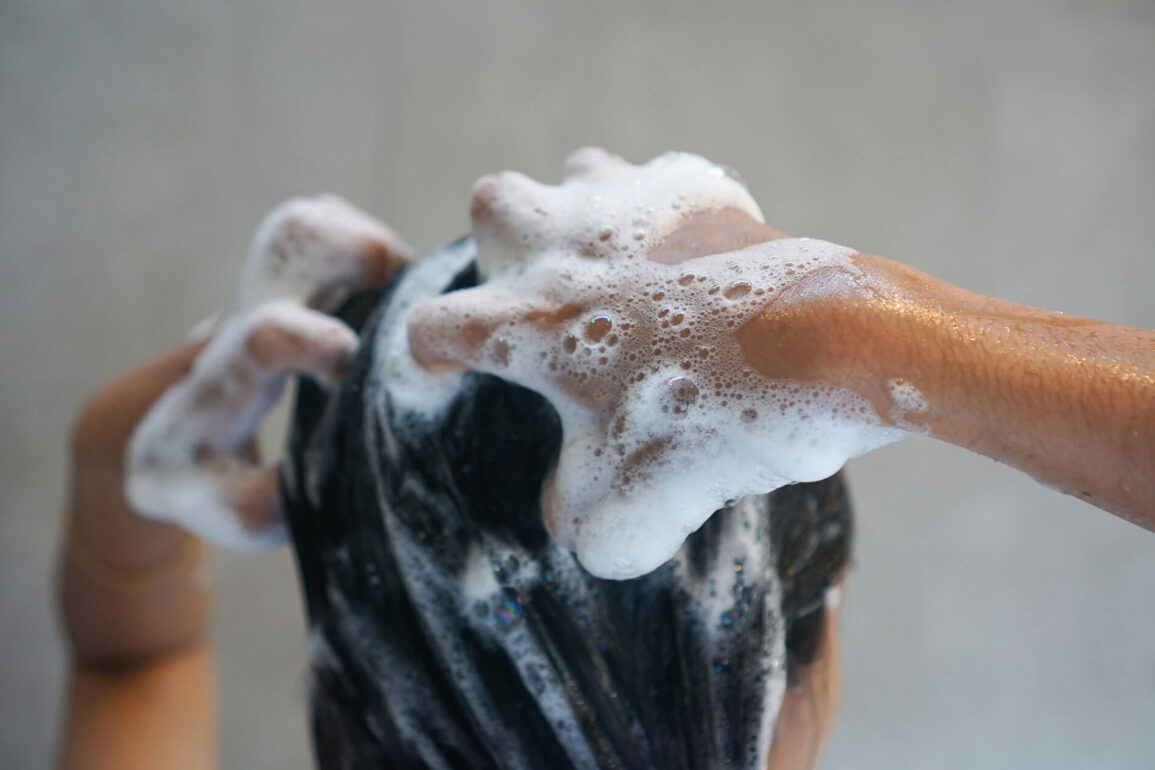
Sodium lauryl sulfate and ammonium lauryl sulfate are highly effective surfactants — so effective that they strip not just dirt and product but also the natural lipids that help protect the cuticle. For high porosity hair that needs to preserve every bit of surface integrity, sulfate-free or low-sulfate formulas are the appropriate choice.
Silicones Without Regular Clarifying
Silicones are not inherently harmful to high porosity hair — they coat the cuticle effectively and provide excellent short-term frizz control. However, without regular clarifying to remove them, silicone build-up creates a barrier that prevents moisture and active ingredients from reaching the strand. If you use silicone-containing products, ensure you clarify with a sulfate-based shampoo at least twice monthly.
Applying Your Ingredient Knowledge

Understanding what ingredients to look for is only half the equation. The other half is application order. No matter how effective your ingredients are individually, applying them in the wrong sequence reduces their impact significantly. For a complete step-by-step application system built around these ingredients, see the full high porosity hair care routine, which covers wash day structure, protein-moisture cycling, and daily maintenance in detail.
Frequently Asked Questions
How do I know if I have protein overload in high porosity hair?
Protein overload presents as hair that feels stiff, dry, and brittle — and that breaks rather than stretching when pulled. If your hair feels like straw after a protein treatment, reduce the frequency and follow up immediately with a deeply moisturizing treatment like a ceramide-rich conditioning mask or butter-based leave-in.
Can I use coconut oil to seal high porosity hair?
Coconut oil is a penetrating oil rather than a purely surface-coating sealant, which gives it a somewhat complex relationship with high porosity hair. For some people it works well; for others — particularly those with protein sensitivity — the lauric acid in coconut oil (which behaves similarly to protein in terms of strand stiffness) can create overload-like symptoms. If you use it, apply sparingly as part of the sealing step and monitor for stiffness.
Are ceramides safe for all high porosity hair types?
Yes. Ceramides are naturally occurring components of the hair’s own structure, which means sensitivity reactions are extremely rare. They are beneficial across all hair textures and ethnicities and are particularly effective for hair that has been color-processed, bleached, or heat-damaged.
What is the difference between hydrolyzed protein and regular protein?
Regular (non-hydrolyzed) protein molecules are too large to penetrate the hair shaft and can only coat the surface. Hydrolyzed proteins have been broken down through enzymatic or acid processing into smaller molecular fragments that can partially or fully enter the cuticle. For high porosity hair, hydrolyzed proteins are significantly more effective than non-hydrolyzed forms at filling structural gaps.
AI-assisted, human-verified. At LaLaDaisy.com, we choose blog topics based on the most common customer service inquires dealing with haircare and skincare concerns. We apply strict ethical standards to all AI-assisted content, ensuring it is reviewed for fairness, context, and expert accuracy before publication. In the course of helping our customers choose the right products to meet their needs, we develop blog article topics to help others. Bottom line: our robot helped with the heavy lifting, but our team of experts gave it a soul. Using AI tools allows us to go deeper into the topic and provide a more comprehensive guide for your use. At LaLadaisy.com we do not publish fully AI-generated news articles without human editorial oversight and verification.