Introduction: Two Ingredients, One Category — But Not Interchangeable

Zinc oxide vs titanium dioxide sunscreen – Which is best for you? If you have spent any time reading mineral sunscreen labels, you have likely encountered two names on the active ingredient panel: zinc oxide and titanium dioxide. Both qualify as mineral UV filters. Both are FDA-approved for use in sunscreen formulations. And both are considered safe, effective alternatives to chemical UV absorbers.
But they are not identical. Each one filters different parts of the UV spectrum, behaves differently on the skin, suits different skin types, and lends itself to different formulation aesthetics. Knowing the difference helps you read labels with precision and select a mineral sunscreen that actually performs for your skin — not just one that carries the right marketing language.
This is a focused breakdown of how zinc oxide vs titanium dioxide sunscreen compares as UV filters, where each excels, and how to choose between them. For a broader introduction to how mineral sunscreen works and who should use it, the complete guide to mineral sunscreen covers the full picture.
What Is Zinc Oxide?
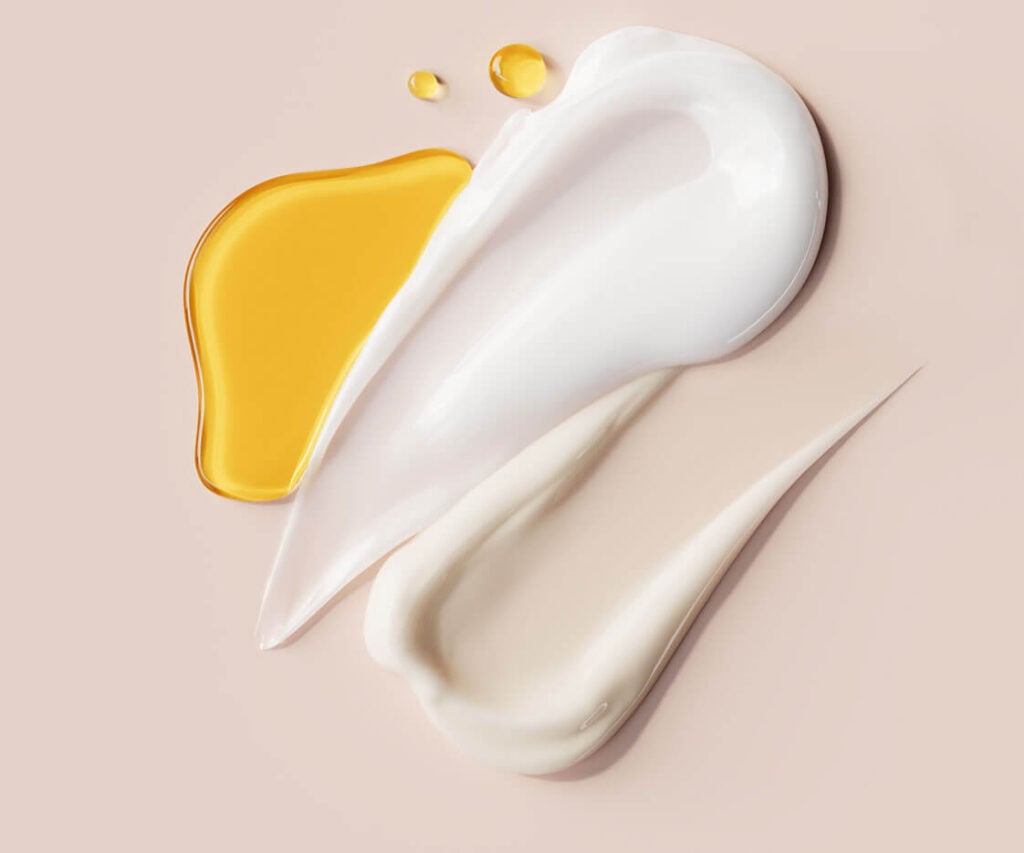
Zinc oxide is a white, powdery mineral compound derived from the element zinc. It has been used in skincare for well over a century — originally in calamine lotion and diaper creams — and its safety and efficacy profile is among the most thoroughly studied of any topical cosmetic ingredient.
As a UV filter, zinc oxide provides true broad-spectrum protection. It scatters and reflects ultraviolet radiation across the full UV spectrum, including UVA1 (the longest-wave UVA rays, associated with deep photoaging and hyperpigmentation), UVA2, and UVB (responsible for sunburn and some forms of skin cancer).
This full-spectrum coverage is one of zinc oxide’s most significant advantages. Achieving comprehensive UVA1 protection without zinc oxide in a mineral formulation is difficult. Titanium dioxide alone does not extend fully into the UVA1 range, which means formulas relying solely on titanium dioxide may leave a protection gap at the long-wave end of the UV spectrum.
Beyond UV protection, zinc oxide has documented anti-inflammatory properties. It reduces redness and calms reactive skin, which is why it is a commonly recommended ingredient for acne, rosacea, eczema, and sensitized skin. This dual function — protective and soothing — makes it particularly versatile in skincare formulations.
What Is Titanium Dioxide?

Titanium dioxide is another white inorganic mineral compound, widely used across industries ranging from paint and food to cosmetics and pharmaceuticals. In sunscreen, it functions as a UV scatterer with a slightly narrower range of coverage than zinc oxide.
Titanium dioxide provides strong UVB protection and partial coverage in the UVA2 range. It does not extend meaningfully into the UVA1 range, which means a sunscreen relying solely on titanium dioxide as its active ingredient has a significant coverage gap in the deeper UVA spectrum — the range most associated with photoaging and melasma.
The functional trade-off titanium dioxide offers is aesthetic. Compared to zinc oxide, titanium dioxide tends to have a smaller particle size and a lighter, less occlusive texture. It blends more easily into the skin, leaves less of a white cast, and is often the preferred filter in lightweight, daily-wear, and makeup-primer-adjacent formulations.
This is why many tinted mineral sunscreens use titanium dioxide as their primary or sole active: the lighter texture and smaller particle size work better with iron oxide pigments to create a seamless, skin-matching finish. However, for complete photoprotection — particularly from UVA1 — combining titanium dioxide with zinc oxide addresses the coverage limitation without sacrificing the lighter aesthetic.
UV Spectrum Coverage: A Direct Comparison
Understanding UV spectrum coverage is the most technically important part of this comparison, and it is worth being precise.
UVB Coverage (280–315 nm)

Both zinc oxide and titanium dioxide provide strong UVB protection. Titanium dioxide may have a slight efficiency advantage in this range at equivalent concentrations, but both ingredients are highly effective UVB blockers when properly formulated.
UVA2 Coverage (315–340 nm)
Zinc oxide and titanium dioxide both provide coverage in the UVA2 range. Neither has a decisive advantage here, and most well-formulated mineral sunscreens achieve adequate UVA2 coverage through appropriate concentrations of either ingredient.
UVA1 Coverage (340–400 nm)
This is where the key difference lies. Zinc oxide extends its protective range into UVA1. Titanium dioxide does not. UVA1 radiation is responsible for the deeper skin penetration that triggers collagen degradation, melanin production, and long-term photoaging. A sunscreen that misses this range delivers incomplete protection against the UV wavelengths most relevant to aging and pigmentation.
For anyone concerned about hyperpigmentation, premature aging, or melasma, zinc oxide’s UVA1 coverage is a meaningful differentiator. Formulas that combine both filters tend to offer the most complete protection profile while allowing formulators to use lower concentrations of each individual ingredient.
Texture, Feel, and Aesthetics on Skin
The aesthetic properties of each mineral filter significantly affect how a finished sunscreen performs in real-world use — particularly under makeup and on different skin tones.
White Cast
Both zinc oxide and titanium dioxide contribute to the white cast effect. Titanium dioxide typically produces a lighter white cast because its particles are smaller and scatter light more evenly. Zinc oxide, particularly at higher concentrations and in larger particle sizes, can appear more opaque on the skin.
Particle size is the key variable. Micronized and nano-sized particles of both filters reduce visible whitening significantly. However, nano-particle formulations have raised minor safety questions in some regulatory contexts — particularly around inhalation risk from spray formulas — which is worth noting when selecting an application format.
Skin Feel and Weight

Zinc oxide formulations tend to feel more substantial on the skin. At higher concentrations, they can feel slightly waxy or occlusive, which some skin types welcome as a moisturizing benefit and others find uncomfortable, particularly in humid conditions.
Titanium dioxide tends to feel lighter and drier, which suits oily and combination skin types who prefer a matte finish. Gel or water-based mineral formulas often use titanium dioxide as the primary filter for this reason.
Compatibility With Makeup
Both filters can be formulated to work well under makeup, but titanium dioxide’s lighter texture and faster dry-down make it a common choice for mineral sunscreens positioned as makeup bases or skin-perfecting SPFs. Zinc oxide formulas require slightly more time to set before applying foundation.
Which Filter Is Better for Sensitive or Acne-Prone Skin?

Both zinc oxide and titanium dioxide are considered appropriate for sensitive and reactive skin, because both are inert and do not penetrate the skin in the way that chemical filters do. Neither ingredient triggers the photochemical reactions that make certain chemical UV absorbers problematic for sensitive types.
Zinc oxide has an additional functional advantage here: its anti-inflammatory and antimicrobial properties make it a beneficial ingredient for acne-prone skin, not merely a neutral one. Zinc is a well-established acne-management ingredient in prescription and over-the-counter preparations, and its inclusion in a sunscreen formulation adds a layer of skin-supporting benefit beyond UV protection.
If acne, rosacea, or general sensitivity is a primary concern, zinc oxide is generally the preferred mineral filter. For a detailed breakdown of how to select and use mineral sunscreen for this skin type, the dedicated guide on the best mineral sunscreen for oily and acne-prone skin covers formulation selection, ingredient compatibility, and routine integration in full. This formulation approach works well for acne-prone and sensitive skin.
Combination Formulas: When Both Filters Work Together

Many of the most effective mineral sunscreens on the market use both zinc oxide and titanium dioxide in a single formulation. This approach is not a compromise — it is a deliberate strategy that leverages the strengths of each filter while managing their individual limitations.
By combining the two ingredients at lower concentrations than would be required of either alone, formulators can achieve full-spectrum UV coverage while improving the overall texture and blendability of the product. The lighter feel of titanium dioxide moderates the heavier texture of zinc oxide. The full-spectrum coverage of zinc oxide compensates for titanium dioxide’s UVA1 gap.
When evaluating a combination mineral sunscreen, look at the total mineral active concentration. A formula with 7.5 percent zinc oxide plus 5 percent titanium dioxide will outperform a formula with 5 percent titanium dioxide alone — not because the numbers are larger, but because the combined spectrum coverage is more complete. Read this article from Women’s Health for more information on zinc oxide vs titanium dioxide sunscreen.
How to Read the Label: Practical Guidance
Armed with this understanding, here is how to apply it when evaluating a mineral sunscreen label.
For full-spectrum UVA + UVB protection

Look for zinc oxide as a primary active, at a minimum of 10 percent, or a combination formula that includes both zinc oxide and titanium dioxide. Verify the broad spectrum designation on the front of the label.
For lighter texture and reduced white cast
Formulas listing titanium dioxide as a primary or sole active will typically feel lighter. Tinted options using iron oxides with titanium dioxide will blend most seamlessly. If zinc oxide is present, look for micronized or finely milled formulations.
For acne-prone or reactive skin
Prioritize zinc oxide as the lead active. Confirm non-comedogenic labeling, oil-free base, and absence of potentially irritating ingredients like synthetic fragrance, alcohol denat, or sensitizing botanical extracts.
For makeup compatibility
Lightweight titanium dioxide-primary formulas typically sit better under makeup. Allow full absorption before applying foundation and set with a minimal amount of translucent powder if pilling is a concern.
Frequently Asked Questions
Is zinc oxide or titanium dioxide better for sensitive skin?
Both are suitable for sensitive skin, but zinc oxide is typically the preferred option because its anti-inflammatory properties provide an additional benefit beyond UV protection. It is less likely to cause irritation than chemical UV filters and has a long record of use in gentle skincare formulations.
Does titanium dioxide protect against UVA rays?
Titanium dioxide provides partial UVA2 protection but does not extend into the UVA1 range. For comprehensive UVA coverage, look for formulas that include zinc oxide or combine both mineral filters.
Are nano zinc oxide and nano titanium dioxide safe?
Current regulatory bodies including the FDA and EU Scientific Committee on Consumer Safety have assessed nano-sized mineral UV filters and found them acceptable for use in topical sunscreen formulations. Nano particles do not penetrate healthy skin in clinically significant amounts. The primary safety note applies to aerosol spray formats, where inhalation of nano particles during application is a consideration.
Can I use a zinc oxide sunscreen every day?
Yes. Zinc oxide is one of the most reliably safe ingredients in the entire sunscreen category and is appropriate for daily use across all age groups, including children and pregnant individuals.
AI-assisted, human-verified. At LaLaDaisy.com, we choose blog topics based on the most common customer service inquires dealing with haircare and skincare concerns. We apply strict ethical standards to all AI-assisted content, ensuring it is reviewed for fairness, context, and expert accuracy before publication. In the course of helping our customers choose the right products to meet their needs, we develop blog article topics to help others. Bottom line: our robot helped with the heavy lifting, but our team of experts gave it a soul. Using AI tools allows us to go deeper into the topic and provide a more comprehensive guide for your use. At LaLadaisy.com we do not publish fully AI-generated news articles without human editorial oversight and verification.
Table of Contents