
Introduction: The Problem That Turns People Away from Mineral SPF

You have been told mineral sunscreen is better for sensitive skin. You have been told zinc oxide is the gold standard of UV protection. You have bought the product, applied it — and immediately looked like you lost a fight with a bag of flour. The white cast is real, it is frustrating, and for people with medium to deep skin tones, it is not a minor inconvenience. Don’t worry! Let’s learn how to apply mineral sunscreen without a white cast.
But here is the thing: the white cast problem is solvable. It is a function of formula choice and application technique — two variables that are entirely within your control. Most people who struggle with mineral sunscreen white cast are using the wrong formulation for their skin tone, applying it incorrectly, or both.
This guide covers, in detail, how to apply mineral sunscreen without white cast. You’ll get the exact steps to apply mineral sunscreen seamlessly, which formulations work best for which skin tones, and how to integrate it naturally into a makeup routine. For a full foundation on why mineral sunscreen works the way it does and who it is best suited for, the complete guide to mineral sunscreen is worth reading alongside this.
Why Mineral Sunscreen Leaves a White Cast

Understanding the cause makes the solution obvious. Mineral sunscreens use zinc oxide and titanium dioxide — white, opaque mineral particles — as their active UV filters. These particles sit on the skin’s surface and reflect light, which is precisely the mechanism that makes them effective UV blockers. That same reflective property also creates the white or grey tint visible on the skin.
The degree of white cast depends on three factors: the type and concentration of mineral actives used, the particle size in the formulation, and the presence or absence of tinting pigments.
Zinc oxide at high concentrations in large particle sizes produces the most visible white cast. Micronized or nano-sized zinc oxide particles scatter light more evenly and leave far less residue. Titanium dioxide, with its naturally smaller particle size, blends more cleanly — but as noted earlier, it provides less complete UVA coverage when used alone. Formulas that combine both at lower concentrations generally offer the best balance of protection and wearability.
Tinted mineral sunscreens address the problem at the formulation level by incorporating iron oxide pigments that neutralize the white reflection and match a range of skin tones. This is the most effective solution for medium to deep skin tones and is increasingly the professional recommendation for anyone who has experienced persistent casting.
Step-by-Step: How to Apply Mineral Sunscreen Without White Cast
Step 1: Start With Fully Absorbed Skincare Underneath
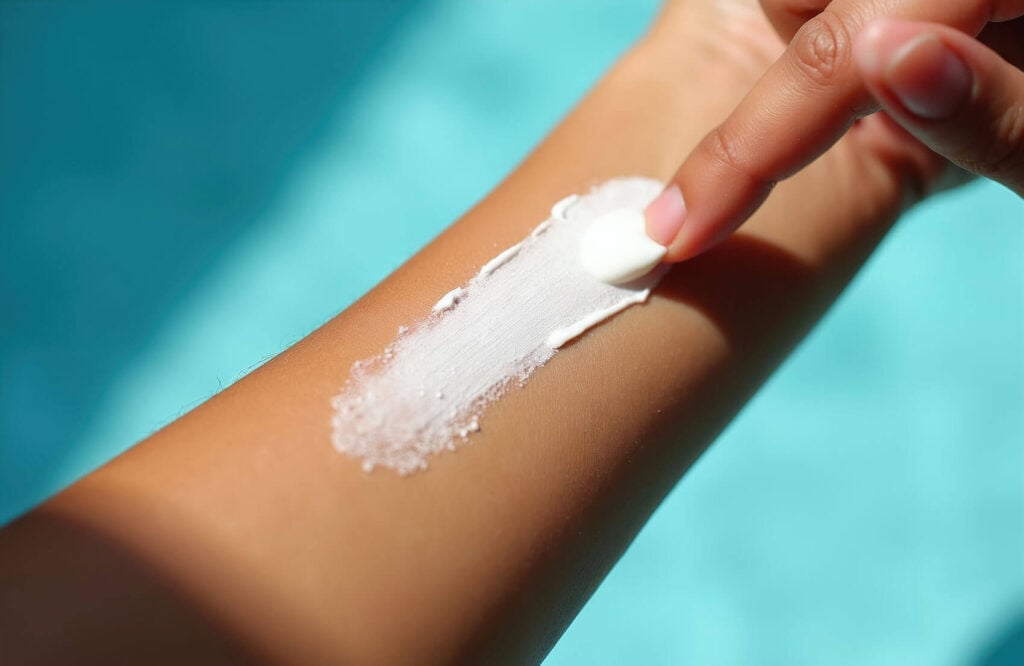
The most common technical mistake in mineral sunscreen application is applying SPF over skincare that has not fully absorbed. Serums, oils, or moisturizers that are still wet on the skin surface create an unstable base that causes the mineral formula to sit unevenly, move around as you blend, and increase the likelihood of both white cast and pilling.
Allow each step of your routine sixty to ninety seconds to absorb before proceeding. This is not optional when learning how to apply mineral sunscreen without a white cast — it directly affects how well the mineral sunscreen adheres and distributes across the skin.
Step 2: Apply in Small Sections, Not All at Once
Dispensing the entire recommended amount of sunscreen at once and trying to blend it across the full face in a single movement is a reliable way to get streaking. Mineral formulas are thicker than chemical alternatives and require deliberate sectioning.
Dispense a small amount — approximately the size of a pea — onto three or four points across the face: both cheeks, the forehead, and the chin. Blend each section immediately before moving to the next. This approach allows the formula to sit evenly without accumulating in patches.
Step 3: Use Patting or Pressing Motions, Not Rubbing

Rubbing mineral sunscreen into the skin in circular or back-and-forth motions tends to displace it unevenly and drag the white particles into fine lines, pores, and hairline edges where they become more visible. Pressing or patting the product into the skin distributes the mineral particles more evenly and creates a smoother, more uniform finish.
Use the pads of your fingers or the flat of your palm, and work in gentle pressing and smoothing motions. Work outward from the center of the face toward the hairline and jawline, ensuring full coverage at the edges.
Step 4: Set with a Light Powder or Skin Prep Primer
After the mineral sunscreen has been applied and is nearly dry — typically thirty to sixty seconds — a very light dusting of translucent setting powder can significantly reduce the white cast appearance by mattifying the surface and slightly blurring the mineral particles. Use the smallest amount necessary, applied with a fluffy brush in circular motions.

If you are wearing makeup over your SPF, applying a skin prep primer between the sunscreen and foundation can also smooth the surface and improve how the foundation blends over a mineral base. Be aware that certain primers and foundations can cause mineral sunscreen pilling under makeup — a problem covered in full in the guide on why mineral sunscreen pilling happens and how to address it.
Step 5: Choose the Right Amount
Applying too much mineral sunscreen is a common reason the white cast feels unmanageable. The recommended amount for UV protection — approximately one quarter teaspoon for the face — is calibrated to deliver adequate coverage without layering on excessive mineral particle density. If your sunscreen consistently looks white regardless of technique, try reducing the amount slightly and supplementing with a separate SPF-containing product (like a tinted moisturizer or powder SPF) rather than applying a heavy single layer.
Choosing the Right Formulation for Your Skin Tone
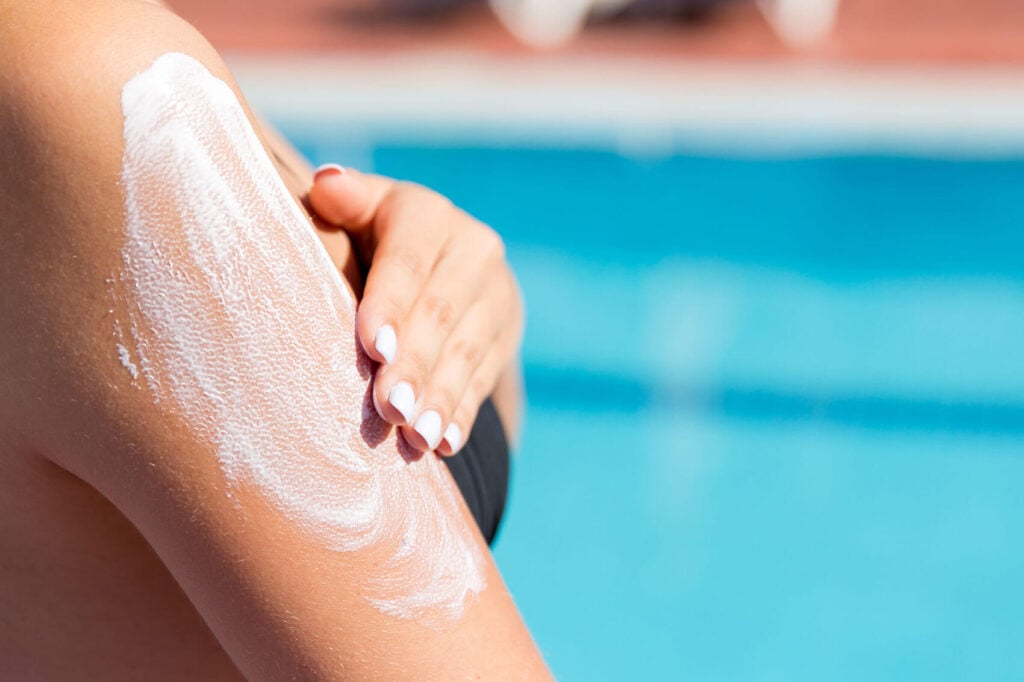
Technique only solves part of the white cast equation. Formulation selection is equally critical, particularly for deeper skin tones where the contrast between the mineral particles and the skin creates the most visible effect.
Light Skin Tones
Those with light skin tones often find that a well-formulated clear mineral sunscreen with micronized zinc oxide or titanium dioxide is entirely workable with correct technique. The white cast at low concentrations may be minimal enough to function as a subtle brightening effect rather than a problem.
Medium Skin Tones
Medium skin tones benefit most from tinted mineral sunscreens with a light to medium tint — often labeled as universal or nude tones. These formulas use iron oxide pigments to balance the white reflection and blend more naturally into skin with warm, neutral, or olive undertones.
Deep Skin Tones

For deep skin tones, untinted clear mineral sunscreens with high zinc oxide concentrations are consistently problematic. Tinted formulas designed specifically for deeper skin tones — or universally tinted formulas with deeper pigment ranges — are the practical solution. Iron oxide enrichment in these formulations also provides added protection against visible light, which is a meaningful bonus for those managing hyperpigmentation.
Why Tinted Mineral Formulas Are the Professional Recommendation
Tinted mineral sunscreens work because iron oxides neutralize the grey-white cast at the formulation level rather than relying entirely on technique to compensate. They also provide broader light protection that is particularly relevant for pigmentation concerns. For anyone who has struggled consistently with mineral sunscreen aesthetics, switching to a tinted formulation is the single most effective change they can make.
Applying Mineral Sunscreen Under Makeup
Mineral sunscreen and makeup are entirely compatible — the key is the order of operations and allowing sufficient drying time between steps.
Wait Before Applying Foundation
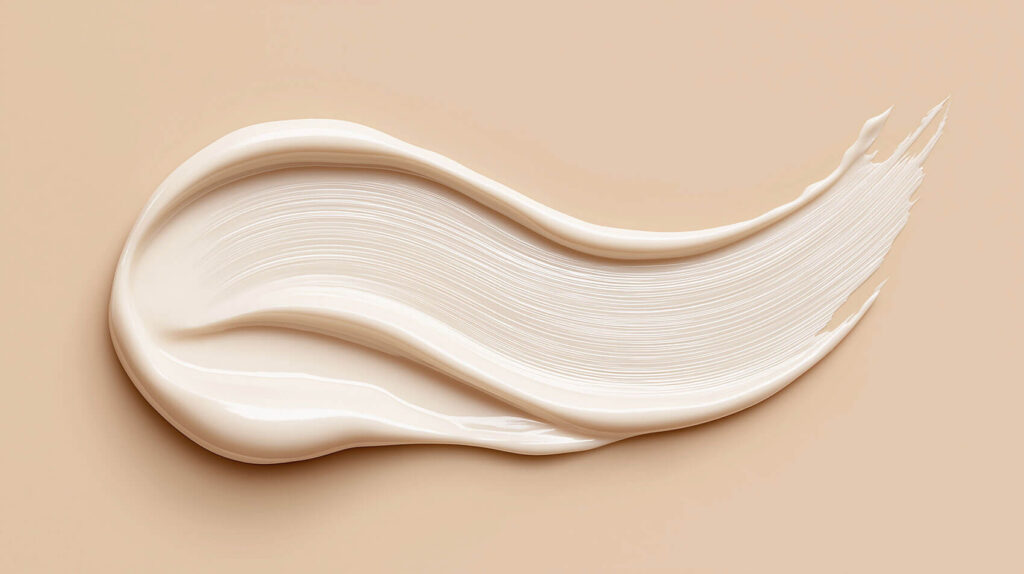
Allow mineral sunscreen to fully absorb — typically one to two minutes after application — before applying any makeup over it. Foundation applied too soon after SPF moves the mineral particles around rather than sitting on top of them, which produces both uneven coverage and a more visible white residue in areas of friction.
Use Makeup That Works With Mineral Formulas
Water-based foundations and cushion compacts tend to work well over mineral sunscreens. Heavy silicone-based primers can cause conflict with the mineral base, contributing to pilling. Test compatibility by applying a thin layer of foundation over a dry mineral base — if it blends smoothly without balling, the combination is compatible.
Consider a Tinted Mineral SPF as a Foundation Replacement
For a simplified routine, many tinted mineral sunscreens offer sufficient coverage to function as a standalone complexion product — eliminating the SPF-plus-foundation layering challenge entirely. This approach reduces the number of steps that can cause incompatibility and is particularly useful for oily skin types that benefit from fewer product layers.
Frequently Asked Questions
Why does mineral sunscreen look grey on dark skin tones?
The grey cast on deeper skin tones results from the white mineral particles sitting on top of the skin and reflecting light in a way that conflicts with the skin’s natural tone. Tinted mineral sunscreens with iron oxides neutralize this reflection by introducing compensating pigments that match deeper skin tones.
Does applying less mineral sunscreen reduce the white cast?
Applying less product does reduce white cast, but it also reduces UV protection. The recommended one quarter teaspoon is calibrated to the SPF level on the label — significantly less than this delivers significantly less protection. The better solution is to switch to a tinted or micronized mineral formula rather than under-applying a formula that leaves a cast.
Does tinted mineral sunscreen provide the same UV protection as clear mineral sunscreen?
Yes, if properly formulated. The tinting pigments — typically iron oxides — do not reduce the UV protection provided by the zinc oxide or titanium dioxide in the formula. They also add a layer of visible light protection, which is beneficial for anyone managing pigmentation concerns.
Can I mix mineral sunscreen with foundation to reduce white cast?
Mixing sunscreen with foundation is not recommended. Diluting the sunscreen with another product reduces the concentration of the active ingredients and changes how the formula distributes on the skin, which directly compromises UV protection. Use them as separate steps.
AI-assisted, human-verified. At LaLaDaisy.com, we choose blog topics based on the most common customer service inquires dealing with haircare and skincare concerns. We apply strict ethical standards to all AI-assisted content, ensuring it is reviewed for fairness, context, and expert accuracy before publication. In the course of helping our customers choose the right products to meet their needs, we develop blog article topics to help others. Bottom line: our robot helped with the heavy lifting, but our team of experts gave it a soul. Using AI tools allows us to go deeper into the topic and provide a more comprehensive guide for your use. At LaLadaisy.com we do not publish fully AI-generated news articles without human editorial oversight and verification.