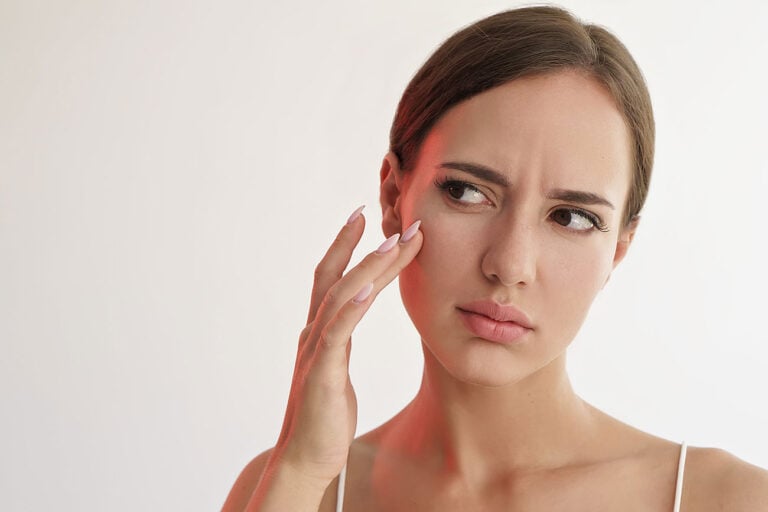

Before you buy another serum or switch moisturizers again, there’s one question worth answering first: what’s your skin type? Knowing how to determine your skin type is the foundation of every effective routine. It tells you which textures to reach for, which ingredients will help, and which products are likely to cause problems.
The good news is that you don’t need a dermatologist’s office or special equipment to figure it out. A few simple at-home tests, plus a little observation, will tell you most of what you need to know.
Why Your Skin Type Matters
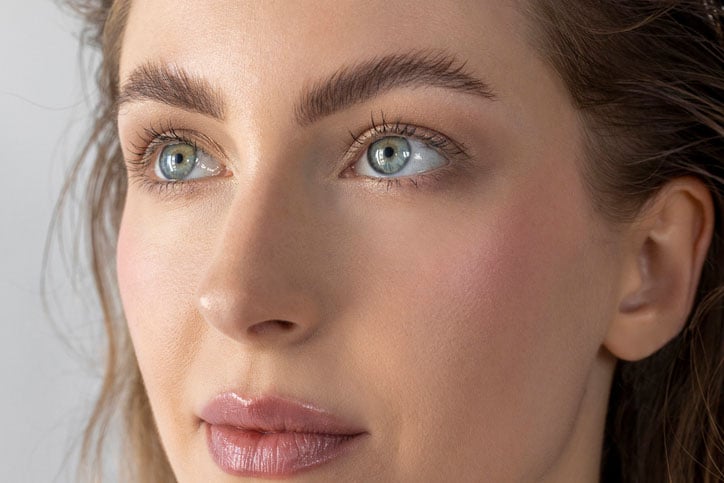
Skin type describes how your skin behaves at baseline: how much oil it produces and how well it holds onto moisture. Using products designed for a different skin type is one of the most common reasons routines fail. A heavy cream can clog oily pores. A clarifying cleanser can leave dry skin cracked and irritated. Once you know your type, choosing products becomes much easier.
Most people fall into one of five categories:
- Dry: Produces little oil and feels tight, rough, or flaky.
- Oily: Produces excess oil and looks shiny, with visible pores and frequent breakouts.
- Combination: Oily in the T-zone (forehead, nose, and chin), normal or dry on the cheeks.
- Normal: Balanced, with little oiliness or dryness and few sensitivities.
- Sensitive: Reacts easily with redness, stinging, or itching. Sensitivity can occur alongside any other skin type.
How to Determine Your Skin Type: Prep Your Skin First
For accurate results, start with a clean slate. Wash your face with a gentle, mild cleanser and pat it dry. Then, and this is the important part, don’t apply any toner, serum, moisturizer, or makeup. You want to see what your skin does on its own.

Try to test on an ordinary day. Avoid testing right after a workout, a long hot shower, or a day in the sun, since all of these can temporarily change how your skin behaves.
Test 1: The Bare-Face Method
This is the simplest test, and it’s surprisingly reliable.

- Cleanse your face and pat it dry.
- Wait 30 minutes without applying any products.
- Notice how your skin looks and feels.
- Wait another 30 minutes and check again.
What your results mean:
- Tight, rough, or flaky all over: You likely have dry skin.
- Shiny across your forehead, nose, chin, and cheeks: You likely have oily skin.
- Shiny only on the T-zone, with comfortable or tight cheeks: You likely have combination skin.
- Comfortable, with no noticeable shine or tightness: You likely have normal skin.
Test 2: The Blotting Paper Test
This test is quicker and gives you a visual read on oil production.
- Cleanse your face and wait about 30 minutes.
- Gently press clean blotting papers on different areas of your face: forehead, nose, chin, and each cheek.
- Hold each sheet up to the light.

What your results mean:
- Little to no oil on any sheet: Dry skin.
- Oil on every sheet, including the cheeks: Oily skin.
- Oil on the forehead, nose, and chin sheets, but not the cheeks: Combination skin.
- A small amount of oil on the T-zone sheets only: Normal skin.
Test 3: The Weekly Observation Method

Single tests capture just one moment. For the most accurate picture, pay attention to your skin over the course of a week. Take notes on questions like these:
- How does your skin feel right after washing? Tight, comfortable, or still oily?
- How shiny is your face by midday, and where?
- Where do you tend to break out?
- How does your moisturizer feel? Does it absorb quickly or sit on top?
- Does your makeup stay put, cling to dry patches, or slide off?
Patterns over several days are more reliable than any single test, especially since stress, hormones, and weather can cause short-term changes.
Signs Your Products Don’t Match Your Skin Type

Sometimes your current products offer the clearest clue about your skin type. If you notice any of the following, your routine may be working against you:
- Your skin feels tight or stings after cleansing. Your cleanser may be too harsh, which often points to dry or sensitive skin.
- You’re shiny within an hour of moisturizing. Your moisturizer may be too rich for oily or combination skin.
- You have new breakouts in specific areas. A heavy product may be clogging pores in your T-zone.
- Your skin looks dull and flaky despite moisturizing. You may need a richer cream, or a humectant serum underneath it.
- Your makeup separates or pills. Your skincare layers may be too heavy, or not absorbing before the next step.
Skin Type vs. Skin Condition
It’s easy to confuse your skin type with a temporary skin condition. Here are two common mix-ups:
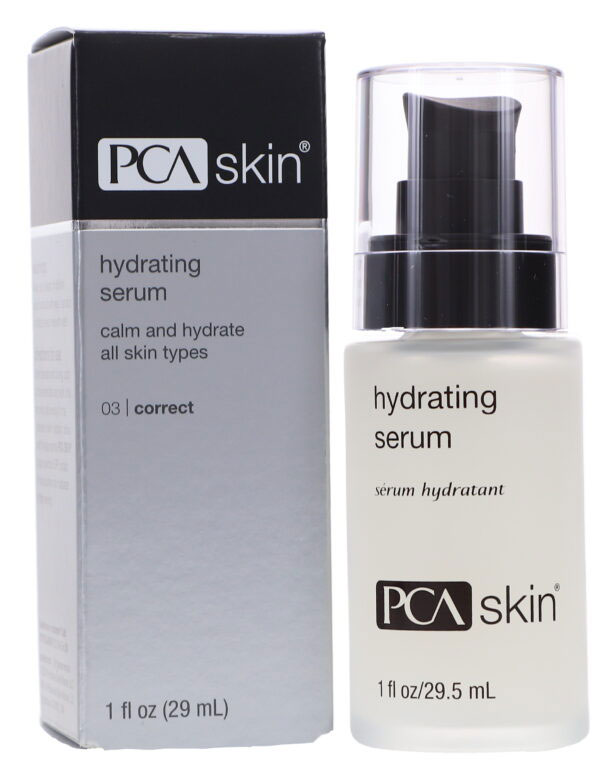
- Dehydrated vs. dry: Dry skin lacks oil, while dehydrated skin lacks water. Even oily skin can be dehydrated, feeling tight while still producing shine. Hydrating ingredients like glycerin and hyaluronic acid help dehydrated skin of any type, which is why a simple humectant serum such as PCA Skin Hydrating Serum fits into almost any routine.
- Acne vs. oily skin: Breakouts are more common with oily skin, but acne can affect any skin type.
If you have persistent redness, scaling, or breakouts that don’t respond to over-the-counter care, a dermatologist can help identify conditions like eczema or rosacea.
Your Skin Type Can Change

Your skin isn’t static. Age, hormones, climate, medications, and even your current products can shift your skin type over time. Skin often becomes drier with age, oilier in humid weather, and more combination-like during hormonal changes. It’s a good idea to retest every season, or whenever your routine suddenly stops working.
What to Do Once You Know Your Skin Type
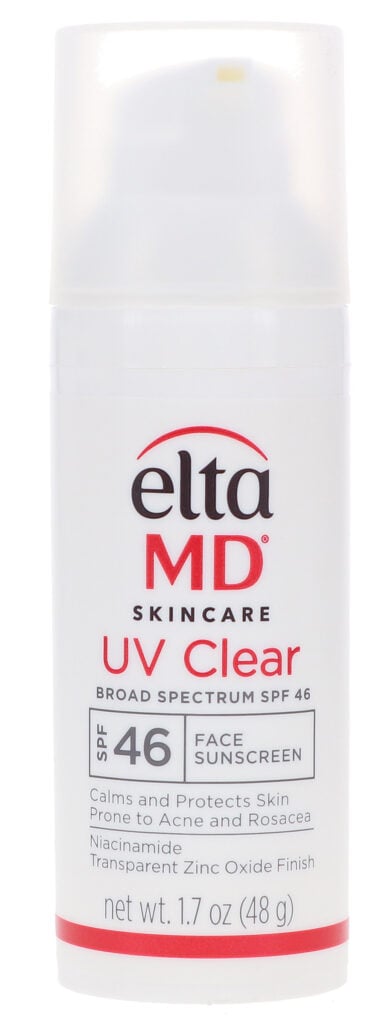
Once you’ve identified your type, the next step is building a routine that fits. Every routine follows the same four steps: cleanse, treat, moisturize, and protect. Every skin type also needs daily broad-spectrum sunscreen. A lightweight, oil-free option like EltaMD UV Clear Broad Spectrum SPF 46 is a versatile choice for many skin types, especially if you’re prone to shine or breakouts.
Here’s where to go next:
- Dry skin: Follow our step-by-step routine built for dry skin, featuring rich creams and hydrating serums.
- Oily skin: Try our oily skin routine for morning and night to control shine without stripping.
- Combination skin: Learn how to treat each zone with our combination skin care routine.
For a side-by-side comparison of all three, see our guide to building a routine tailored to your skin type.
Frequently Asked Questions
What is the easiest way to determine my skin type?
The bare-face method is the easiest. Cleanse your face, skip all products, and check how your skin looks and feels after an hour. Tightness points to dry skin, all-over shine to oily skin, and T-zone shine to combination skin.
Can my skin type change over time?
Yes. Age, hormones, climate, and lifestyle can all shift your skin type. Many people find their skin becomes drier as they get older.
Is sensitive skin a skin type?
Sensitive skin is often treated as its own type, but it can occur alongside dry, oily, or combination skin. If your skin reacts easily to products, choose fragrance-free formulas and patch-test anything new.
Do I need special products if I have normal skin?
Normal skin is the most flexible type. A gentle cleanser, a lightweight moisturizer, and daily sunscreen are usually all it needs.
AI-assisted, human-verified. At LaLaDaisy.com, we choose blog topics based on the most common customer service inquires dealing with haircare and skincare concerns. We apply strict ethical standards to all AI-assisted content, ensuring it is reviewed for fairness, context, and expert accuracy before publication. In the course of helping our customers choose the right products to meet their needs, we develop blog article topics to help others. Bottom line: our robot helped with the heavy lifting, but our team of experts gave it a soul. Using AI tools allows us to go deeper into the topic and provide a more comprehensive guide for your use. At LaLadaisy.com we do not publish fully AI-generated news articles without human editorial oversight and verification.