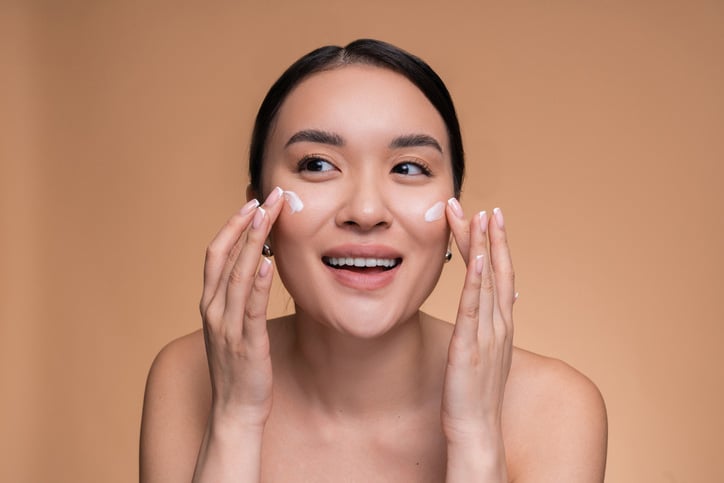

PCA Skin products are professional-grade cleansers, serums, moisturizers and treatments formulated to address specific skin concerns, including excess oil and breakouts, dryness, fine lines and uneven tone. The short answer to which ones you need: identify your primary concern, choose a cleanser that suits your skin type, add one targeted treatment serum, and finish with the right moisturizer and a daily broad-spectrum sunscreen.
That concern-first approach is how estheticians build routines in the treatment room, and it is how this guide is organized. Below, you will learn what sets PCA Skin apart, which formulas match the four most common skin concerns, and how to combine them into a morning and evening routine that works without overloading your skin.
What Are PCA Skin Products?

PCA Skin is a professional skincare brand founded in 1990 by an aesthetician and developed with a dermatologist. Its formulas are researched and designed by an in-house PhD chemist, and the brand is best known in spas and medical offices for its chemical peels, with more than one million PCA Skin peels performed around the world each year.
The at-home collection grew out of that professional work. The products are designed to maintain and extend the results of in-office treatments, which is why the line leans on proven, well-studied ingredients: hyaluronic acid, peptides, pure vitamin C and vitamin E, niacinamide, and gentle acids such as lactic acid and gluconolactone. Many PCA Skin formulas are free of synthetic fragrance and parabens, and the brand puts real emphasis on tolerability, so its products are built to deliver results without unnecessary irritation.
For everyday shoppers, that translates into a short list of clear PCA Skin benefits:
- Targeted formulas. Most products are designed around one primary concern rather than trying to do everything at once.
- Clinically familiar ingredients. You will recognize the actives from dermatologist and esthetician recommendations.
- Professional heritage. The same brand that formulates in-office peels formulates the at-home products that support them.
- Room to build. Cleansers, serums, moisturizers and sunscreens are designed to layer together into a complete routine.
Why Should You Choose Skincare by Concern Rather Than by Product Type?
Choosing by concern keeps your routine focused and effective. A cabinet full of serums chosen at random often means several products competing for the same step while your actual priority goes unaddressed. When you start with the concern you most want to improve, every product earns its place.

Most people have one primary concern and one or two secondary ones. Someone with oily skin may also notice early fine lines. Someone with dry skin may also see dullness. Address the primary concern first, then add a second treatment once your skin has adjusted. The sections below follow that logic, concern by concern.
Which PCA Skin Products Work Best for Oily and Acne-Prone Skin?
Oily, breakout-prone skin needs thorough but gentle cleansing, lightweight hydration and a few targeted treatments. The goal is to manage excess oil without stripping the skin, because harsh products tend to trigger more oil, not less.
Here is what you need to know about the cause. Every pore contains a sebaceous gland that produces sebum, the oil that keeps skin supple and protected. Hormones, genetics, heat and humidity can all push those glands into overdrive. When excess sebum mixes with dead skin cells, pores clog, and clogged pores are the starting point for blackheads, whiteheads and inflamed blemishes.
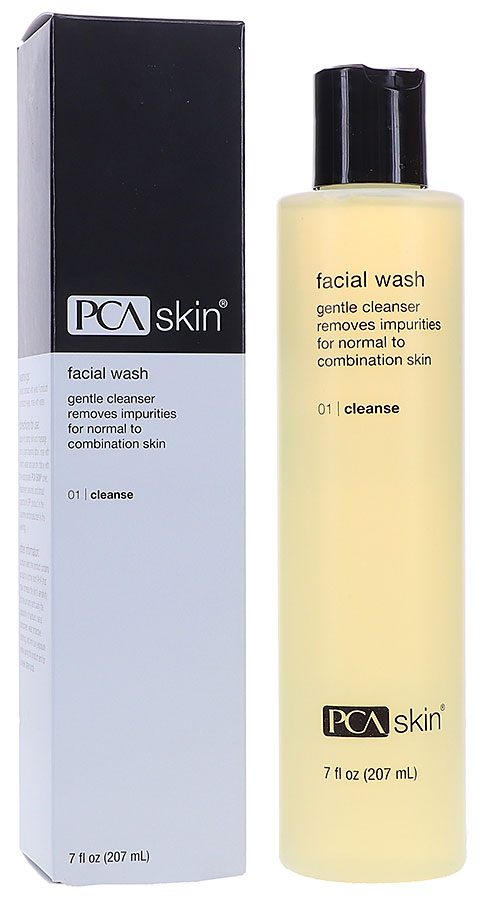
PCA Skin Facial Wash is the brand’s everyday foundation cleanser and a smart starting point for almost every skin type, including combination and oily skin. It removes makeup, oil, dirt and environmental impurities while lactic acid and aloe vera help keep skin comfortable, and willow bark extract adds a gentle clarifying touch. It is formulated without synthetic dyes, fragrances or parabens, so it suits skin that reacts easily.
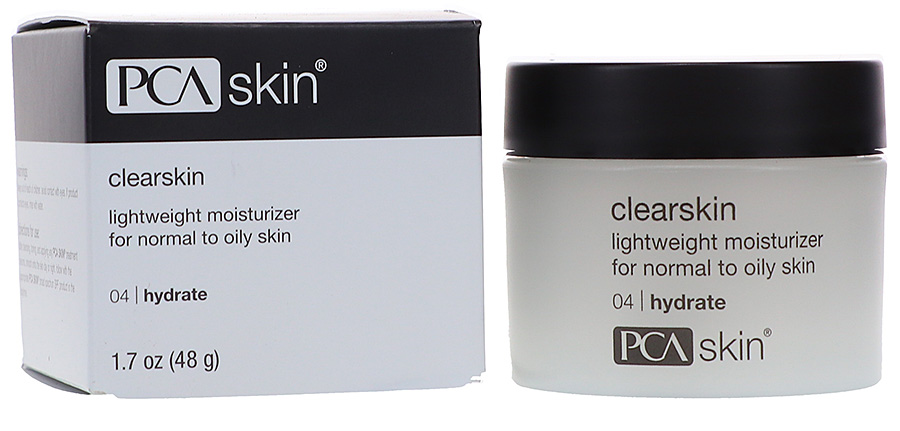
If your oil and congestion are more persistent, PCA Skin Facial Wash Oily/Problem steps up the cleansing power with a higher level of alpha hydroxy acids, including lactic acid and gluconolactone, along with soothing aloe. Follow either cleanser with PCA Skin ClearSkin, a moisturizer for blemish-prone skin that pairs niacinamide with hyaluronic acid to hydrate without heaviness. Skipping moisturizer is one of the most common oily-skin mistakes, and ClearSkin makes that step easy to keep.
For a deeper look at the causes and the daily habits that help, see our guide on how to control oily skin and breakouts.
Which PCA Skin Products Help Dry and Dehydrated Skin?
Dry and dehydrated skin both need more moisture, but they are not the same problem, and the difference changes which products help most.

Dry skin is a skin type. It produces less oil, so the protective lipid barrier is thinner and moisture escapes more easily. Dehydrated skin is a temporary condition that any skin type can experience, including oily skin. It lacks water rather than oil, often because of weather, indoor heating, harsh cleansers or over-exfoliation. Dry skin tends to feel rough and look flaky. Dehydrated skin tends to feel tight, look dull and show fine, crepey lines that soften once hydration is restored.
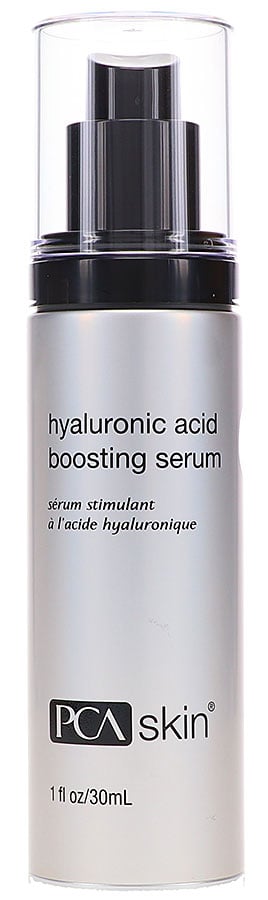
The most effective approach combines a humectant, which draws water into the skin, with richer ingredients that hold it there. PCA Skin Hyaluronic Acid Boosting Serum is the anchor of that strategy and one of the best-known PCA Skin serums. It combines hyaluronic acid and smaller hydrolyzed hyaluronic acid with the brand’s HA-Pro Complex, which is designed to support the skin’s own hyaluronic acid production. Niacinamide and ceramides round out the formula to support a healthy moisture barrier.
Pair the serum with a non-stripping cleanser and a moisturizer suited to your skin type. For truly dry skin, PCA Skin Creamy Cleanser and PCA Skin Collagen Hydrator, one of the richest PCA Skin moisturizers, add cushioning oils and butters that seal hydration in. For a full walkthrough of the layering technique and daily habits, read our guide on how to hydrate dry skin.
Which PCA Skin Products Target Fine Lines and Wrinkles?
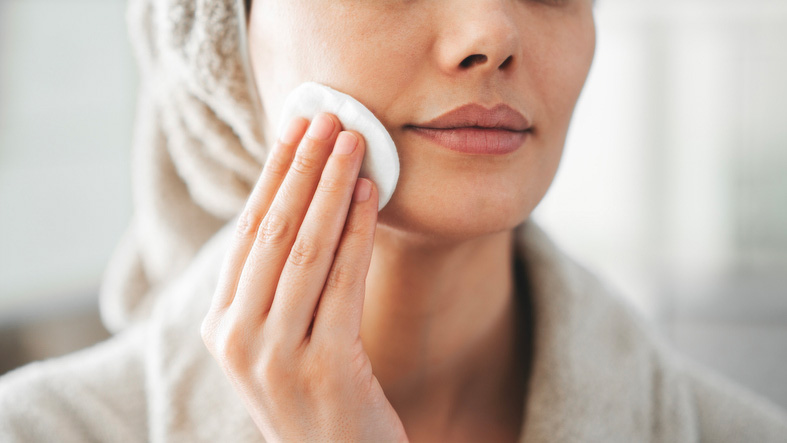
Fine lines and wrinkles respond best to a combination of targeted peptides, antioxidant protection, consistent hydration and daily sunscreen. No topical product erases deep wrinkles, but the right formulas can visibly soften fine lines and improve texture over time.
Lines form for several overlapping reasons. Collagen and elastin production slows gradually with age, so skin becomes thinner and less resilient. Ultraviolet exposure accelerates that breakdown. And repeated facial expressions, such as squinting, frowning and smiling, fold the skin in the same places thousands of times until the creases stay visible at rest. Dehydration makes all of it look more pronounced.
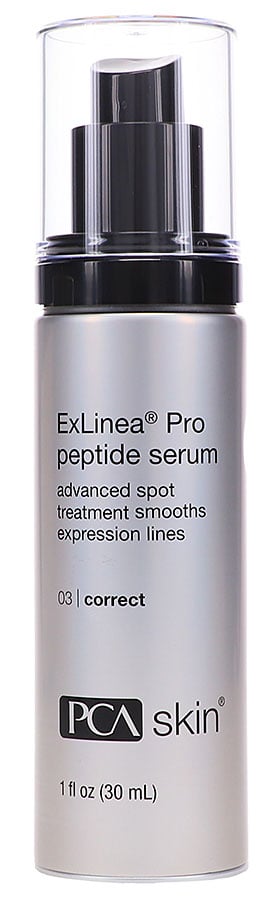
PCA Skin Exlinea Pro Peptide Serum is the brand’s most advanced answer to expression lines. Its Peptide-Pro Complex combines acetyl octapeptide-3 and acetyl hexapeptide-8, two peptides studied for their ability to soften the look of lines caused by repeated muscle movement, with a polysaccharide and amino acid blend that supports moisture retention. Apply it directly to lines around the eyes, forehead and mouth twice a day.
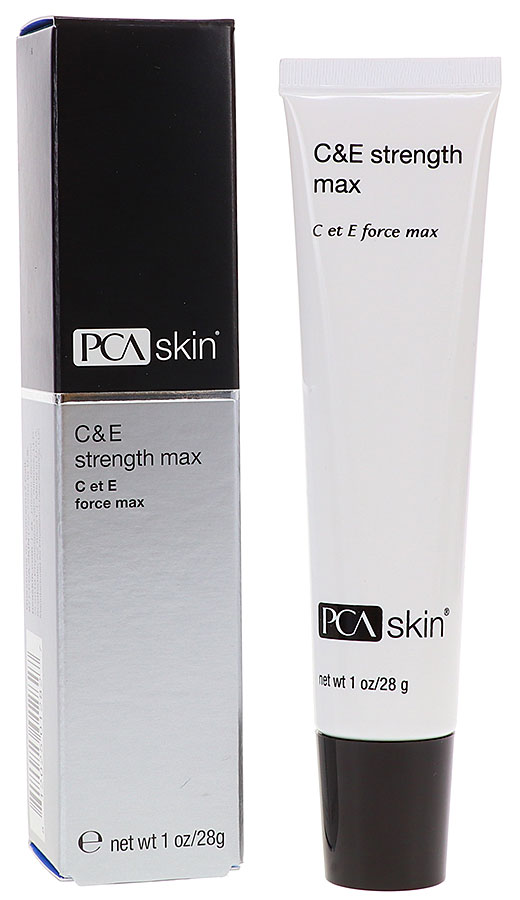
Antioxidants complete the picture by helping defend the skin against the free radical damage that contributes to premature aging. Vitamin C formulas such as PCA Skin C&E Strength Max add a brightening, smoothing benefit as well. Our dedicated guide on how to reduce fine lines and wrinkles explains which results are realistic and how to layer these treatments correctly.
Which PCA Skin Products Brighten an Uneven Skin Tone?
An uneven skin tone improves with three habits working together: antioxidant protection, regular gentle exfoliation and daily broad-spectrum sunscreen. Vitamin C is the anchor ingredient, because it brightens while helping protect against the environmental damage that causes discoloration in the first place.
Uneven tone usually has more than one cause. Sun exposure triggers extra melanin production, which shows up as patches and spots. Breakouts can leave flat brown or pink marks behind. Slow cell turnover lets dull, dead cells sit on the surface, so the complexion looks flat and grey rather than luminous. Pollution and other environmental stressors add to the problem by generating free radicals.
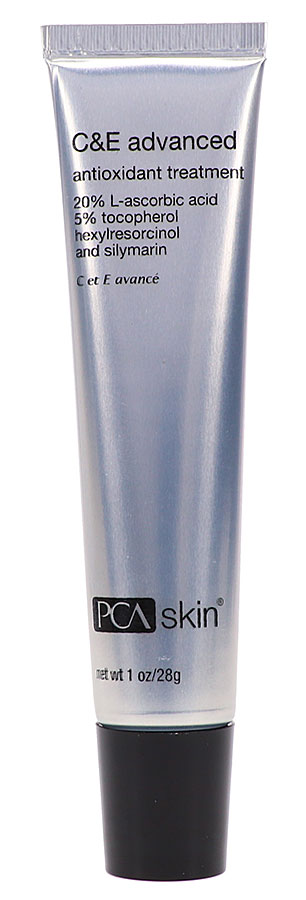
PCA Skin C&E Advanced with Hexylresorcinol and Silymarin is the brand’s most advanced antioxidant formula. It contains 20% pure vitamin C and 5% vitamin E, plus 1% hexylresorcinol and 1% silymarin, a milk thistle derivative, to brighten and promote a more even-looking tone. Its water-free formula helps keep the vitamin C stable. Apply it in the morning after cleansing, then follow with moisturizer and sunscreen.
Pair it with a gentle exfoliating step, such as PCA Skin Daily Exfoliant, and a sunscreen you will wear every day, such as PCA Skin Hydrator Plus Broad Spectrum SPF 30. Our guide on how to improve uneven skin tone covers the difference between temporary dullness and true hyperpigmentation in more detail.
How Do You Build a PCA Skin Skincare Routine?
A PCA Skin skincare routine follows the same order as any well-built routine: cleanse, treat, moisturize and protect in the morning, then cleanse, treat and moisturize at night. Apply products from the thinnest texture to the thickest, and give each new active a few weeks before adding another.
What Does a Morning PCA Skin Routine Look Like?
The morning routine prepares and protects your skin for the day.
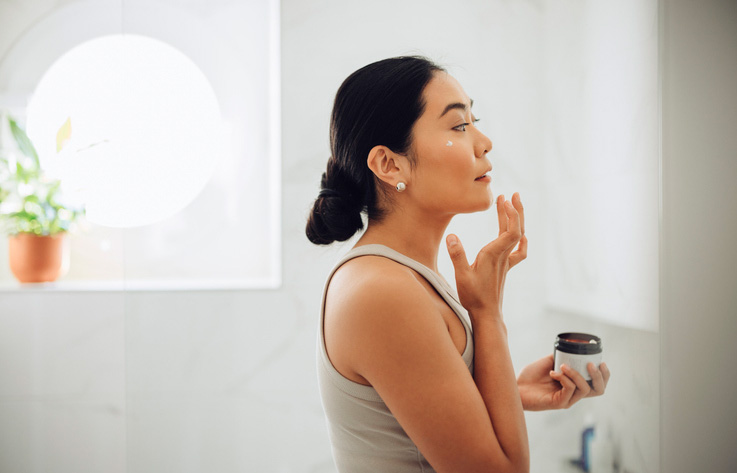
- Cleanse. Use PCA Skin Facial Wash, or the cleanser best matched to your skin type.
- Apply an antioxidant serum. A vitamin C formula such as C&E Advanced belongs in the morning, when it can help defend against environmental stressors.
- Add a hydrating serum if needed. Hyaluronic Acid Boosting Serum layers well under other products.
- Moisturize. Choose a lightweight formula for oily skin or a richer cream for dry skin.
- Protect. Finish with a broad-spectrum sunscreen of SPF 30 or higher, every day, in every season.
What Does an Evening PCA Skin Routine Look Like?
The evening routine removes the day’s buildup and gives treatments uninterrupted time to work.
- Cleanse thoroughly. Remove sunscreen, makeup and oil. Double cleansing is worth considering if you wear water-resistant sunscreen.
- Treat. Apply targeted serums, such as Exlinea Pro Peptide Serum for expression lines.
- Moisturize. Seal everything in with the moisturizer suited to your skin.
- Add an occasional treatment. Use masks, such as a weekly clay mask for oily skin or an overnight hydrating mask for dry skin, as needed.
How Do You Match PCA Skin Products to Your Skin Type?
Your skin type shapes the cleanser and moisturizer you choose. Your concern shapes the serum.

- Oily or breakout-prone: Facial Wash or Facial Wash Oily/Problem, ClearSkin moisturizer and a weekly Detoxifying Mask.
- Dry or dehydrated: Creamy Cleanser, Hyaluronic Acid Boosting Serum, Collagen Hydrator and Hyaluronic Acid Overnight Mask.
- Visible lines: Facial Wash, Exlinea Pro Peptide Serum or Exlinea Peptide Smoothing Serum, plus a vitamin C serum in the morning.
- Dull or uneven: Facial Wash, C&E Advanced, Daily Exfoliant a few times a week and daily sunscreen.
- Combination: Facial Wash, a lightweight moisturizer all over, and targeted treatments only where needed.
How Should You Introduce New PCA Skin Products?

Introduce one new active product at a time and give it two to three weeks before adding the next. That pacing lets you see what is working and identify the source of any irritation. Patch test potent formulas, such as 20% vitamin C, on a small area first. A brief tingle is common with high-strength vitamin C. Persistent stinging, redness or a rash is a sign to stop and consult a skincare professional.
What Is the Difference Between PCA Skin Serums and PCA Skin Moisturizers?
PCA Skin serums deliver concentrated active ingredients to a specific concern, while PCA Skin moisturizers hydrate, protect the barrier and seal those actives in. You usually need one of each, not one instead of the other.
Serums have lighter, more fluid textures and higher concentrations of targeted ingredients, such as peptides in Exlinea Pro or hyaluronic acid in the Hyaluronic Acid Boosting Serum. They go on first, directly onto clean skin, so nothing stands between the active ingredients and your skin. Moisturizers follow. Their job is to reduce water loss, soften the surface and keep the barrier resilient, which in turn helps your skin tolerate stronger treatments. ClearSkin suits oily and blemish-prone skin, while Collagen Hydrator suits dry and mature skin. If you can only invest in one targeted product right now, make it the serum for your primary concern, and use a well-matched moisturizer you already own until you are ready to add more.
How Do PCA Skin Products Fit With Professional Peels?

PCA Skin products are designed to prepare the skin before a professional peel and to maintain results afterward, but they work equally well for people who never book a treatment.
Because PCA Skin is known for its professional chemical peels, many estheticians recommend specific at-home products to build tolerance in the weeks before a peel and to support healing after it. In the days following a peel, the usual guidance is to keep the routine gentle: a mild cleanser, a hydrating serum, a soothing moisturizer and strict daily sunscreen, holding off on vitamin C and exfoliants until your provider says otherwise.
If you have a peel scheduled, share your current routine with your skincare professional so they can tailor the plan. If you do not, the routines in this guide stand on their own. The same ingredients that extend peel results are the ones that improve oiliness, dryness, lines and tone day to day.
Which PCA Skin Products Should You Start With?
Start with three products: a cleanser matched to your skin type, one treatment serum for your primary concern, and a daily sunscreen. That trio covers the essentials and makes it easy to judge results.
From there, build gradually. Add a moisturizer suited to your skin type if your current one is not working, then a second treatment for a secondary concern once your skin has settled. Masks and specialty treatments come last. They enhance a routine, but they cannot replace the daily basics.
Worth knowing: consistency matters more than the number of products. Skin renews its surface roughly every four to six weeks, and many treatments need several cycles to show their full effect. A focused routine you use every day will outperform an elaborate one you use occasionally.
Frequently Asked Questions About PCA Skin Products
Are PCA Skin products good for sensitive skin?
Yes, many PCA Skin products suit sensitive skin. The brand formulates with tolerability in mind, and options such as Creamy Cleanser are designed for dry and sensitive complexions. Introduce strong actives such as 20% vitamin C slowly and patch test first.
Can you use PCA Skin vitamin C and peptide serums together?
Yes, and they complement each other well. A common approach is vitamin C in the morning for antioxidant protection and a peptide serum such as Exlinea Pro at night, or both in the morning, applying the thinner formula first.
How long does it take to see results from PCA Skin products?
Most people notice hydration and comfort improvements within days, while changes in tone, texture and the look of fine lines typically take six to twelve weeks of consistent use. Sunscreen every day protects those results.
Do you need professional treatments to benefit from PCA Skin products?
No. PCA Skin’s at-home products work well on their own. Professional peels can accelerate results, and the home-care line is designed to maintain them, but neither depends on the other.
Are PCA Skin products worth the price?
For many people, yes, because the formulas use effective concentrations of well-studied ingredients, such as 20% vitamin C in C&E Strength Max and C&E Advanced. Shopping at LaLaDaisy makes them more accessible, with PCA Skin products offered below retail.
Which PCA Skin product should you buy first?
Buy a cleanser matched to your skin type first, then the serum for your primary concern. PCA Skin Facial Wash is a versatile starting point for most skin types.
AI-assisted, human-verified. At LaLaDaisy.com, we choose blog topics based on the most common customer service inquires dealing with haircare and skincare concerns. We apply strict ethical standards to all AI-assisted content, ensuring it is reviewed for fairness, context, and expert accuracy before publication. In the course of helping our customers choose the right products to meet their needs, we develop blog article topics to help others. Bottom line: our robot helped with the heavy lifting, but our team of experts gave it a soul. Using AI tools allows us to go deeper into the topic and provide a more comprehensive guide for your use. At LaLadaisy.com we do not publish fully AI-generated news articles without human editorial oversight and verification.