
Shiny forehead, dry cheeks, and a nose with a mind of its own? That’s combination skin, and it’s one of the most common skin types out there. It can also be one of the trickiest to care for, since products that help one part of your face can aggravate another.
The secret to a successful skincare routine for combination skin is simple: start with gentle basics that work everywhere, then give each zone exactly what it needs. Here’s how to do it.
What Is Combination Skin?
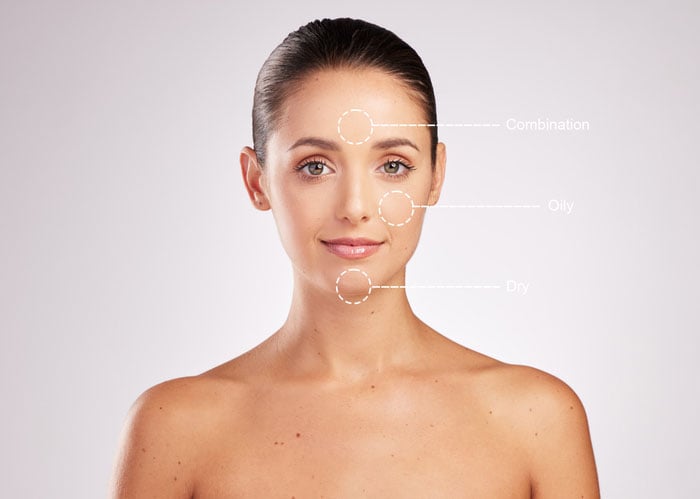
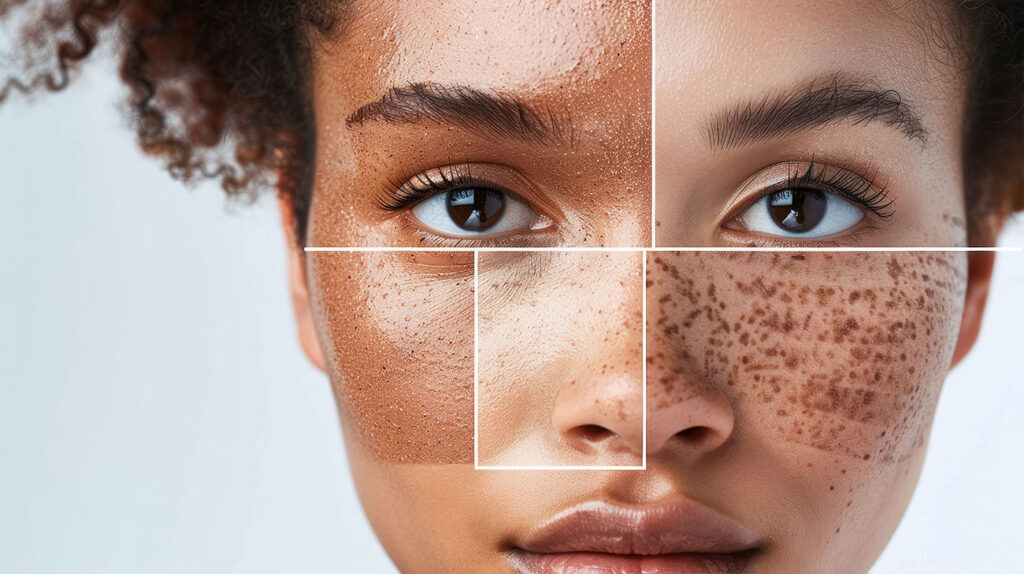
Combination skin has two distinct zones. The T-zone, which covers your forehead, nose, and chin, tends to be oily, with larger pores and a higher chance of blackheads and breakouts. The cheeks, jawline, and sometimes the area around the eyes are normal or dry.
This happens because the T-zone naturally has a higher concentration of oil glands. In combination skin, that difference is more pronounced, so you see two very different behaviors on the same face.
Signs you may have combination skin include:
- Shine on your forehead and nose by midday, while your cheeks stay matte or feel tight
- Larger, more visible pores on the nose and chin
- Breakouts concentrated in the T-zone
- Occasional dry or flaky patches on the cheeks
- Moisturizers that feel perfect on one area but too heavy or too light on another
Why Combination Skin Is Tricky

The challenge with combination skin is that a single product rarely treats both zones perfectly. Oil-control products can leave cheeks parched and irritated. Rich creams can clog pores in the T-zone. Many people with combination skin end up bouncing between products, never quite finding the right fit.
The solution isn’t a closet full of products. It’s being strategic about where you apply them.
Key Ingredients for Combination Skin

Some ingredients are versatile enough to use across your whole face, while others work best when you apply them only where they’re needed.
All-over ingredients:
- Niacinamide: Helps balance oil in the T-zone while strengthening the barrier on drier areas. It’s one of the most useful ingredients for combination skin.
- Hyaluronic acid and glycerin: Hydrate without heaviness, so they’re comfortable everywhere.
T-zone ingredients:
- Salicylic acid: Clears oil and buildup inside pores, helping to reduce blackheads on the nose and chin.
- Clay: A weekly clay mask applied only to the T-zone absorbs excess oil without drying the cheeks.
Cheek ingredients:
- Ceramides and shea butter: Replenish lipids and soften dry patches.
- Squalane: A lightweight oil that adds comfort without feeling greasy.
The 4-Step Skincare Routine for Combination Skin
Step 1: Cleanse With a Balanced, Gentle Formula

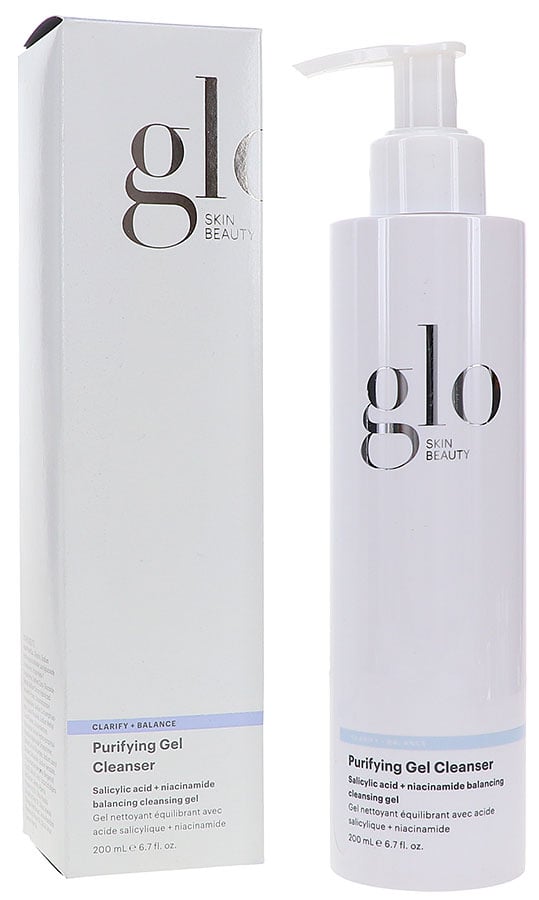
Your cleanser touches your whole face, so it needs to work for both zones. Choose a gentle foaming or gel cleanser that removes oil from the T-zone without stripping the cheeks. Avoid harsh, high-foaming formulas as well as heavy cream cleansers.
Glo Skin Beauty Purifying Gel Cleanser is formulated specifically for oily, combination, and acne-prone skin. It’s sulfate-free and pairs salicylic acid with niacinamide, glycerin, and soothing yucca extract. That balance lets it clear oil and congestion from the T-zone while keeping drier areas comfortable. Massage it onto damp skin for about 60 seconds, as the brand recommends, then rinse with warm water.
Step 2: Treat Each Zone Separately
This is where combination skin care really comes together. Instead of applying one treatment everywhere, divide and conquer:
- On the T-zone: Apply oil-controlling treatments, like a BHA exfoliant or a niacinamide serum. If your skin is sensitive, use BHA a few times a week rather than daily.
- On the cheeks: Apply a hydrating serum with hyaluronic acid or glycerin. The PCA Skin Hydrating Serum we recommend for dry skin is a great match here.
Keep exfoliating acids off the drier areas of your face. They don’t need them, and they’re more likely to become irritated.
Step 3: Moisturize Strategically
You have two smart options for combination skin:
- One lightweight moisturizer all over. Many combination types do perfectly well with a single lightweight lotion that hydrates without heaviness.
- Multi-moisturizing. Apply a gel moisturizer on oily zones and a richer cream on dry cheeks.
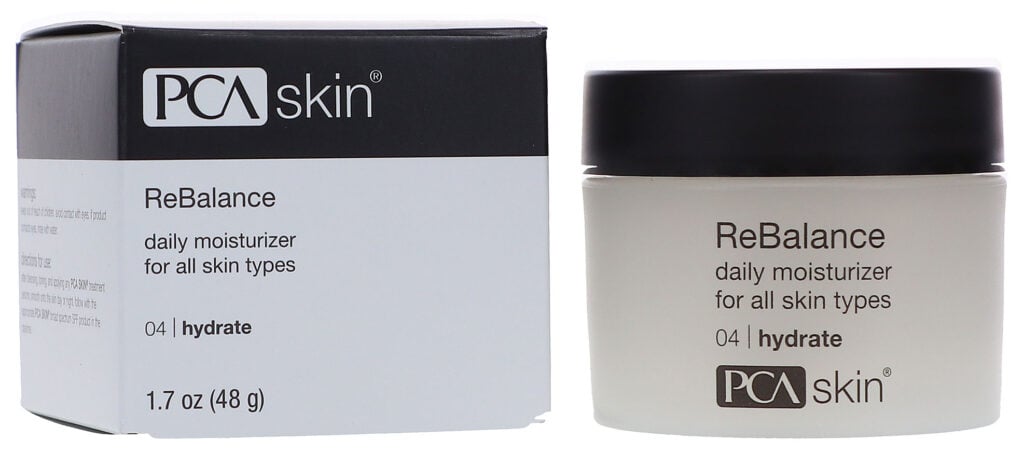
PCA Skin Rebalance is our pick for the all-over approach. This lightweight moisturizer provides all-day hydration with niacinamide, vitamin E, and borage and evening primrose seed oils. PCA SKIN designed it for normal and sensitive skin, and its light, comfortable feel makes it a natural fit for combination complexions. If your cheeks still feel tight, layer a small amount of a richer cream, like ZO Skin Health Hydrating Creme, only on those areas.
Step 4: Protect With a Universal Sunscreen
Finish every morning with a broad-spectrum sunscreen of SPF 30 or higher. For combination skin, a lightweight, non-comedogenic formula is usually the best fit. It won’t clog the T-zone, and it won’t leave the cheeks feeling tight. Apply it to your whole face, plus your ears and neck.
Your Daily Combination Skin Schedule
Morning:
- Gentle gel cleanser
- Niacinamide on the T-zone, hydrating serum on the cheeks
- Lightweight moisturizer all over
- Lightweight broad-spectrum sunscreen
Night:
- Gel cleanser to remove sunscreen and oil
- BHA or niacinamide on the T-zone a few nights a week, hydrating serum on the cheeks
- Lightweight moisturizer, plus a richer cream on dry areas if needed
How Combination Skin Changes With the Seasons

Combination skin is especially responsive to weather. In hot, humid months, the T-zone often gets oilier, and your whole face may lean oily. In cold, dry months, the cheeks can become drier and more sensitive.
Adjust your routine accordingly:
- Summer: Switch to lighter textures, increase T-zone treatments, and keep blotting papers on hand for midday shine.
- Winter: Add a richer cream to the cheeks, reduce exfoliation, and consider running a humidifier at night.
Mistakes to Avoid
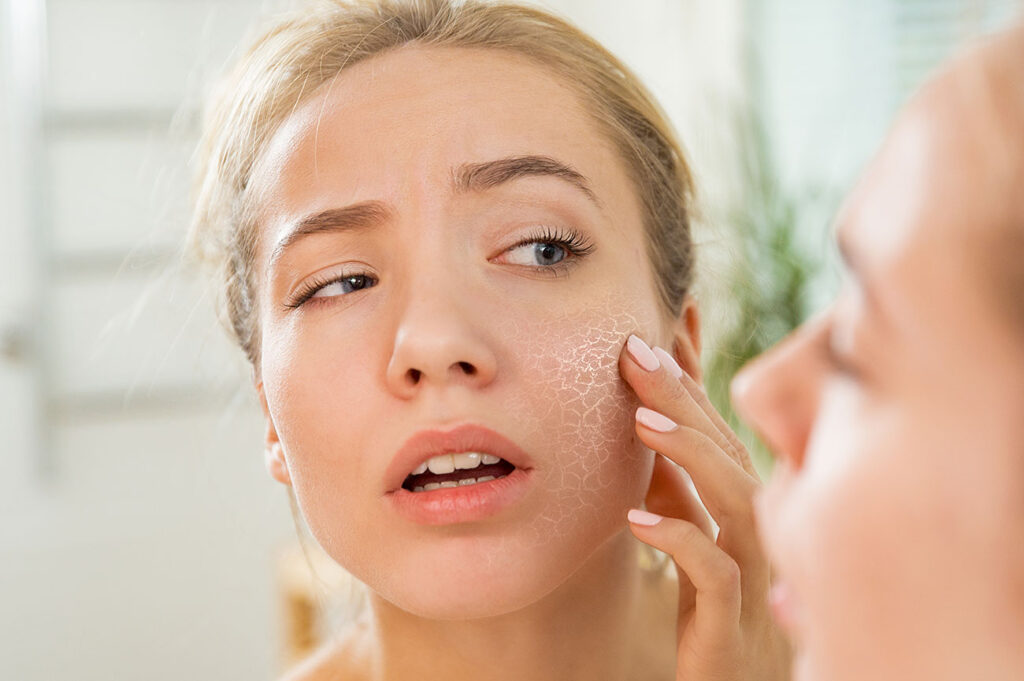
- Treating your whole face like it’s oily. This often leads to dry, irritated cheeks.
- Treating your whole face like it’s dry. Heavy creams everywhere can lead to T-zone breakouts.
- Overusing acids. Exfoliation helps in the T-zone, but too much can damage your barrier.
- Giving up too soon. Give a new routine four to six weeks to show results.
- Skipping sunscreen because it feels heavy. If your current SPF feels greasy on the T-zone, switch to a lighter, non-comedogenic formula rather than going without.
For more on how combination skin compares with dry and oily types, explore our guide to skincare routines for every skin type.
Frequently Asked Questions
How do I know if I have combination skin?
If your forehead, nose, and chin get shiny while your cheeks stay normal or feel dry, you likely have combination skin. A simple blotting paper test can confirm it.
Can I use two different moisturizers on combination skin?
Yes. Using a lightweight gel on the T-zone and a richer cream on the cheeks is a popular and effective approach. Many people, however, do well with just one lightweight moisturizer.
Should I use toner on combination skin?
A gentle, alcohol-free toner can help, especially one with niacinamide or a mild BHA applied to the T-zone. Skip astringent toners with high alcohol content, which can dry out the cheeks.
What is the best cleanser for combination skin?
A gentle, sulfate-free gel or light foaming cleanser works best. It removes oil from the T-zone without stripping moisture from drier areas.
AI-assisted, human-verified. At LaLaDaisy.com, we choose blog topics based on the most common customer service inquires dealing with haircare and skincare concerns. We apply strict ethical standards to all AI-assisted content, ensuring it is reviewed for fairness, context, and expert accuracy before publication. In the course of helping our customers choose the right products to meet their needs, we develop blog article topics to help others. Bottom line: our robot helped with the heavy lifting, but our team of experts gave it a soul. Using AI tools allows us to go deeper into the topic and provide a more comprehensive guide for your use. At LaLadaisy.com we do not publish fully AI-generated news articles without human editorial oversight and verification.