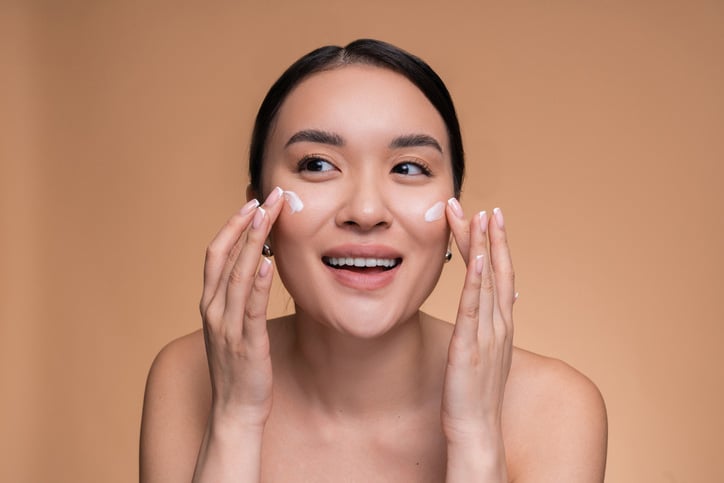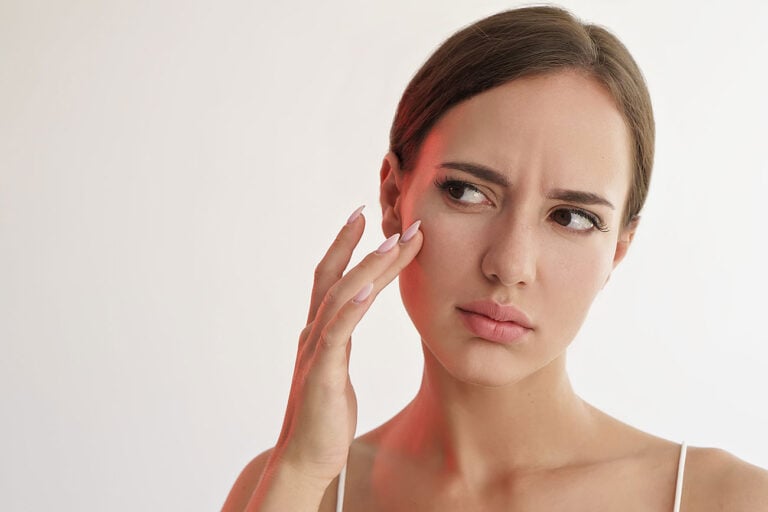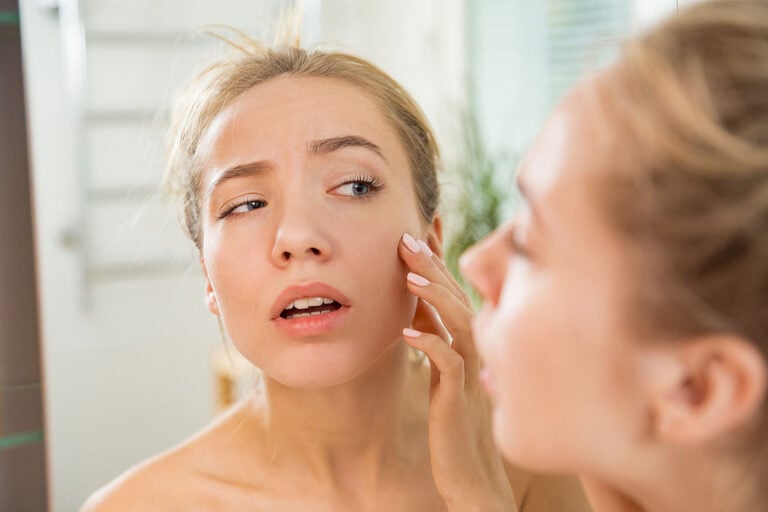

The most effective way to reduce fine lines and wrinkles at home is to combine a targeted peptide serum for expression lines, a vitamin C antioxidant serum, consistent hydration and daily broad-spectrum sunscreen. Fine lines respond well to this approach within a few months. Deeper wrinkles soften more gradually, and sunscreen keeps new ones from forming.
Knowing how to reduce fine lines and wrinkles starts with knowing what you are treating. Not every line has the same cause, and matching the treatment to the type of line is what separates visible results from a crowded shelf.
Why Do Fine Lines and Wrinkles Develop?
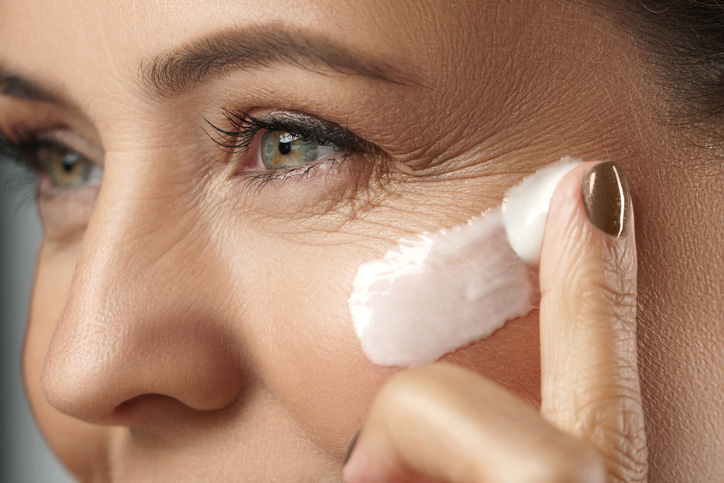
Fine lines and wrinkles develop because the skin gradually loses collagen, elastin and moisture, while sun exposure and repeated facial expressions crease it in the same places over time.
- Natural collagen decline. Collagen gives skin its firmness and elastin gives it bounce. Production of both slows steadily from early adulthood, so skin becomes thinner and less resilient.
- Sun exposure. Ultraviolet light breaks down collagen and elastin faster than the body can replace them. Dermatologists consider it the single largest driver of premature skin aging.
- Repeated expressions. Every squint, frown and smile folds the skin along the same lines. Over years, those folds become crow’s feet, forehead lines and smile lines that remain visible at rest.
- Dehydration. Skin that lacks water looks crepey, which makes existing lines more prominent.
- Environmental stress. Pollution and other stressors generate free radicals, unstable molecules that damage skin proteins.
What Is the Difference Between Fine Lines and Deep Wrinkles?
Fine lines are shallow creases in the outermost layers of the skin, while deep wrinkles extend further down, where collagen and elastin have broken down more significantly.

Fine lines often appear first around the eyes and across the forehead. They tend to come and go with hydration and expression, and they are the most responsive to topical care. Deep wrinkles, such as pronounced nasolabial folds or forehead furrows, reflect structural changes deeper in the skin. Topical products can soften their appearance and improve the surrounding texture, but they will not erase them.
Here is what you need to know about expectations. A well-chosen routine can make skin look smoother, firmer and more rested, and it can slow the formation of new lines. For deep wrinkles, in-office treatments offer more dramatic change, and a strong at-home routine helps maintain those results.
What Are Expression Lines?
Expression lines, sometimes called dynamic wrinkles, are caused by repeated muscle movement rather than by sun damage or volume loss alone. Crow’s feet, the “11s” between the brows and horizontal forehead lines are the classic examples. Because they are driven by movement, they respond especially well to a specific class of ingredients: neuropeptides.

Which Ingredients Improve the Appearance of Aging Skin?
The ingredients with the strongest track record are peptides, antioxidants such as vitamins C and E, hydrators such as hyaluronic acid, and retinoids, all supported by daily sunscreen.
How Do Peptides Help With Wrinkles?
Peptides are short chains of amino acids, the building blocks of proteins such as collagen. Different peptides do different jobs. Signal peptides encourage the skin to support its own collagen. Neuropeptides, such as acetyl hexapeptide-8 and acetyl octapeptide-3, are studied for their ability to soften the look of expression lines by moderating the muscle contractions that create them. This is why peptides for wrinkles work best when applied directly to the areas that move most.
Why Do Antioxidants Matter for Fine Lines?

Antioxidants neutralize free radicals before they damage collagen and elastin. Pure vitamin C, also called L-ascorbic acid, is the most studied topical antioxidant. It supports the skin’s natural collagen production and brightens the complexion, and it works even better when paired with vitamin E.
What Role Does Hydration Play?
Hydration plumps the skin from within, so fine lines immediately look softer. Hyaluronic acid draws water into the skin, and well-hydrated skin also tolerates active ingredients such as vitamin C and retinoids more comfortably.
How to Reduce Fine Lines and Wrinkles: Which Routine Works Best?

A routine for fine lines and wrinkles combines gentle cleansing, a targeted peptide serum, antioxidant protection, moisture and daily sunscreen.
- Cleanse gently. Harsh cleansers compromise the barrier and make lines look more pronounced. Choose a non-stripping formula.
- Apply a vitamin C serum in the morning. Antioxidants are most useful during the day, when skin faces UV exposure and pollution.
- Treat expression lines with peptides. Smooth a peptide serum directly onto crow’s feet, forehead lines and the area around the mouth, morning and evening.
- Hydrate. Layer a hyaluronic acid serum to plump the skin and support your other treatments.
- Moisturize. A moisturizer seals in hydration and supports the barrier.
- Protect every morning. Broad-spectrum SPF 30 or higher is the most important anti-aging step. Without it, every other product is working against ongoing damage.
Which PCA Skin Products Help With Fine Lines and Wrinkles?

Four PCA Skin products form a targeted plan for lines and wrinkles: two peptide serums for expression lines, a high-strength vitamin C treatment and a hydrating serum.
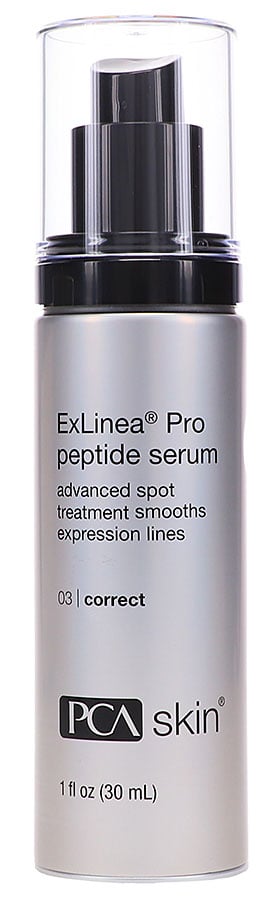
PCA Skin Exlinea Pro Peptide Serum is the brand’s most advanced treatment for expression lines. Its proprietary Peptide-Pro Complex brings together four ingredients that work as a team: acetyl octapeptide-3, an eight amino acid peptide that helps reduce facial muscle contractions and skin roughness; acetyl hexapeptide-8, a next-generation peptide that helps relax the contractions that follow facial expressions; a polysaccharide and amino acid blend that boosts moisture retention and elasticity; and a bacillus and soybean ferment extract that provides a firming effect. Apply it twice daily after cleansing, concentrating on the lines around the eyes, forehead and mouth.
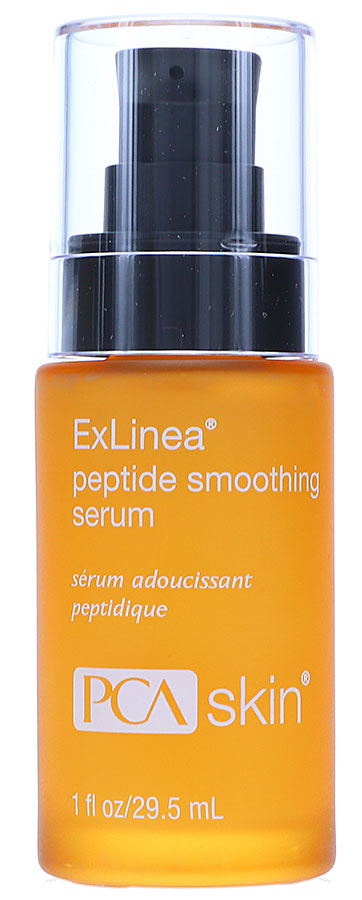
PCA Skin Exlinea Peptide Smoothing Serum is a strong alternative for newer or finer expression lines. This peptide spot treatment pairs acetyl hexapeptide-8 with hyaluronic acid, the gentle polyhydroxy acid gluconolactone, squalene and rice bran wax to hydrate, smooth and firm. If you are new to peptides, it is a comfortable first step before moving up to Exlinea Pro.
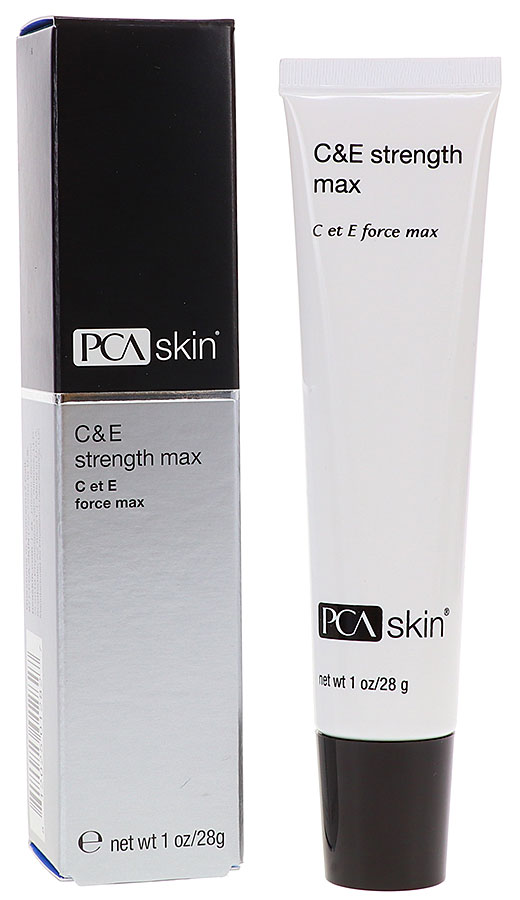
PCA Skin C&E Strength Max delivers antioxidant protection at a high concentration: 20% pure vitamin C and 5% vitamin E. It brightens, smooths the look of fine lines and helps strengthen skin against environmental damage. PCA Skin recommends it for skin that already tolerates high-strength vitamin C. A mild tingle on application is normal. Use it in the morning after cleansing, and follow with sunscreen.
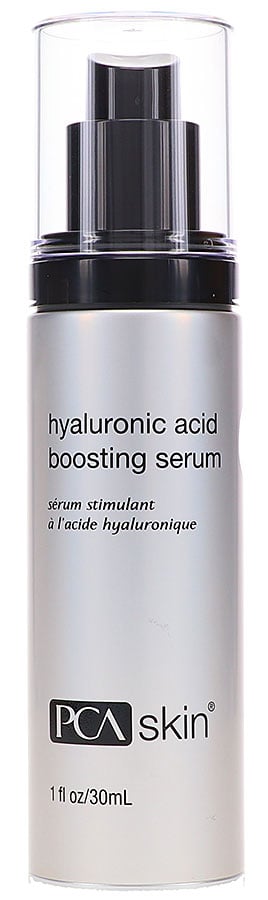
PCA Skin Hyaluronic Acid Boosting Serum fills the hydration step. Hyaluronic acid, hydrolyzed hyaluronic acid and the HA-Pro Complex provide immediate plumping and long-term hydration, which softens the look of fine lines and helps the other treatments perform comfortably.
A sample routine looks like this. In the morning: cleanse, C&E Strength Max, Exlinea Pro on lines, Hyaluronic Acid Boosting Serum, moisturizer and sunscreen. In the evening: cleanse, Exlinea Pro, Hyaluronic Acid Boosting Serum and moisturizer. For help choosing PCA Skin products for your other concerns, visit our complete guide.
Which Long-Term Habits Keep Skin Looking Smoother?
Long-term habits protect your results and slow the formation of new lines.

- Wear sunscreen every day. Clouds and windows do not block all UVA rays, the wavelengths most associated with aging.
- Wear sunglasses. Squinting less means fewer repeated folds around the eyes.
- Sleep on your back when possible. Side and stomach sleeping can press creases into the face night after night.
- Do not smoke. Smoking accelerates collagen breakdown and reduces blood flow to the skin.
- Stay consistent. Peptides and antioxidants show their full effect over eight to twelve weeks of daily use.
- Address tone and texture too. Lines are only part of how aging skin looks. Dullness and discoloration add years as well, and brightening an uneven skin tone makes the complexion look fresher overall.
Frequently Asked Questions About Fine Lines and Wrinkles
What is the best ingredient for fine lines?
There is no single best ingredient. Peptides target expression lines, vitamin C supports collagen and brightness, hyaluronic acid plumps, and retinoids improve texture. Combining two or three of these usually works better than relying on one.
How long does it take for peptides to reduce wrinkles?
Most people see smoother-looking skin within four to eight weeks, with fuller results after about twelve weeks of twice-daily use. Consistency matters more than quantity.
Can you use a peptide serum and vitamin C together?
Yes. Apply vitamin C first in the morning, let it absorb, then apply the peptide serum to lines. Peptides can also be used alone at night.
Can skincare get rid of deep wrinkles?
No. Skincare can soften their appearance and improve the surrounding texture, but it cannot erase deep wrinkles. In-office treatments are more effective for deep creases, and a good routine helps maintain those results.
At what age should you start using anti-aging products?
Sunscreen should start in childhood. Most people benefit from adding antioxidants in their twenties and targeted treatments, such as peptides, once fine lines begin to appear, often in the late twenties or thirties.
AI-assisted, human-verified. At LaLaDaisy.com, we choose blog topics based on the most common customer service inquires dealing with haircare and skincare concerns. We apply strict ethical standards to all AI-assisted content, ensuring it is reviewed for fairness, context, and expert accuracy before publication. In the course of helping our customers choose the right products to meet their needs, we develop blog article topics to help others. Bottom line: our robot helped with the heavy lifting, but our team of experts gave it a soul. Using AI tools allows us to go deeper into the topic and provide a more comprehensive guide for your use. At LaLadaisy.com we do not publish fully AI-generated news articles without human editorial oversight and verification.