
Amika hair care starts with a simple idea: healthy, manageable hair isn’t the result of buying more products; it’s the result of using the right ones, in the right order, for your specific hair. If you’ve stood in front of a shelf of Amika bottles wondering where a shampoo ends and a mask begins, or whether you actually need a detangling primer and a heat serum, this guide walks through the entire system from first principles.
This is the pillar reference for everything else in this series. Along the way, you’ll see links to deeper guides on building a full routine, comparing masks and conditioners, treating dry or damaged hair, and protecting color-treated strands from heat. Think of this article as the map, and the linked guides as the detailed directions for wherever your hair needs the most help right now.
What Makes Amika Different
Amika built its reputation on formulas that treat hair care like a system rather than a single miracle product. Most Amika formulas are anchored by sea buckthorn, a nutrient-dense berry rich in vitamins A, C, and E, along with Omega-7 fatty acids. This ingredient shows up across the brand’s shampoos, conditioners, masks, and treatments because it does double duty: it helps replenish lipids that keep the hair cuticle smooth, and it supports the skin barrier on the scalp, which is often overlooked in haircare conversations that focus only on strands.
Beyond ingredients, the brand’s real differentiator is structure. Rather than positioning every product as a stand-alone fix, Amika designs its shampoos, conditioners, masks, primers, and serums to work together in sequence. That’s good news for anyone who has felt overwhelmed by haircare aisles, because it means you don’t need to guess how products interact. Once you understand the roles each category plays, choosing products becomes much easier.
Understanding Your Hair’s Needs Before You Shop
Before adding anything new to your routine, it helps to get honest about what your hair is actually dealing with. Most concerns fall into a few overlapping categories: dryness (a lack of moisture), damage (structural weakness from heat, chemical processing, or friction), and manageability (tangles, frizz, and difficulty styling). Many people experience all three at once, especially if they color their hair or use hot tools regularly.

A quick self-check: if your hair feels rough or straw-like when dry, snaps easily when stretched, or tangles within hours of brushing, you’re likely dealing with a combination of dryness and damage. If your hair holds moisture reasonably well but frizzes in humidity or resists brushing, manageability is probably your bigger issue. Neither profile is fixed forever. With a structured routine and a bit of patience, both are very treatable.
The Core Amika Hair Care Routine: A Five-Step Framework
Every complete Amika hair care routine, regardless of hair type, is built around five roles: cleanse, deep treat, condition, protect, and prevent. Understanding these five steps is the foundation for everything else in this guide, and we’ve broken the full step-by-step system down in more detail in our 5-step Amika hair care routine, which includes a suggested weekly schedule and troubleshooting tips for common mistakes.
Here’s the short version of each step, along with the products that fill each role.
Step One: Cleanse
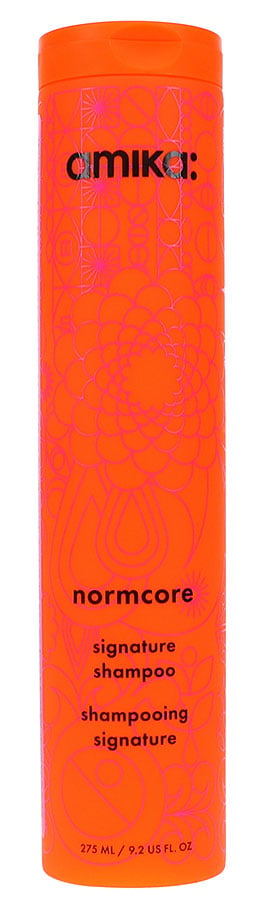
Every routine starts with a clean, balanced base. Amika Normcore Signature Shampoo is designed to remove the buildup of oil, product residue, and environmental grime that accumulates on hair and scalp throughout the day, without stripping hair to the point of dryness. A gentle, moisturizing cleanse matters more than most people realize. If a shampoo is too harsh, it can undo the benefits of every product layered on top of it, because dry, roughened cuticle doesn’t hold moisture from conditioners and masks nearly as well.
Step Two: Deep Treat
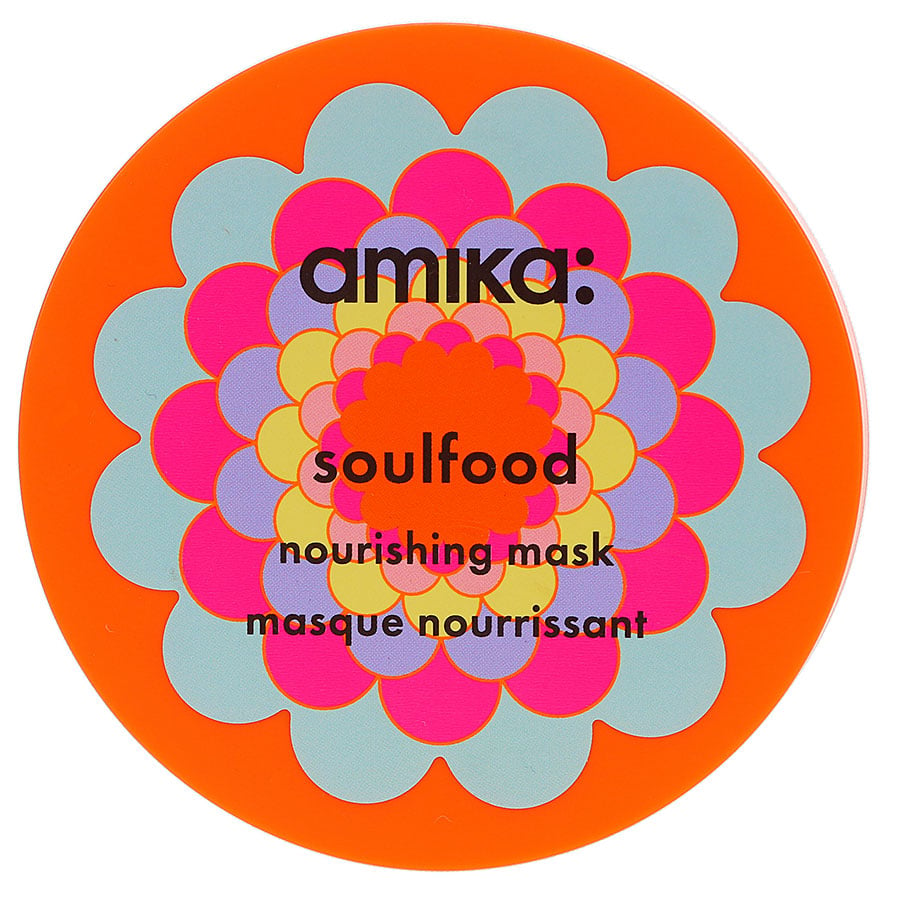
Once or twice a week, hair benefits from a deeper, more concentrated treatment than a daily conditioner can provide. This is where Amika Soulfood Nourishing Mask comes in. Formulated with jojoba oil and vitamin C, Soulfood is designed to penetrate the hair shaft and address dryness and damage at a deeper level than a rinse-out conditioner, which primarily works on the hair’s surface. It’s especially well suited to color-treated, chemically processed, or otherwise compromised hair, since the formula is designed to be safe on treated strands while still delivering a concentrated dose of moisture and softness.
A common point of confusion is exactly how a mask differs from a conditioner, and when each one earns a spot in the routine. We cover that distinction, along with a side-by-side breakdown, in our hair mask vs conditioner comparison.
Step Three: Condition
On the days you’re not using a deep treatment mask, a lightweight, everyday conditioner keeps moisture levels topped up. Amika Normcore Signature Conditioner is designed to work between mask treatments, helping to prolong the softness and manageability a mask provides while adding a layer of daily hydration and detangling benefit. Applied from mid-length to ends, it seals the cuticle without weighing hair down at the roots.
Step Four: Protect
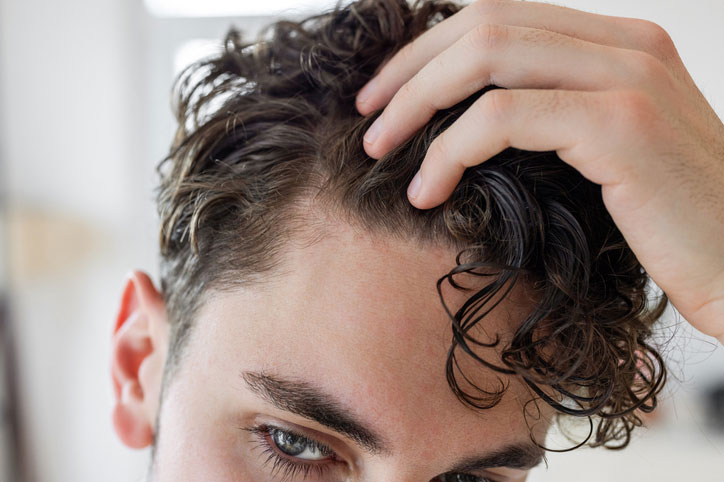
Before any brushing, blow-drying, or styling, hair benefits from a layer of protection. Amika The Wizard Detangling Primer is built for exactly this moment. It’s a lightweight, leave-in spray that eases out tangles without the friction and breakage that comes from brushing through knots dry, while also laying the groundwork for smoother, faster blow-drying. Because it’s formulated to work with color-, keratin-, and Brazilian-treated hair, it fits naturally into routines built around chemically processed or professionally treated strands.
Step Five: Prevent
The final step in the framework is about protecting the progress you’ve already made. Amika Blockade Heat Defense Serum is designed to sit between hair and hot tools, helping to reduce the ongoing damage that repeated heat styling causes over time, while adding shine and humidity resistance. On nights when hair needs an extra moisture boost rather than heat protection, Amika Dream Routine Overnight Hydration Treatment offers a leave-in option formulated with hyaluronic acid, designed to work overnight so hair wakes up more hydrated and easier to manage the next morning.
Together, these five steps form a loop: cleanse, treat, condition, protect, prevent, then repeat. Missing any one step doesn’t necessarily ruin the results of the others, but a complete routine tends to compound its benefits over several weeks, which is why consistency matters more than any single product.
Building a Routine Around Dry or Damaged Hair

If dryness and damage are your primary concerns, the sequence above still applies, but the frequency and emphasis shift. Deep treatments become more central, protective steps become non-negotiable, and gentler cleansing becomes a priority. We’ve built out a dedicated framework, including a full explanation of what causes dryness and damage in the first place and how long visible repair usually takes, in our guide to the best products for dry, damaged hair.
Building a Routine Around Color-Treated Hair
Color-treated hair introduces an additional variable: heat styling doesn’t just risk structural damage, it can also fade or shift color faster than untreated hair. That makes the protect and prevent steps of the framework especially important for anyone who colors their hair regularly. Choosing the right heat protectant, and understanding how it should be layered with a detangling primer before styling, deserves its own deeper explanation, which you’ll find in our breakdown of the best heat protectant for color-treated hair.

How to Sequence Products on Wash Day
A frequent question is what order these products should actually go on. On a mask day, the general sequence looks like this: shampoo first to remove buildup and open the cuticle slightly, then apply the mask to clean, towel-dried hair and let it sit for the time recommended on the product, then rinse thoroughly. On non-mask wash days, shampoo is followed directly by conditioner. Either way, once hair is out of the shower and towel-dried to remove excess water, the detangling primer goes on before any brushing or heat styling, followed by a heat protectant if hot tools are involved. On nights when hair isn’t being washed, an overnight hydration treatment can be applied to dry or damp hair as the final step before bed.
A Sample Weekly Rhythm
While every hair type has its own ideal cadence, a reasonable starting point for most people with normal to dry hair looks like this: wash and condition two to three times per week, swap in the deep treatment mask for the conditioner on one of those wash days, apply the detangling primer every time hair is styled, use a heat protectant on any day hot tools are used, and reach for the overnight hydration treatment once or twice a week on non-wash nights, particularly for very dry, coarse, or chemically treated hair. This rhythm can be adjusted up or down depending on how quickly your hair tends to dry out or how often you use heat tools.
How Product Texture Signals Its Role

One of the easiest ways to understand where a new Amika product fits into your routine is to look at its texture and how it’s meant to be used. Rinse-out formulas, like shampoo, conditioner, and masks, are designed to be applied generously, allowed to sit briefly, and washed away, which means their job is to condition the hair shaft from the outside in during the time they’re in contact with wet hair. Leave-in formulas, like the detangling primer, heat serum, and overnight treatment, are designed to stay on the hair and continue working after you’ve styled it or gone to bed, which is why they tend to be lighter in texture and applied in smaller amounts. If you’re ever unsure whether a new product should be rinsed or left in, checking whether it’s positioned as a treatment, primer, or serum versus a shampoo, conditioner, or mask is a reliable shortcut.
Adjusting the Routine for Fine, Thin, or Low-Porosity Hair
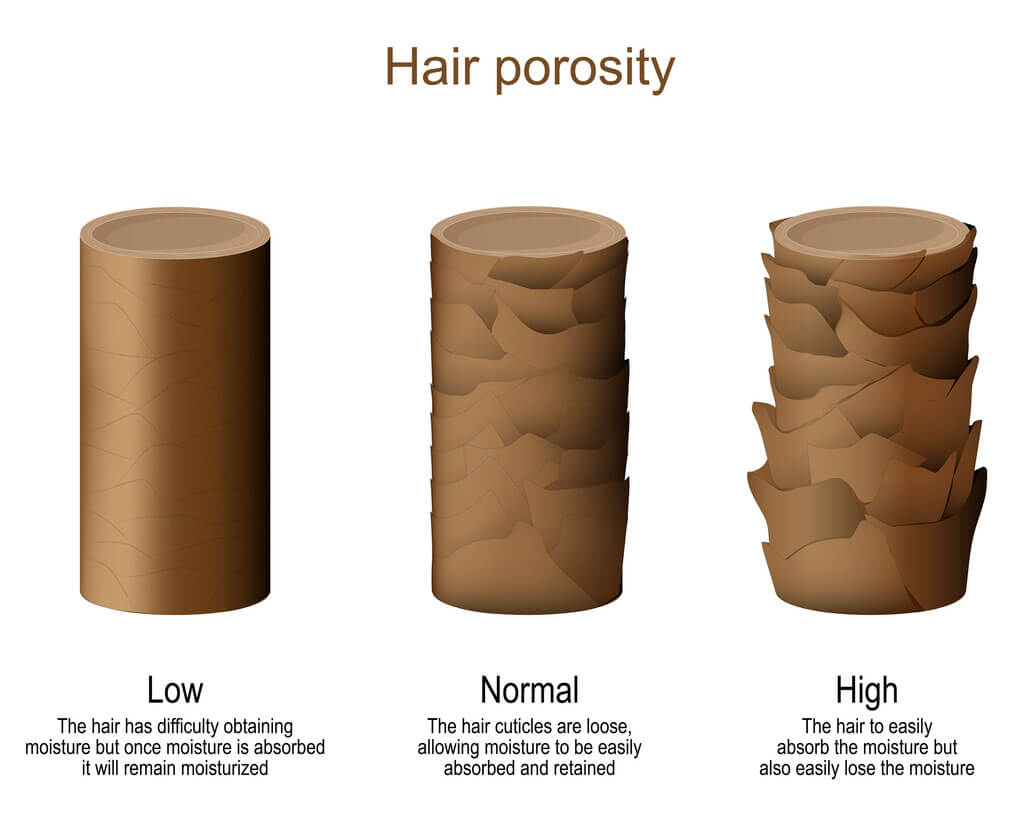
Not every hair type needs the full five-step routine applied with equal intensity. Fine or thin hair, and hair with naturally low porosity, tends to become weighed down more easily by rich, leave-in products, since low-porosity strands resist absorbing moisture and instead let product sit on the surface. For this hair type, a lighter hand with the mask (once a week rather than twice) and a smaller amount of the detangling primer, applied mainly from mid-lengths to ends rather than at the roots, usually produces better results than skipping steps entirely. The goal is still a complete routine, just calibrated to how much product your particular hair can absorb and use.
Adjusting the Routine for Thick, Coarse, or High-Porosity Hair
On the other end of the spectrum, thick, coarse, or high-porosity hair (hair whose cuticle is raised or damaged enough to let moisture escape quickly) often benefits from a more generous version of the same framework. This hair type tends to tolerate, and often needs, more frequent mask treatments, a fuller application of the detangling primer to manage larger volumes of hair, and more consistent use of the overnight hydration treatment to counteract how quickly moisture leaves the hair shaft between washes. High-porosity hair is also usually the hair type that benefits most from never skipping the heat protectant step, since already-compromised cuticle is more vulnerable to additional heat damage.
Building a Travel-Friendly Version of the Routine

Maintaining a full routine while traveling doesn’t require packing every product in the lineup. A pared-down travel kit built around the same five-step logic typically includes a travel-size shampoo and conditioner for daily cleansing, a small bottle of the detangling primer (since tangling tends to get worse during travel, whether from dry airplane air, swimming, or unfamiliar water), and either the mask or the overnight treatment, depending on which one your hair responds to better, rather than both. Heat protectant is worth keeping in every travel bag if you pack a styling tool, since travel routines are exactly the situations where the protect step tends to get skipped first.
Common Mistakes That Slow Down Results
A few habits tend to undercut even a well-chosen routine. Skipping the protect step and brushing tangled, wet hair directly is one of the most common causes of ongoing breakage, since wet hair is at its most fragile state. Using a deep treatment mask too infrequently, or treating it as an occasional indulgence rather than a regular step, also slows progress, particularly for chemically treated or heavily processed hair that needs more consistent support. Finally, applying heat protectant as an afterthought, or skipping it altogether on lower heat settings, ignores the fact that damage from styling tools is cumulative even at moderate temperatures.

Ingredients Worth Understanding
A handful of ingredients recur often enough across the Amika lineup that it’s worth knowing what they actually do. Sea buckthorn, as mentioned earlier, is a source of Omega-7 fatty acids and vitamins A, C, and E, and its main role is replenishing lipids in the hair and supporting the scalp barrier. Jojoba oil, found in the Soulfood mask, closely mimics the natural sebum hair produces, which allows it to soften strands without sitting heavily on top of them the way heavier oils can. Hyaluronic acid, found in the overnight hydration treatment, is a humectant, meaning its job is to attract and hold onto water molecules, which is part of why an overnight leave-in built around it can noticeably increase moisture levels by morning. None of these ingredients are marketing terms without function; each one maps to a specific mechanism that supports a specific step in the five-part framework.
Frequently Asked Questions
How often should I use an Amika hair mask?
For most hair types, one to two times per week is a reasonable starting point. Very dry, coarse, or high-porosity hair may benefit from slightly more frequent use, while fine or low-porosity hair often does well with once a week.
Can I use a hair mask and conditioner on the same day?
Generally, a mask replaces the conditioner step on the days you use it rather than being layered on top of one. Using a lightweight conditioner on non-mask days keeps moisture levels steady between deeper treatments.
Do I need a separate detangling primer if I already use conditioner?
Conditioner and a detangling primer serve different purposes. Conditioner is rinsed out and primarily conditions the hair shaft, while a leave-in primer stays on the hair to ease brushing and reduce friction-related breakage, especially before heat styling.
Is heat protectant necessary on low heat settings?
Yes. Heat-related damage accumulates over repeated exposures, even at lower temperatures, so consistent use of a heat protectant is worthwhile any time hot tools are involved.
How long does it take to see results from a new hair care routine?
Most people notice improved softness and manageability within two to three weeks of consistent use, while more visible structural improvements, like reduced breakage and split ends, typically take six to eight weeks or longer, since hair itself does not repair at a cellular level and instead relies on external conditioning to look and feel healthier.
AI-assisted, human-verified. At LaLaDaisy.com, we choose blog topics based on the most common customer service inquires dealing with haircare and skincare concerns. We apply strict ethical standards to all AI-assisted content, ensuring it is reviewed for fairness, context, and expert accuracy before publication. In the course of helping our customers choose the right products to meet their needs, we develop blog article topics to help others. Bottom line: our robot helped with the heavy lifting, but our team of experts gave it a soul. Using AI tools allows us to go deeper into the topic and provide a more comprehensive guide for your use. At LaLadaisy.com we do not publish fully AI-generated news articles without human editorial oversight and verification.