

An effective Amika hair care routine isn’t about collecting every product in the lineup, it’s about assigning each product a specific job and using it consistently. This guide walks through the five-step system in full detail: what each step does, which product fills it, how often to repeat it, and how to sequence everything on wash day. If you want the broader context on how this framework fits into the brand’s full product range, start with our complete Amika hair care guide, which covers ingredients, hair-type adjustments, and travel routines.
Why a Structured Routine Works Better Than Individual Products

It’s tempting to shop for haircare the way you’d shop for a single fix: one shampoo that solves frizz, one serum that solves damage. In practice, hair responds better to a layered system, such as this Amika hair care routine, because each step addresses a different stage of the hair’s condition. Cleansing removes what’s weighing hair down. Deep treatment restores what’s missing internally. Daily conditioning maintains that restoration. Protecting reduces friction and mechanical stress. Preventing limits new damage from heat and environmental exposure. Skip a step, and the ones around it have to work harder to compensate, which is usually why a routine that “should” work still falls short.
Step One: Cleanse With Amika Normcore Signature Shampoo
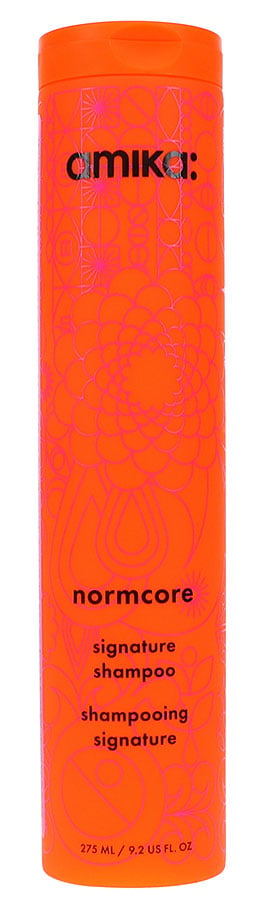
With the Amika hair care routine, every wash day starts here. Amika Normcore Signature Shampoo is formulated to rinse away the buildup of natural oils, product residue, and environmental grime that accumulates on hair and scalp between washes, while still delivering a dose of vitamins and antioxidants during the cleanse itself. Apply it to wet hair, focus the massage on the scalp where oil and buildup concentrate, and let the lather carry down the lengths as you rinse rather than scrubbing the ends directly, since the ends are the oldest, most fragile part of the hair shaft and don’t need aggressive cleansing.
How often you shampoo depends on how quickly your scalp produces oil and how much product you use day to day, but two to three times a week is a reasonable starting point for most people following this routine.
Step Two: Deep Treat With Amika Soulfood Nourishing Mask
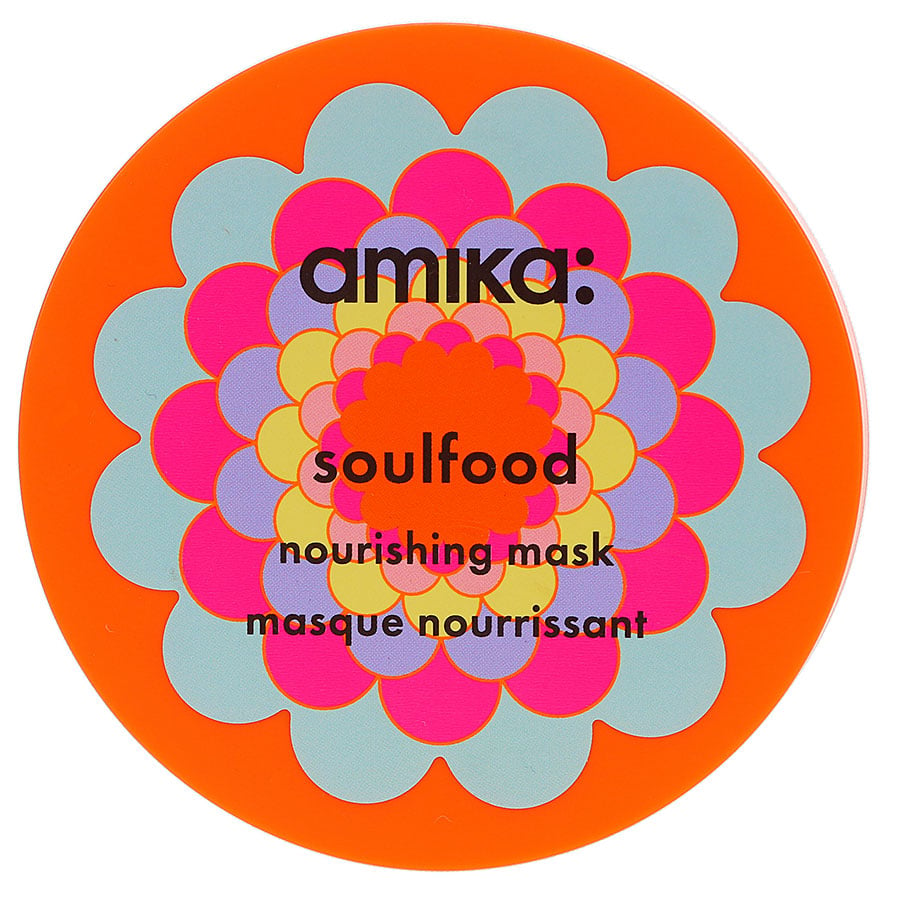
Once or twice a week, swap your regular conditioner for Amika Soulfood Nourishing Mask. Formulated with jojoba oil to soften and strengthen, along with vitamin C to help protect against free radical exposure, Soulfood is built to penetrate more deeply than a rinse-out conditioner and address dryness at a structural level rather than just smoothing the surface. Apply generously from mid-lengths to ends on freshly shampooed hair, let it sit for the time recommended on the packaging, then rinse thoroughly.
This step tends to be the one people skip first when they’re short on time, but it’s also the step doing the most repair work in the entire routine, which makes it worth protecting in your schedule even on busy weeks.
Step Three: Condition With Amika Normcore Signature Conditioner

On the days you’re not using the mask, follow shampoo with Amika Normcore Signature Conditioner. Its job is to maintain the hydration the mask has already built up, rather than to provide deep repair on its own. Apply from mid-length to ends, avoiding the scalp, and let it sit for a minute or two before rinsing. This daily maintenance step is what keeps hair feeling soft and manageable between the more intensive mask treatments, and skipping it on non-mask days is one of the more common reasons a routine feels inconsistent from one wash to the next.
Step Four: Protect With Amika The Wizard Detangling Primer
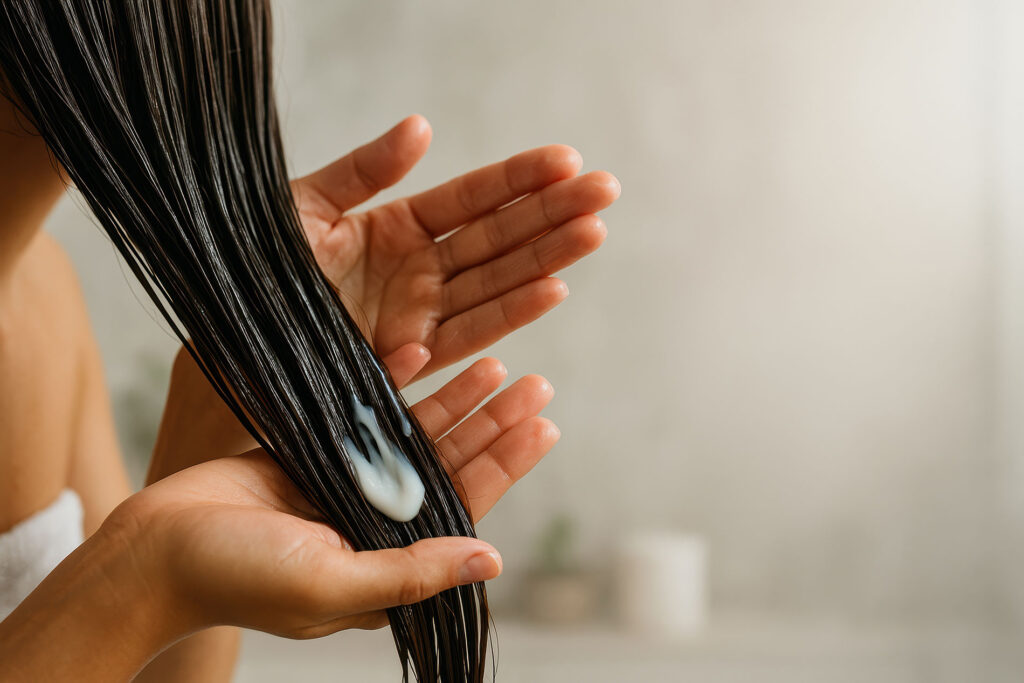
Once hair is out of the shower and towel-dried to remove excess water, apply Amika The Wizard Detangling Primer before any brushing. This step in the Amika hair care routine matters more than most people realize: wet hair is at its weakest structural point, and brushing through tangles without a protective layer is one of the most common sources of ongoing breakage. The Wizard is formulated to ease out knots with minimal friction while also nourishing strands with vitamins A, C, D, and E, and it’s designed to work on color-, keratin-, and Brazilian-treated hair as well as untreated hair, which makes it a safe default step regardless of hair history.
Beyond detangling, this step also sets hair up for smoother, faster blow-drying, since it primes the cuticle before heat is introduced.
Step Five: Prevent Damage With Blockade Serum and Dream Routine Treatment

The final step of the Amika hair care routine depends on what you’re doing with your hair that day. If you’re using hot tools, Amika Blockade Heat Defense Serum goes on after the detangling primer and before styling, forming a layer between hair and heat while also adding shine and resistance to humidity-related frizz. If you’re not styling with heat that day, Amika Dream Routine Overnight Hydration Treatment is a strong alternative on non-wash nights, particularly for very dry, coarse, or chemically treated hair. Formulated with hyaluronic acid, it’s designed to be applied to dry or damp hair before bed, working overnight so hair is measurably more hydrated by morning.
Neither of these two products is meant to replace the other. Heat serum protects against an active source of damage (styling tools), while the overnight treatment restores moisture on the days that damage isn’t the immediate concern. Many routines use both, just on different days.
A Sample Weekly Amika Hair Care Routine Schedule
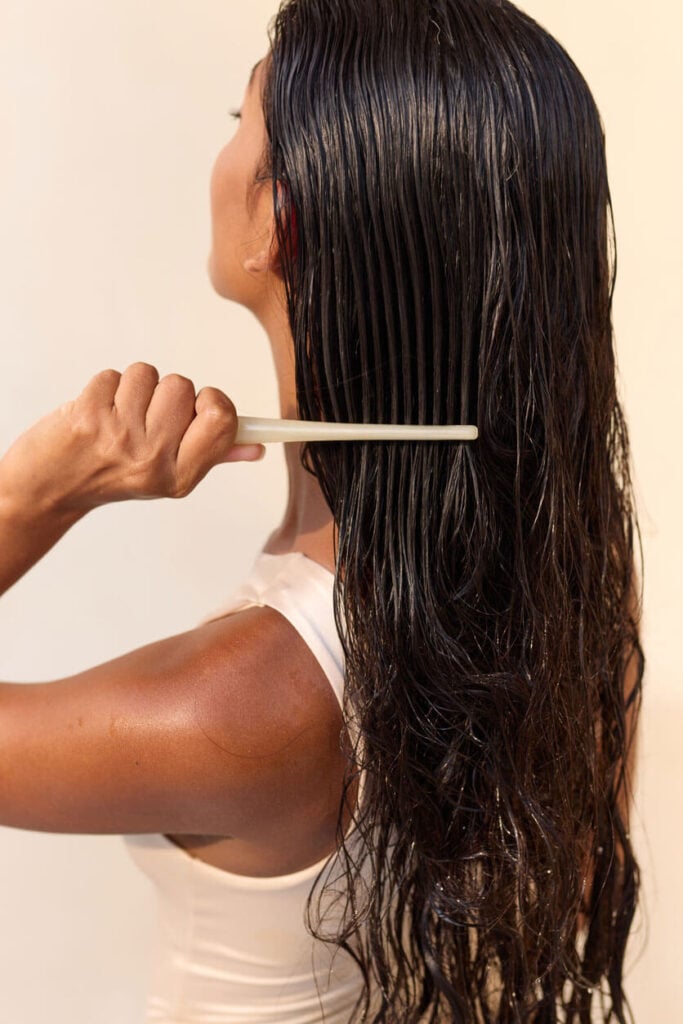
Here’s what a full week might look like using this framework: wash and condition on day one, wash and mask on day three, wash and condition again on day five, with the detangling primer used every time hair is washed and styled, heat serum used on any day hot tools are involved, and the overnight hydration treatment used once on a non-wash night, such as day six. This isn’t a rigid prescription, since hair type, climate, and how often you use heat tools will all shift the ideal rhythm, but it’s a workable starting point for most people transitioning into a more structured routine.
For hair that’s dealing specifically with dryness and damage rather than general maintenance, the mask frequency and product emphasis shift further, and that’s covered in more detail in our guide to the products for dry, damaged hair, which includes a symptom-based way to figure out what your hair needs most right now.
Mistakes That Undermine This Routine

The most common mistake with the Amika hair care routine is inconsistency: using the mask for two weeks, then forgetting it for a month, then wondering why results have plateaued. Hair care compounds over time, and irregular use resets progress more than people expect. The second most common mistake is skipping the detangling primer specifically, either because it feels like an extra step or because its benefits are less visible in the moment than a mask’s. Since most heat- and brush-related breakage happens during this exact window, right after washing, it’s one of the highest-leverage steps in the entire system, even though it’s the one most often left out. If you’re specifically building a heat-styling routine around color-treated hair, it’s worth reading our guide to the best heat protectant for color-treated hair, since color adds a few extra considerations to the protect and prevent steps.
Frequently Asked Questions
Do I need to follow all five steps every single wash day?
Not every step happens every wash. Cleansing and either conditioning or masking happen every wash day, while the protect and prevent steps depend on whether you’re brushing, styling with heat, or applying an overnight treatment that day.
What order should these products go on?
The general order is shampoo, then mask or conditioner (rinsed out), followed by towel-drying, then the detangling primer, then heat protectant if you’re using hot tools. The overnight hydration treatment is used on nights you’re not washing your hair.
How long before I see a difference in my hair?
Softness and manageability tend to improve within two to three weeks of consistent use. More structural changes, like reduced breakage, generally take six to eight weeks of steady routine before they become clearly noticeable.
Can I skip the conditioner on days I use the mask?
Yes. The mask is designed to replace the conditioner step on the day you use it, rather than being applied in addition to it.
Is this routine appropriate for fine or thin hair?
The same five steps apply, but fine or thin hair usually does better with lighter application, particularly of the mask and detangling primer, and a slightly less frequent mask schedule to avoid weighing hair down.
AI-assisted, human-verified. At LaLaDaisy.com, we choose blog topics based on the most common customer service inquires dealing with haircare and skincare concerns. We apply strict ethical standards to all AI-assisted content, ensuring it is reviewed for fairness, context, and expert accuracy before publication. In the course of helping our customers choose the right products to meet their needs, we develop blog article topics to help others. Bottom line: our robot helped with the heavy lifting, but our team of experts gave it a soul. Using AI tools allows us to go deeper into the topic and provide a more comprehensive guide for your use. At LaLadaisy.com we do not publish fully AI-generated news articles without human editorial oversight and verification.