Introduction

Understanding what causes age spots is the first step toward managing them effectively. These flat, darkened patches — most commonly appearing on the face, hands, and chest — are among the most visible markers of cumulative sun exposure and skin aging. They are not a sign of compromised health, but they are a clear signal from the skin’s biology that something has shifted in how melanin is being produced and distributed.
For anyone who has noticed these spots appearing or darkening over time, the good news is this: age spots are among the most preventable and treatable of all aging skin concerns. But prevention requires understanding the mechanism. For a broader look at how age spots fit within the full spectrum of aging skin concerns, our complete guide to understanding what causes age spots, wrinkles, and mature skin care provides the essential context.
This article breaks down the exact biological process behind age spot formation, the factors that accelerate their development, the difference between age spots and other pigmentation concerns, and the most effective strategies to prevent new spots from forming.
What Causes Age Spots: The Biology of Hyperpigmentation
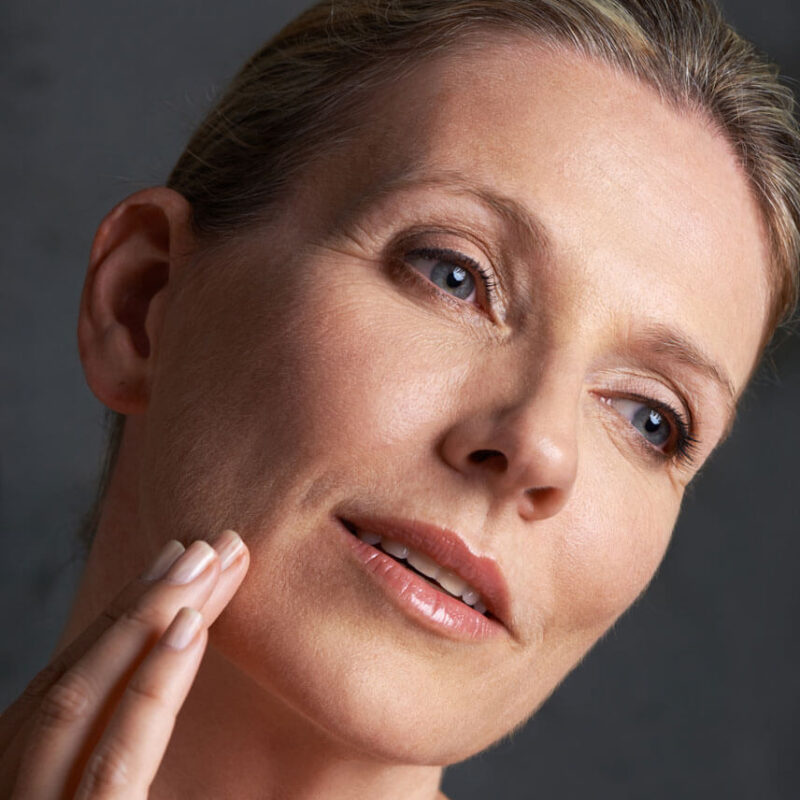
Age spots form when clusters of melanocytes — the pigment-producing cells in the skin’s basal layer — become overactive and produce excessive concentrations of melanin in localized areas. To understand what causes age spots, it helps to understand the skin’s normal pigmentation process first.
How Melanin Works in Healthy Skin
Melanin is the pigment responsible for the color of skin, hair, and eyes. It also serves a protective function: when the skin is exposed to UV radiation, melanocytes produce melanin and distribute it to surrounding skin cells as a form of natural UV shielding. In healthy, younger skin, this process is relatively uniform — melanin is produced in response to sun exposure and distributed evenly across the skin surface.
What Goes Wrong with Age
Over decades of cumulative UV exposure, certain melanocytes become permanently overactivated. They begin producing melanin at higher levels even in response to modest sun exposure — or in some cases, independently of any immediate UV trigger. When this happens in a concentrated area, the result is a clearly defined patch of darker pigment that remains long after any tan would have faded. This is what causes age spots: localized melanocyte hyperactivity that has become self-sustaining as a result of cumulative damage.
The Role of Tyrosinase
At the cellular level, melanin production is governed by an enzyme called tyrosinase. UV radiation activates tyrosinase, which triggers a cascade of biochemical steps that culminate in melanin synthesis. In damaged or hyperactive melanocytes, tyrosinase activity is elevated and harder to regulate — which is why so many effective age spots treatments target tyrosinase inhibition as their primary mechanism. Ingredients like vitamin C, alpha arbutin, kojic acid, and niacinamide all work through this pathway.
Sun Spots vs Age Spots: Is There a Difference?
The terms ‘sun spots’ and ‘age spots’ are often used interchangeably, and in most cases, they refer to the same thing: solar lentigines caused by cumulative UV exposure. However, in learning what causes age spots, there are nuances worth understanding.
Solar Lentigines

Solar lentigines are the medical term for what most consumers know as age spots or sun spots. They are directly caused by UV damage and appear in areas of the body that receive the most sun exposure — the face, hands, forearms, and upper chest. They are flat, well-defined, and range in color from light tan to dark brown.
Ephelides (Freckles)
Freckles are small concentrations of melanin that appear in lighter skin tones, often in childhood or young adulthood. Unlike age spots, they tend to fade in winter and darken in summer — indicating that they are triggered by current UV exposure rather than being the result of cumulative damage. Most freckles are genetic, not damage-related.
Seborrheic Keratoses
These are raised, waxy, sometimes darkly pigmented growths that appear in older adults and are sometimes mistaken for age spots. Unlike solar lentigines, seborrheic keratoses have a textured surface and a slightly warty appearance. They are entirely benign but are distinct from age spots and do not respond to the same topical treatments.
Melasma
Melasma is a form of hyperpigmentation driven primarily by hormonal factors — particularly estrogen — and exacerbated by UV exposure. It tends to appear in a symmetrical pattern on the face, most often on the cheeks, forehead, and upper lip. It is more commonly seen in women, particularly during pregnancy or when taking hormonal contraceptives. Melasma is more difficult to treat than solar lentigines and often requires prescription-strength interventions.
Factors That Accelerate Age Spot Formation

Let’s look at what causes age spots to worsen. While cumulative UV exposure is the primary driver of age spots on the face and body, several additional factors can accelerate or worsen their development.
Cumulative Lifetime UV Exposure
The single most significant predictor of age spot development is total lifetime sun exposure. Even brief, daily, incidental exposure — commuting, walking between buildings, sitting near a window — adds up over years and decades. The absence of visible burning does not mean the absence of UV damage to melanocytes.
Hormonal Changes
Estrogen influences melanocyte activity, which is why many women experience an increase in hyperpigmentation during perimenopause and menopause. The combination of hormonal fluctuation and years of accumulated UV exposure creates ideal conditions for age spot formation during this life phase.
Inflammation and Post-Inflammatory Hyperpigmentation
Skin inflammation — from acne, rashes, insect bites, or physical trauma — can trigger melanin overproduction in the affected area. This is called post-inflammatory hyperpigmentation (PIH). In mature skin, PIH tends to linger longer than in younger skin because cell turnover has slowed, meaning pigmented cells are shed more gradually.
Fair Skin and Reduced Melanin Diversity

People with lighter skin tones have less baseline melanin distribution to buffer UV exposure, making overactivation of individual melanocytes more visually apparent. However, age spots affect all skin tones — they simply may be more visible on lighter skin.
Certain Medications
Some medications, including certain antibiotics, diuretics, and nonsteroidal anti-inflammatory drugs, can increase photosensitivity. When taking these medications, UV-induced melanocyte activation can be significantly amplified, increasing the risk of new spot formation even with modest sun exposure.
How to Prevent Age Spots From Forming
Prevention is considerably more efficient than treatment. The strategies below represent the evidence-supported approaches to interrupting age spot formation before spots develop — or preventing existing spots from deepening.
Daily Broad-Spectrum SPF Is Non-Negotiable

The most powerful preventive tool against age spots is consistent, daily application of a broad-spectrum sunscreen with a minimum SPF of 30. ‘Broad-spectrum’ means the product blocks both UVA rays (which penetrate deeper into the skin and drive melanocyte damage) and UVB rays (responsible for visible burning). SPF must be applied every morning — regardless of weather, indoor/outdoor plans, or skin tone — and reapplied every two hours during extended outdoor exposure.
Antioxidant Protection in the Morning Routine
Topical antioxidants, applied before SPF, provide an additional layer of defense against UV-induced free radical damage. Vitamin C is the most extensively researched choice: it neutralizes the free radicals generated by UV exposure before they can activate tyrosinase and trigger melanin overproduction. Used each morning consistently, it meaningfully reduces both the severity of existing age spots and the risk of new ones forming.
Physical Barriers
For extended outdoor exposure, physical sun protection — wide-brimmed hats, protective clothing, and seeking shade during peak UV hours (10am to 4pm) — provides a level of defense that topical sunscreen alone cannot fully achieve, particularly in conditions of high UV intensity.
Supporting the Skin’s Protective Barrier

A healthy, intact skin barrier responds more effectively to UV exposure and recovers more efficiently from environmental stress. Ceramide-rich moisturizers, gentle cleansers that do not strip the barrier, and consistent hydration all support barrier integrity and reduce the inflammatory responses that can trigger PIH.
Early Introduction of Brightening Ingredients
For those in their 30s and early 40s who have not yet developed significant age spots, introducing brightening ingredients — niacinamide, vitamin C, and gentle AHA exfoliants — proactively creates conditions that make hyperpigmentation harder to establish. The best skincare ingredients for mature skin cover this category in considerable depth.
What Treating Existing Age Spots Looks Like
Prevention addresses future spot formation. For existing age spots, the approach shifts to active treatment — interrupting ongoing melanin overproduction while accelerating the removal of already-pigmented cells.
Brightening Ingredients That Target Melanin Production
The most effective over-the-counter brightening ingredients work by inhibiting tyrosinase activity, reducing melanin transfer to skin cells, or both. These include vitamin C, alpha arbutin, niacinamide, kojic acid, and tranexamic acid. Used consistently over 8 to 12 weeks, these ingredients produce measurable lightening of existing age spots.
Chemical Exfoliation to Accelerate Cell Turnover
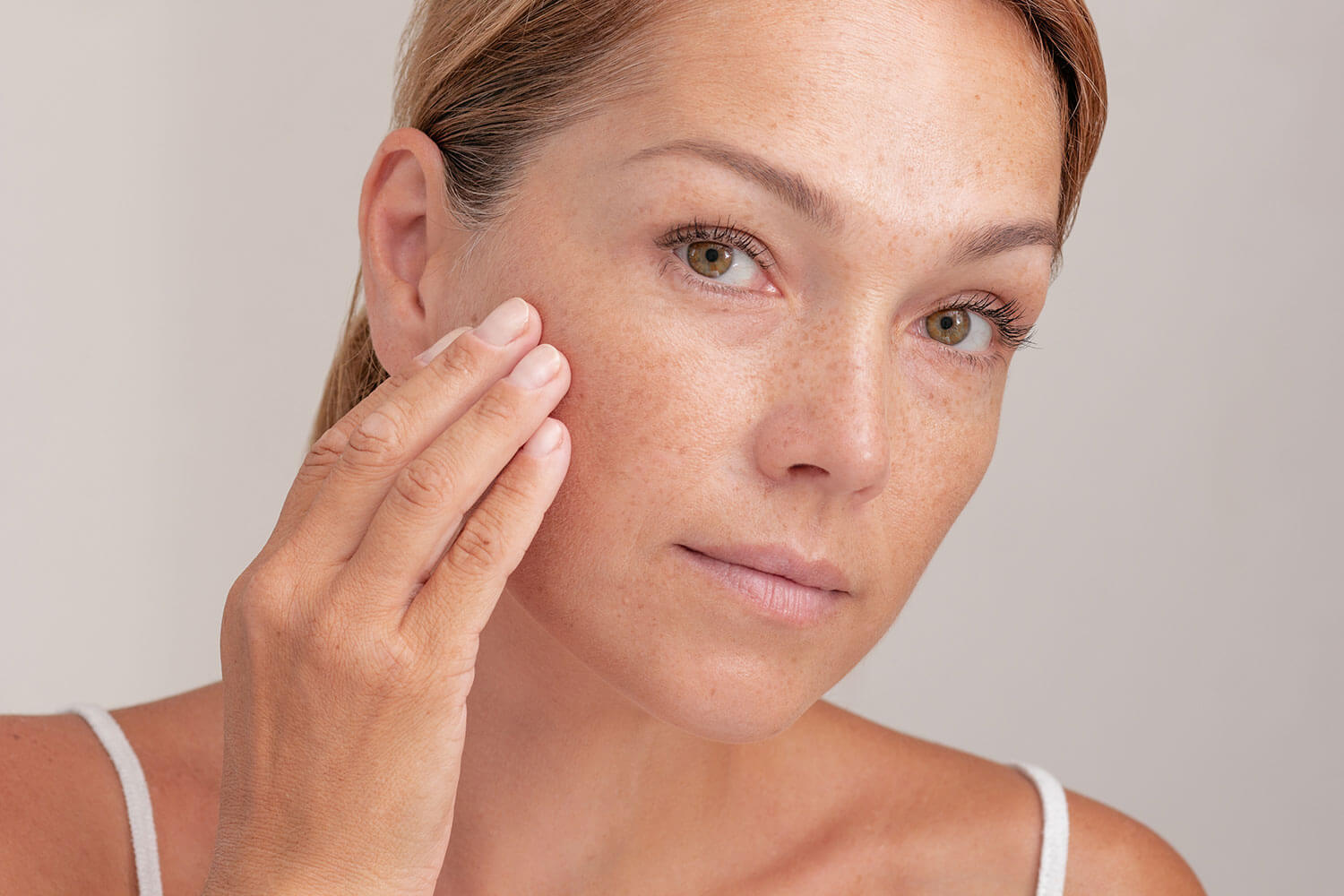
Alpha hydroxy acids — particularly glycolic acid and lactic acid — accelerate the natural shedding of the surface skin cells that carry visible pigment. Regular use of a well-formulated AHA exfoliant (two to three times per week in most mature skin routines) visibly brightens skin tone and supports the efficacy of layered brightening serums.
Retinoids for Combined Cell Turnover and Pigmentation
Retinol and prescription retinoids accelerate cell turnover while also suppressing melanin overproduction. They are among the most versatile tools in any age spots treatment protocol because they address both the surface accumulation of pigmented cells and the underlying melanocyte behavior driving the problem.
There are a few other treatments to consider, such as laser treatments and cryotherapy, which are discussed in this article by WebMD.
FAQ: What Causes Age Spots
Are age spots the same as liver spots?
Yes. ‘Liver spots’ is an older colloquial term for age spots or solar lentigines. Despite the name, they have nothing to do with liver function. The name is thought to come from their color, which resembles that of liver tissue. They are caused by UV exposure and are completely benign.
Can age spots go away on their own?
Solar lentigines do not typically fade on their own without intervention. Unlike a tan, which gradually fades as pigmented cells are shed, age spots reflect permanently overactivated melanocytes that continue to produce excess pigment. Without brightening ingredients, consistent SPF, and accelerated cell turnover, most age spots will remain stable or gradually darken over time.
How young can age spots appear?
Age spots most commonly appear from the mid-40s onward, but they can develop earlier in people with higher lifetime UV exposure, lighter skin tones, or a history of significant sunburns. Freckle-like spots in people in their 20s and 30s are more likely to be ephelides — a distinct type of pigmentation — rather than true solar lentigines.
Are age spots dangerous?
Age spots themselves are completely benign and do not require medical treatment. However, any dark spot that changes in size, shape, or color, has irregular or asymmetrical borders, or bleeds should be evaluated by a dermatologist to rule out skin conditions that require clinical attention.
AI-assisted, human-verified. At LaLaDaisy.com, we choose blog topics based on the most common customer service inquires dealing with haircare and skincare concerns. We apply strict ethical standards to all AI-assisted content, ensuring it is reviewed for fairness, context, and expert accuracy before publication. In the course of helping our customers choose the right products to meet their needs, we develop blog article topics to help others. Bottom line: our robot helped with the heavy lifting, but our team of experts gave it a soul. Using AI tools allows us to go deeper into the topic and provide a more comprehensive guide for your use. At LaLadaisy.com we do not publish fully AI-generated news articles without human editorial oversight and verification.