
The ingredients that fade ingrown hair dark spots fall into two distinct categories, and understanding the difference is the fastest way to stop wasting money on products that only address half the problem. Some ingredients exist to keep the follicle clear so new ingrown hairs stop forming. Others exist to calm and fade the pigment left behind once irritation has already happened. A formula that only does one of these jobs will always feel like it is working halfway. This guide breaks down exactly which ingredients do what, how they work together, and what to look for on a label.
Why Two Categories of Ingredients Are Necessary
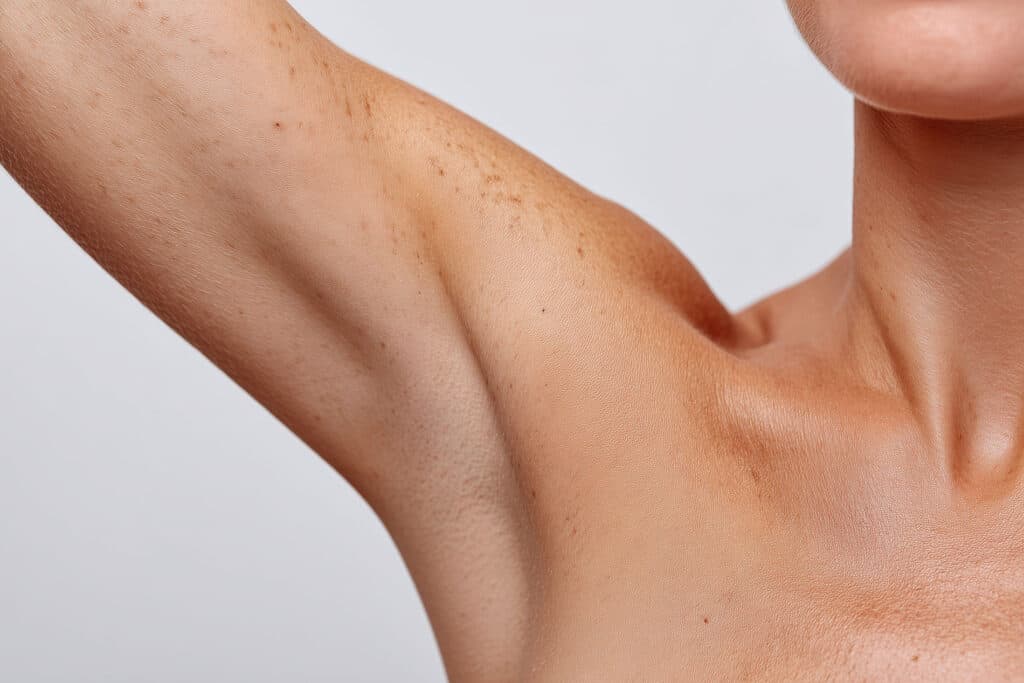
An ingrown hair dark spot is really two problems stacked on top of each other. First, a hair curls back into the follicle instead of exiting cleanly, which is a mechanical, physical issue. Second, the skin’s healing response to that irritation produces excess melanin, which is a pigment issue. Treating only the mechanical side with a plain exfoliant can prevent new bumps but does very little to fade marks that already exist. Treating only the pigment side with a brightening cream can fade discoloration but does nothing to stop the next ingrown hair from forming and creating a new one. Effective formulas combine both categories deliberately, and that pairing is what separates a targeted post-hair-removal treatment from a generic body lotion.
The Exfoliating Acids That Keep Follicles Clear
Salicylic Acid
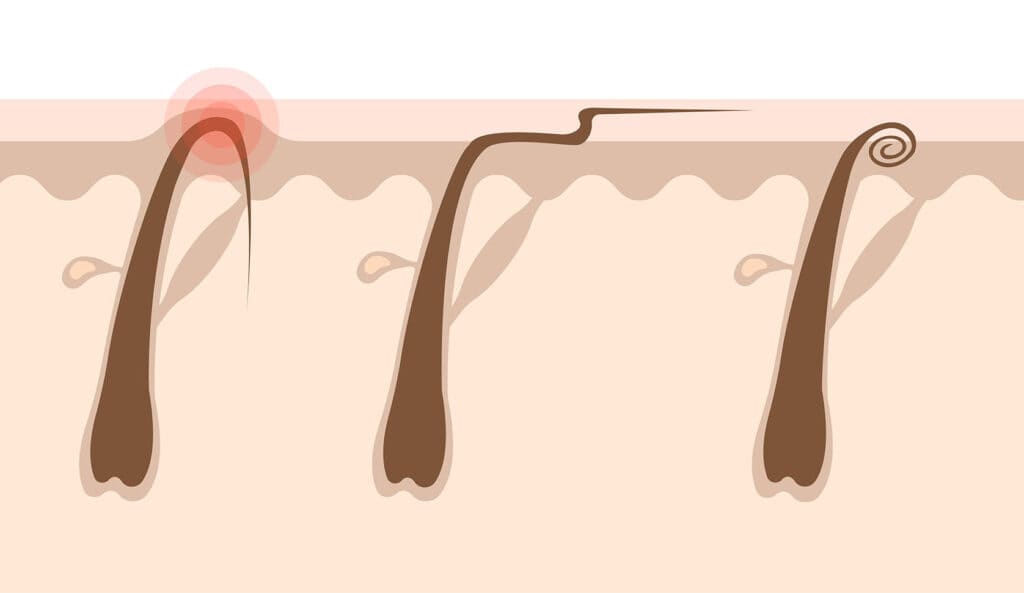
Salicylic acid is a beta-hydroxy acid, which means it is oil-soluble and able to penetrate into the follicle itself rather than sitting on the surface. This makes it especially effective at breaking down the buildup of dead skin cells and debris that traps a regrowing hair. Because it also has natural anti-inflammatory properties, salicylic acid does double duty: clearing the follicle while calming the redness and irritation that typically surrounds an ingrown hair.
Glycolic Acid
Glycolic acid is an alpha-hydroxy acid with the smallest molecular size in its category, which allows it to exfoliate the skin’s surface efficiently and encourage faster cell turnover. Faster turnover means dead skin is shed before it can clog a follicle opening, and it also means that any existing pigment in the upper layers of skin is carried away more quickly, gradually fading dark spots as new, evenly toned skin cells take their place.
Lactic Acid

Lactic acid is a gentler alpha-hydroxy acid that exfoliates while also drawing in moisture, which makes it a good balance for skin that is already somewhat irritated from recent hair removal. It supports the same cell turnover process as glycolic acid but with a lower likelihood of stinging or dryness, which matters on sensitive areas like the bikini line or underarms.
The Brightening Technology That Fades Existing Marks
Chromabright and Similar Complexes
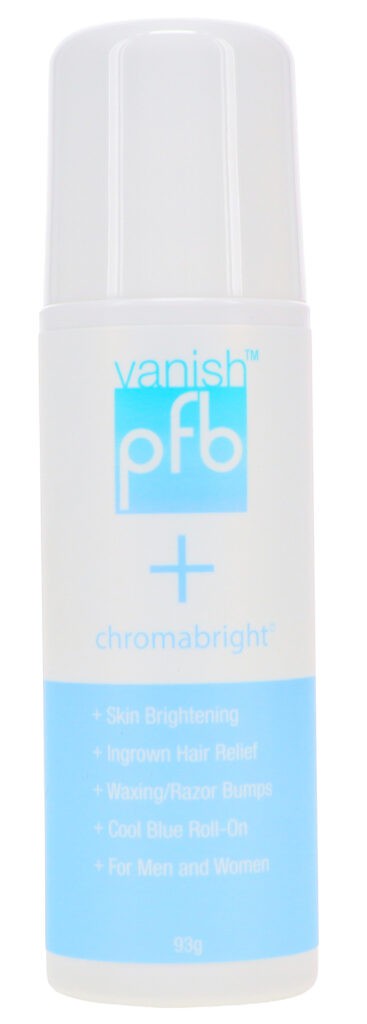
Patented brightening ingredients such as Chromabright, chemically referred to as dimethylmethoxy chromanyl palmitate, interrupt the pathway that produces excess melanin in irritated skin. Unlike some older lightening ingredients, this class of brightening technology is formulated to even out tone gradually and consistently, without the harsh irritation that can come from more aggressive ingredients. Because it works on the pigment-producing process rather than physically stripping skin, results build steadily over weeks rather than appearing overnight, which is normal and expected.
Botanical Brightening Extracts
Several natural extracts are frequently paired with acids and Chromabright-style technology for an added brightening boost. Shiitake mushroom extract, listed as lentinus edodes mycelium extract on an ingredient label, has natural skin-brightening properties and antioxidant benefits. White water lily extract, listed as nymphaea alba flower extract, and plankton extract both contribute antioxidant support that helps protect skin from the free-radical damage that can worsen the appearance of dark spots over time. Willow bark extract, a natural source of salicin, adds a gentle secondary exfoliating effect alongside its calming properties.
Supporting Ingredients Worth Knowing
Beyond the primary actives, a few supporting ingredients show up consistently in well-formulated post-hair-removal treatments and are worth recognizing on a label:
- Glycerin — a humectant that draws moisture into skin, helping offset any dryness from exfoliating acids
- Butylene glycol and propylene glycol — lightweight conditioning agents that improve how a formula spreads and absorbs
- Hydroxycellulose-based thickeners — used to create the gel or roll-on textures that make spot application precise and mess-free
None of these ingredients fade dark spots on their own, but they determine how comfortable a formula feels during the weeks of consistent use that acids and brightening technology require to work. For the full framework on prevention, technique, and daily habits beyond ingredients alone, see our complete guide to ingrown hairs and dark spots.
Ingredients That Fade Ingrown Hair Dark Spots at a Glance

Pulling the categories above into one quick reference makes label-reading faster:
- Salicylic acid — clears follicles, calms inflammation, oil-soluble
- Glycolic acid — speeds cell turnover, fades surface pigment
- Lactic acid — gentler exfoliation with added hydration
- Chromabright (dimethylmethoxy chromanyl palmitate) — targeted brightening technology for existing dark spots
- Shiitake mushroom, white water lily, and plankton extracts — antioxidant and mild brightening support
- Willow bark extract — natural salicin source with calming, mildly exfoliating properties
A formula that includes at least one ingredient from the acid group and the named brightening technology is addressing both sides of the concern at once, which is the combination to look for regardless of brand or price point.
How to Read a Label With This Framework in Mind

When comparing products, scan the ingredient list for at least one exfoliating acid — salicylic, glycolic, or lactic — near the top of the list, which indicates a meaningful concentration rather than a trace amount. Then look for a named brightening technology like Chromabright, rather than a vague “brightening complex” claim with no specific ingredient behind it. A formula built around both categories, at meaningful concentrations, is doing the two jobs this concern actually requires.
Why Formula Strength and Consistency Matter More Than Speed
It can be tempting to look for the strongest possible concentration of acids, assuming faster exfoliation means faster results. In practice, skin that is already irritated from ingrown hairs responds better to moderate, well-tolerated concentrations used daily than to a harsh formula used inconsistently because it stings or causes peeling. The goal is a formula gentle enough to apply every day, since daily consistency is what actually drives the timeline for fading dark spots — typically six to eight weeks of steady use, regardless of which specific product is chosen.
Putting It Into Practice

Knowing the ingredients that fade ingrown hair dark spots is only useful once it changes how you shop and how you apply product. Rather than chasing whichever formula has the highest concentration or the newest marketing claim, look for the two-category combination outlined above — an exfoliating acid and a named brightening technology — and commit to applying it daily rather than only immediately after hair removal. Ingredient quality sets the ceiling on what a formula can do, but consistency is what determines whether skin actually reaches that ceiling.
Frequently Asked Questions
Which ingredient is most important for fading dark spots specifically?
Brightening technology such as Chromabright does the most direct work on existing pigment, but it performs best paired with an exfoliating acid, since faster cell turnover helps carry faded pigment out of the skin more efficiently.
Can I use salicylic acid and glycolic acid at the same time?
Many effective formulas already combine salicylic, glycolic, and lactic acid together at balanced concentrations specifically designed to work in tandem. Layering separate high-concentration acid products on top of each other, however, can be more irritating than helpful.
Are these ingredients safe for sensitive skin?
Most formulas built around this ingredient combination are designed for use on sensitive areas like the bikini line and underarms, but anyone with reactive or very sensitive skin should patch test on a small area first and introduce daily use gradually.
Do natural extracts like shiitake mushroom actually do anything, or are they just marketing?
Botanical extracts like shiitake mushroom and white water lily provide genuine antioxidant and mild brightening support, though they are typically secondary to the primary acids and patented brightening technology rather than the main drivers of results.
AI-assisted, human-verified. At LaLaDaisy.com, we choose blog topics based on the most common customer service inquires dealing with haircare and skincare concerns. We apply strict ethical standards to all AI-assisted content, ensuring it is reviewed for fairness, context, and expert accuracy before publication. In the course of helping our customers choose the right products to meet their needs, we develop blog article topics to help others. Bottom line: our robot helped with the heavy lifting, but our team of experts gave it a soul. Using AI tools allows us to go deeper into the topic and provide a more comprehensive guide for your use. At LaLadaisy.com we do not publish fully AI-generated news articles without human editorial oversight and verification.