
An ingrown hair serum vs roll-on treatment decision comes down to one practical question: how large and how precise is the area you are treating? Both formats can deliver the same core ingredients — exfoliating acids paired with targeted brightening technology — but the way they are applied changes which one fits a given routine best. This guide compares the two formats directly, using PFB Vanish Ultra Triple Action Serum and PFB Vanish + Chromabright as reference points, so the choice becomes straightforward rather than a guess.
The Core Difference Is Application, Not Effectiveness
Both a serum and a roll-on treatment are typically built around the same categories of active ingredients: exfoliating acids like salicylic, glycolic, and lactic acid to keep follicles clear, paired with targeted brightening technology to fade existing dark spots. Neither format is inherently more effective at a chemical level. What changes is how much control each format gives you over placement, how quickly it absorbs, and how well it suits the size of the area being treated.
Serum: Built for Broader Coverage
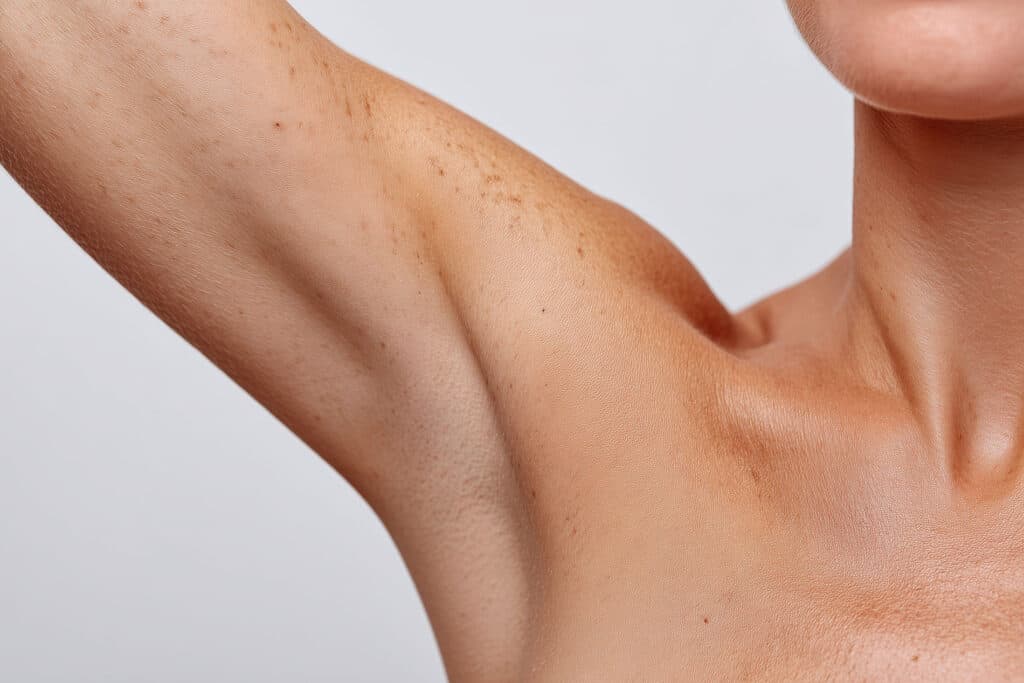
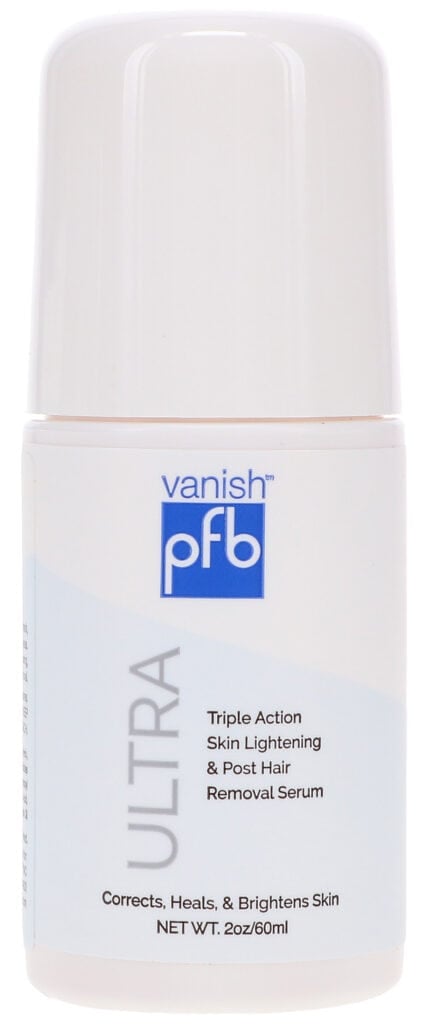
A lightweight serum, dispensed by hand and smoothed across the skin, is designed to cover larger surface areas efficiently. This makes it a strong fit for legs, underarms, or any area where ingrown hairs and dark spots are spread across a wider patch of skin rather than concentrated in a few precise spots. PFB Vanish Ultra Triple Action Serum is formulated this way, combining shiitake mushroom, white water lily, and plankton extract with patented Chromabright technology to brighten dull, dark spots while calming the redness and irritation that surrounds recently treated follicles. Because it is a fluid formula, a small amount spreads easily across the inside of the thighs, underarms, legs, chin, or nape — anywhere hair is regularly removed.
Roll-On: Built for Precision
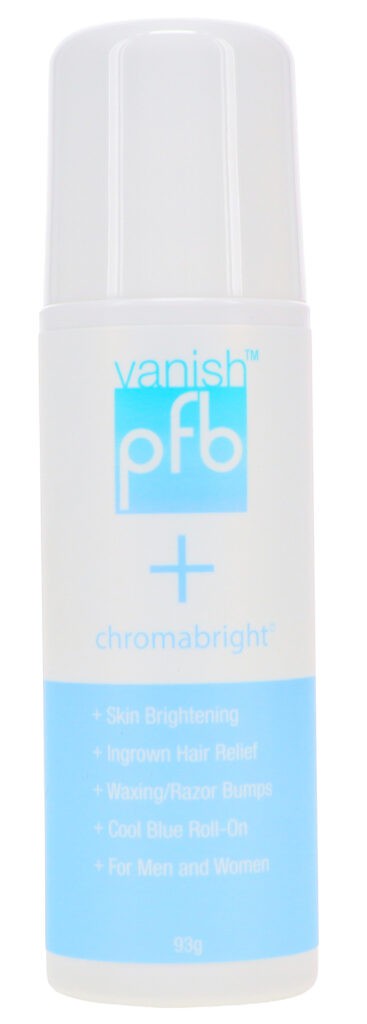
A roll-on applicator delivers product directly to a small, defined area with far more control than a serum applied by hand. This makes it especially well suited to spot-specific concerns — a cluster of ingrown hairs on the bikini line, a dark mark on the chin, or a small irritated patch under the arm. PFB Vanish + Chromabright uses this roll-on format specifically, pairing salicylic, glycolic, and lactic acid with the same Chromabright brightening technology in a two-in-one formula designed to both prevent new ingrown hairs and fade the scarring left behind from previous ones. The roll-on design also means less product is wasted on skin that does not need treatment, which matters for smaller, high-precision areas like the bikini line.
Side-by-Side Comparison
| PFB Vanish Ultra Triple Action Serum | PFB Vanish + Chromabright | |
| Format | Fluid serum | Roll-on applicator |
| Best for | Larger areas — legs, underarms, inner thighs | Smaller, targeted areas — bikini line, chin, face |
| Application style | Smoothed on by hand across the area | Rolled directly onto specific spots |
| Core actives | Salicylic acid, glycolic acid, Chromabright technology, botanical extracts | Salicylic acid, glycolic acid, lactic acid, Chromabright technology |
| Size | 2 oz | 4 oz |
| Typical results timeline | 6 to 8 weeks of consistent use | 6 to 8 weeks of consistent use |
When to Use Both Together

These two formats are not mutually exclusive, and many routines benefit from using each one where it fits best rather than choosing only one. A practical approach is assigning the serum to larger areas like the legs or underarms, while reserving the roll-on for smaller, more concentrated zones like the bikini line or chin. Applying both to the exact same patch of skin at the same time is generally unnecessary and can increase the likelihood of irritation from over-application, so think of them as covering different zones of a single routine rather than layering on top of each other.
This zone-based approach also makes a routine easier to remember. Rather than trying to recall which product goes where every time, most people find it helpful to keep the serum in the shower for legs and underarms immediately after rinsing off, and keep the roll-on somewhere accessible for a quick, targeted application to the bikini line or face once skin is dry. Splitting the routine this way removes the guesswork and makes daily consistency far more realistic to maintain.
Matching Format to Area: A Quick Reference
- Legs and inner thighs: serum, for efficient coverage across a larger surface
- Underarms: serum, though a roll-on works well for anyone who prefers more targeted control in this smaller area
- Bikini line: roll-on, for precise placement on concentrated ingrown hairs and dark spots
- Chin, nape, and upper lip: roll-on, since these are small, defined areas where a serum can be harder to apply cleanly
Price and Value Considerations
Format also plays into how far a product stretches. A serum applied across larger areas like both legs will typically be used up faster than a roll-on reserved for a smaller, targeted zone like the bikini line, simply because more surface area requires more product per application. When weighing an ingrown hair serum vs roll-on treatment purely on cost per use, factor in how much of the body each one is actually covering rather than comparing bottle price alone.
What Both Formats Have in Common

Regardless of which format fits a given area, the underlying routine stays the same: apply immediately after hair removal, when follicles are most receptive to treatment, and continue with daily application on non-removal days to keep results building. Skipping the daily maintenance step is the most common reason either format underperforms, not a flaw in the format itself. For the full explanation of this four-step system, see our guide to ingrown hairs and dark spots after hair removal, and for a deeper walk-through of daily application timing, see our complete post-hair-removal routine.
Making the Decision for Your Routine
If most of the concern is spread across a larger area, a serum is generally the more efficient and practical choice. If the concern is concentrated in one or two smaller, well-defined spots — which is extremely common on the bikini line — a roll-on offers more precision with less product waste. Many people find that a combination, assigning each format to the zone it handles best, covers the full routine most effectively. For anyone whose primary concern is the bikini area specifically, our dedicated guide to bikini line ingrown hairs and dark spots walks through format and technique considerations unique to that zone in more depth.
Ingrown Hair Serum vs Roll-On Treatment: There Is No Single Right Answer

The ingrown hair serum vs roll-on treatment question does not have a universal winner, because the two formats are built to solve different practical problems rather than compete on effectiveness. A serum wins on efficient coverage across larger areas. A roll-on wins on precision for smaller, well-defined spots. The right call comes down to being honest about where your ingrown hairs and dark spots actually show up, and choosing — or combining — formats accordingly rather than defaulting to whichever one is more familiar or heavily marketed.
Frequently Asked Questions
Can I switch between a serum and a roll-on, or should I stick to one format?
Both can be used together, assigned to different areas based on size and precision needs. There is no requirement to use only one format across an entire routine.
Which format is better for sensitive skin?
Sensitivity depends more on the specific active ingredient concentrations than the format itself. Both a serum and a roll-on built around the same acid and brightening-technology combination should be patch tested first regardless of which one is chosen.
Is a roll-on less effective than a serum because it covers a smaller area?
No — a roll-on is not designed to cover large areas, so comparing coverage directly is not the right measure. For its intended use on smaller, precise areas, a roll-on can be more effective than a serum simply because it places product exactly where needed with less waste.
How much product should I use each time?
A thin, even layer is sufficient for either format. More product does not speed up results and can increase the chance of irritation, particularly with acid-based formulas used daily.
AI-assisted, human-verified. At LaLaDaisy.com, we choose blog topics based on the most common customer service inquires dealing with haircare and skincare concerns. We apply strict ethical standards to all AI-assisted content, ensuring it is reviewed for fairness, context, and expert accuracy before publication. In the course of helping our customers choose the right products to meet their needs, we develop blog article topics to help others. Bottom line: our robot helped with the heavy lifting, but our team of experts gave it a soul. Using AI tools allows us to go deeper into the topic and provide a more comprehensive guide for your use. At LaLadaisy.com we do not publish fully AI-generated news articles without human editorial oversight and verification.