
Having a bikini line ingrown hairs and dark spots care routine is important. Ingrown hairs and dark spots are one of the most persistent skin concerns tied to hair removal, and for good reason: the skin in this area is thinner and more reactive than most other parts of the body, hair tends to be coarser, and clothing creates constant friction that keeps healing follicles irritated. The result is a cycle that feels harder to break than ingrown hairs anywhere else. This guide walks through why the bikini area is uniquely prone to this concern and lays out a complete, realistic routine for calmer skin and a more even tone.
Why the Bikini Line Is Especially Prone to This Concern

Several factors overlap in this one area in a way they rarely do elsewhere on the body. Bikini line skin is thinner and contains more nerve endings, which means irritation from hair removal registers more intensely and inflammation runs hotter than on the legs or arms. Hair in this area also tends to be coarser and more likely to curl, which raises the odds of a cut or waxed hair curling back into the follicle instead of growing out cleanly. On top of that, underwear, swimwear, and fitted clothing create ongoing friction against skin that is trying to heal, which can re-irritate a healing follicle before it has fully calmed down. Sweat and warmth in this area add another layer of potential irritation, particularly in warmer months or after exercise.
Because all of these factors compound, bikini line ingrown hairs are more likely to result in noticeable dark spots than the same irritation would elsewhere on the body, and those spots can take longer to fade without a dedicated routine.
Building a Bikini-Specific Routine
The same four-step framework of prep, remove, treat, and maintain that applies everywhere still holds here, but the details shift to account for how sensitive this area is.
Prep: Exfoliate Gently, Not Aggressively

Exfoliate the bikini area the night before hair removal, using a soft washcloth or a very mild scrub. Skip anything with large, rough granules, which can create micro-tears in already-thin skin. The goal is simply to clear surface debris so regrowing hair has a clean path out of the follicle, not to scrub aggressively.
Remove: Technique Matters More Here Than Anywhere Else
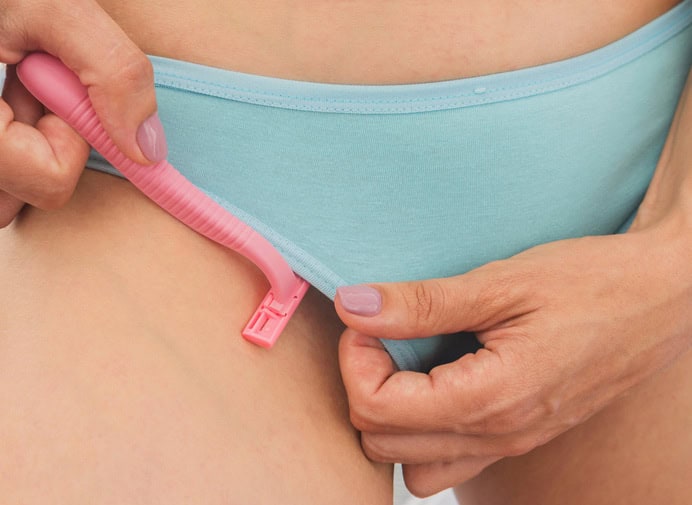
If shaving, always use a fresh, sharp razor blade and shave in the direction of hair growth, since a dull blade tugs at hair and skin rather than cutting cleanly, which is one of the biggest drivers of irritation in this area. If waxing, make sure the technician or the at-home wax is pulled against the direction of growth in one quick motion, and avoid going over the same strip of skin more than once. Whichever method is used, this is not the area to rush.
Treat: Precision Over Coverage
Because the bikini line is a smaller, more defined area than the legs or underarms, a roll-on or targeted applicator tends to work better here than a broad-coverage serum, since it allows for precise placement exactly where ingrown hairs and dark spots are concentrated without spreading product onto unaffected skin. A formula built around exfoliating acids and targeted brightening technology, applied consistently right after hair removal and daily between sessions, is what interrupts the cycle of new bumps and fading marks at the same time.
Maintain: Daily, Not Just Post-Shave

Daily application, even on days without hair removal, keeps the follicle clear and continues fading existing marks. This is especially important on the bikini line because friction from clothing means the area is essentially never fully “resting” the way skin elsewhere on the body might.
Choosing the Right Format for This Area
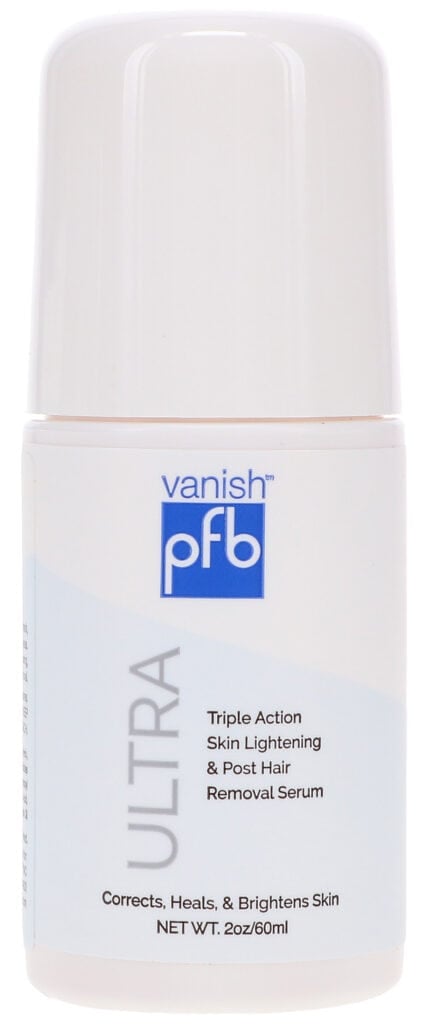
Given how small and precise the bikini line is compared to larger areas like the legs, a roll-on applicator generally offers more control, letting you target dark spots and prone areas directly. A lightweight serum can still work well if it is applied with a fingertip in a thin, controlled layer rather than a broad sweep. For a full breakdown of when each format makes more sense, see our comparison of serum or roll-on treatment options.
What to Avoid on This Area
A few habits are worth specifically calling out for the bikini line, since the consequences of getting them wrong tend to be more visible here than elsewhere.
- Tight synthetic underwear immediately after hair removal. Give the area a few hours in breathable cotton before switching back to tighter fabrics or swimwear.
- Fragranced products on freshly treated skin. Heavily fragranced lotions or body sprays can sting and re-irritate skin that has just been shaved or waxed.
- Picking at visible ingrown hairs. This is true everywhere, but especially important here, since bikini line skin is more prone to noticeable dark spots and, in some cases, scarring from repeated picking.
- Skipping exfoliation between removal sessions. Even light, twice-weekly exfoliation on non-removal days helps prevent the buildup that traps regrowing hair.
- Switching hair removal methods too often. Constantly alternating between shaving, waxing, and other methods makes it harder to identify what is actually causing recurring irritation, and gives skin less time to adapt to any single technique.
- Removing hair right before a swim or workout. Chlorine, salt water, and sweat can all irritate freshly treated follicles. Where possible, build in a few hours between hair removal and activities that expose the area to these irritants.
How This Fits Into a Broader Routine

Everything covered here is a bikini-specific application of the same underlying system used across any area where hair is removed. If underarms, legs, or facial hair removal are also part of your routine, the core habits translate directly — only the format and amount of product need adjusting. For the complete four-step framework this routine is built on, see our guide on how to get rid of ingrown hairs and dark spots. For the full day-by-day version of this routine across every area, including how to layer products without overdoing it, see our post-hair-removal routine guide.
Bikini Line Ingrown Hairs and Dark Spots Care Routine – The Payoff of Sticking With It
Bikini line ingrown hairs and dark spots respond to consistency more than to any single product or technique change. The routine above is not complicated, but it does require applying treatment on days you are not removing hair, not just immediately afterward — that daily habit is what separates a routine that maintains visible progress from one that stalls out after a promising first couple of weeks. Give the full six-to-eight-week timeline a fair chance before judging whether a routine is working, since pigment fading in particular follows skin’s natural turnover cycle rather than the calendar of when hair is removed.
Frequently Asked Questions
Why do I get more dark spots on my bikini line than anywhere else I remove hair?
Thinner, more reactive skin combined with coarser hair and constant friction from clothing makes this area especially prone to both ingrown hairs and the dark marks that follow. It is not a sign anything is being done wrong — it is simply a more demanding area to treat.
Is it safe to use a brightening treatment on the bikini area?
Formulas built specifically for post-hair-removal skin are generally designed for use on the bikini line, underarms, and similar areas, but always patch test first and follow the product’s specific instructions, since this skin can be more reactive than other areas.
Should I wax or shave if I get frequent bikini line ingrown hairs?
Waxing removes hair from the root and produces a naturally tapered regrowth tip, which can lower ingrown hair risk compared to shaving for some people, though it can also cause more immediate irritation. Testing both with a consistent treatment routine afterward is the most reliable way to see which works better for your skin.
How long before I see fewer bumps and lighter dark spots on my bikini line?
Most people notice fewer new ingrown hairs within two to three weeks of daily treatment, while visible fading of existing dark spots typically takes six to eight weeks of consistent use.
AI-assisted, human-verified. At LaLaDaisy.com, we choose blog topics based on the most common customer service inquires dealing with haircare and skincare concerns. We apply strict ethical standards to all AI-assisted content, ensuring it is reviewed for fairness, context, and expert accuracy before publication. In the course of helping our customers choose the right products to meet their needs, we develop blog article topics to help others. Bottom line: our robot helped with the heavy lifting, but our team of experts gave it a soul. Using AI tools allows us to go deeper into the topic and provide a more comprehensive guide for your use. At LaLadaisy.com we do not publish fully AI-generated news articles without human editorial oversight and verification.