

Hyaluronic acid for skin type is not a one-size-fits-all formula decision. While hyaluronic acid is one of the most universally tolerated skincare ingredients in existence, the format, concentration, supporting ingredients, and application approach that delivers the best results vary meaningfully across skin types. A dense hyaluronic acid cream designed for dry skin will feel suffocating on an oily complexion. A weightless serum formulated for oily skin will leave dry skin wanting more. Getting the right match between your skin type and your product format determines whether hyaluronic acid becomes a cornerstone of your routine or an ingredient that underwhelms.
Why Skin Type Changes the Hyaluronic Acid Equation

Hyaluronic acid’s mechanism — drawing water to the skin surface and reducing moisture loss — is the same regardless of skin type. What changes is the skin’s baseline hydration status, sebum production level, barrier integrity, and sensitivity threshold. Each of these variables affects how the skin receives and retains the moisture that hyaluronic acid delivers, and each determines which product format and formula composition will produce the best outcome.
Understanding your skin type as a functional category — rather than a fixed identity — also matters here. Skin type can shift with seasons, age, hormonal cycles, climate changes, and routine disruptions. A person with classically oily skin may experience dehydration in winter. A dry skin type may develop sensitivity when using too many actives. Matching hyaluronic acid selection to your skin’s current condition is more accurate than locking into a fixed type.
Hyaluronic Acid for Dry Skin
Dry skin is defined by insufficient lipid production, which compromises the skin barrier and leads to chronic moisture loss. For dry skin, hyaluronic acid is not just beneficial — it is a foundational requirement. Without adequate hydration, dry skin cannot absorb or perform well with any other actives in a routine.
What Works Best

Dry skin benefits most from a hyaluronic acid serum or essence with high concentration (1% to 2%), multi-molecular weight blending for both surface and deeper layer hydration, and a formula that includes complementary humectants like glycerin and panthenol to extend moisture retention. The serum should be followed immediately by a rich emollient moisturizer — ideally one that contains ceramides to restore lipid barriers — and optionally finished with a face oil for additional occlusion.
For dry skin specifically, layering a hydrating toner or essence beneath the hyaluronic acid serum before applying moisturizer is a highly effective protocol. Each hydration step compounds the water content available for the hyaluronic acid to bind, producing a more significant and lasting result than a single serum step alone.
Ingredients to Look for Alongside Hyaluronic Acid
- Ceramides — restore and reinforce the lipid barrier that dry skin lacks.
- Glycerin — a humectant that works synergistically with hyaluronic acid to extend moisture retention.
- Squalane — a lightweight plant-derived oil that provides occlusion without heaviness.
- Panthenol (Pro-Vitamin B5) — soothes and supports barrier recovery alongside hydration.
Hyaluronic Acid for Oily Skin
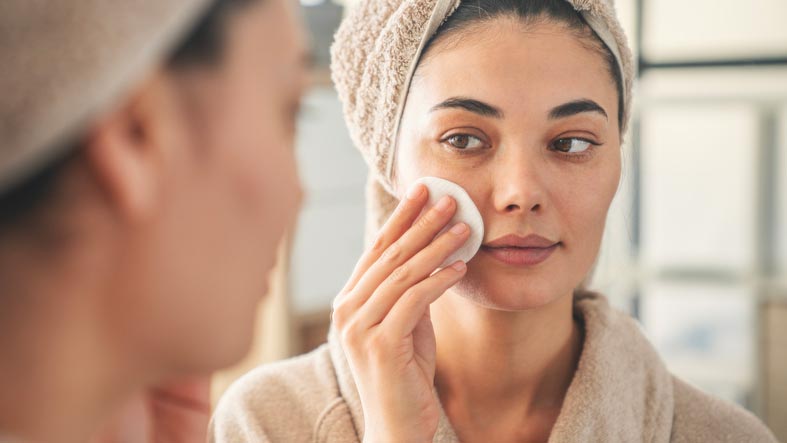
Oily skin is frequently misunderstood as a skin type that does not need hydration. In reality, oily skin is one of the skin types most prone to dehydration — particularly when maintained with harsh cleansers, mattifying products, or treatments that strip the barrier in the process of controlling shine. When dehydrated oily skin signals a need for moisture, the sebaceous glands can actually increase oil production as a compensatory response, worsening the oiliness the routine was designed to address.
Hyaluronic acid is an ideal hydrating ingredient for oily skin precisely because it delivers water-based hydration without any lipid content. It restores moisture levels without contributing to congestion, heaviness, or pore appearance.
What Works Best
Oily skin performs best with lightweight hyaluronic acid serums or gel formulas that absorb quickly and leave no greasy or emollient residue. Look for water-based textures with minimal or no added oils. The moisturizer step remains important — but for oily skin, a lightweight gel-cream or water-gel moisturizer provides the needed occlusion without the heaviness of richer formulas.
Ingredients to Look for Alongside Hyaluronic Acid
- Niacinamide — regulates sebum production while complementing hyaluronic acid’s hydration.
- Zinc PCA — a pore-refining mineral that works well in lightweight HA formulas.
- Aloe vera — a soothing, hydrating botanical that suits oily and breakout-prone skin.
Hyaluronic Acid for Combination Skin

Combination skin presents the most nuanced product-matching challenge. The T-zone (forehead, nose, and chin) tends toward oiliness, while the cheeks are typically drier or normal. A product that adequately hydrates the cheeks may feel heavy in the T-zone; one that controls oil in the center may leave the outer face under-moisturized.
For combination skin, the most practical approach is a mid-weight hyaluronic acid serum that is lightweight enough not to overwhelm the T-zone while concentrated enough to meaningfully hydrate the drier areas. Multi-texture application — a lighter moisturizer in the T-zone, a slightly richer one on the cheeks — over a consistent hyaluronic acid serum base is the most targeted protocol.
What Works Best
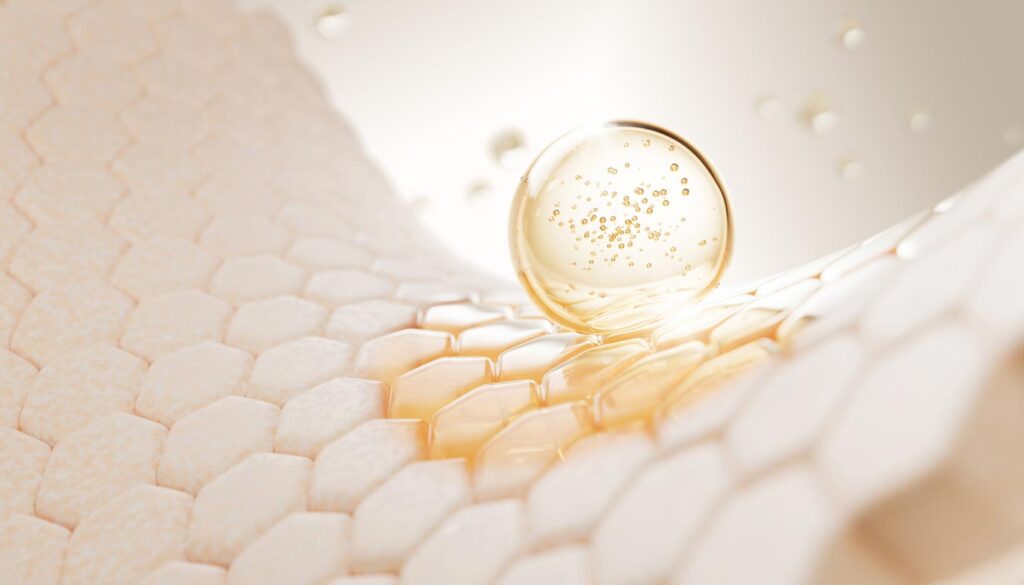
Water-based serums with balanced humectant blends and gel or fluid moisturizers formulated for combination skin are the most effective pairings. Avoid heavy oils or thick emollients applied all over; they are most useful when spot-applied to drier areas only.
Hyaluronic Acid for Sensitive Skin
Sensitive skin is characterized by a reactive, easily disrupted barrier that responds with redness, stinging, itching, or tightness to inputs that would cause no reaction in more resilient skin types. For sensitive skin, hyaluronic acid is one of the safest actives available — it is non-acidic, non-exfoliating, non-irritating in pure form, and clinically well-documented as tolerable across sensitive skin populations.
The risk for sensitive skin is not the hyaluronic acid itself but the supporting ingredients in the formula. Many hyaluronic acid products include fragrances, essential oils, denatured alcohols, or botanical extracts that can trigger sensitivity reactions even when the hyaluronic acid is entirely benign.
What Works Best

Sensitive skin benefits from fragrance-free, alcohol-free, minimal-ingredient formulas that list hyaluronic acid or sodium hyaluronate as a primary active with a short, clean supporting cast. Products designed specifically for sensitive skin or redness-prone complexions are a reliable starting point. Patch testing before full-face application remains the advisable protocol for any new product introduction on sensitive skin.
Ingredients to Look for Alongside Hyaluronic Acid
- Centella asiatica (Cica) — calming, barrier-supporting botanical with excellent tolerability.
- Allantoin — a soothing compound that reduces irritation and supports cell renewal.
- Beta-glucan — a calming humectant that is gentle enough for the most reactive skin types.
Hyaluronic Acid for Mature Skin

As skin ages, endogenous hyaluronic acid production declines, collagen density reduces, and the skin’s water-binding capacity diminishes progressively. The result is a compounding cycle: less hyaluronic acid means less moisture retention, which means lines appear more pronounced, skin looks less plump, and surface texture becomes less even. Topical hyaluronic acid is one of the most direct and effective responses to this cycle.
For mature skin, the highest priority is multi-molecular weight formulas that combine surface plumping with deeper structural hydration, alongside supporting actives that address the cellular mechanisms of aging. Hyaluronic acid works most powerfully in mature skin routines when paired with retinoids (for collagen stimulation and cell turnover) and peptides (for structural repair signaling).
For step-by-step layering guidance for your skin type, including how to sequence hyaluronic acid alongside retinoids and other actives in a mature skin routine, consult our complete guide to hyaluronic acid for skin.
Frequently Asked Questions
Can hyaluronic acid cause breakouts on oily skin?
Hyaluronic acid itself is non-comedogenic and should not cause breakouts. If you experience congestion after introducing a hyaluronic acid product, the cause is likely another ingredient in the formula — an oil, emollient, or occlusive ingredient in the moisturizer, or a botanical extract in the serum itself.
Is hyaluronic acid safe for reactive or rosacea-prone skin?
Yes. Hyaluronic acid is widely recommended by dermatologists for reactive and rosacea-prone skin types because it is non-irritating, non-exfoliating, and does not trigger the inflammatory pathways associated with rosacea flares. Fragrance-free formulations are strongly preferred for this skin concern.
Do I need a different hyaluronic acid product for each season?
Not necessarily, but your moisturizer — the step that seals in hyaluronic acid — may need to change seasonally. A lighter moisturizer in summer and a richer one in winter adjusts the occlusive coverage without requiring you to change your hyaluronic acid serum itself.
AI-assisted, human-verified. At LaLaDaisy.com, we choose blog topics based on the most common customer service inquiries dealing with haircare and skincare concerns. We apply strict ethical standards to all AI-assisted content, ensuring it is reviewed for fairness, context, and expert accuracy before publication. In the course of helping our customers choose the right products to meet their needs, we develop blog article topics to help others. Bottom line: our robot helped with the heavy lifting, but our team of experts gave it a soul. Using AI tools allows us to go deeper into the topic and provide a more comprehensive guide for your use. At LaLadaisy.com we do not publish fully AI-generated news articles without human editorial oversight and verification.