
Understanding how to use hyaluronic acid in your skincare routine correctly is what separates visible results from disappointment. Hyaluronic acid is one of the most effective hydrating ingredients available — but it is also one of the most commonly misapplied. The science of how it works determines exactly when, where, and how it should be applied, and getting those details right does not require a complicated routine. It requires a clear, structured approach, as explained in our complete guide to hyaluronic acid for skin article.
This guide covers the exact application principles, step-by-step routine sequences for morning and evening, layering rules with other actives, and the most common mistakes that prevent hyaluronic acid from performing at its full potential.
Why Application Method Matters for Hyaluronic Acid

Hyaluronic acid functions as a humectant — it works by attracting water molecules and binding them to the skin surface. This mechanism is fundamentally environmental: it requires a source of moisture to draw from. Apply it to damp skin in a reasonably humid environment, and it performs exactly as intended. Apply it to completely dry skin in a low-humidity room and it may actually draw moisture upward from deeper skin layers, only to have that moisture evaporate at the surface.
This is not a flaw in the ingredient. It is a natural consequence of how humectants work. Understanding this mechanism is the foundation of using hyaluronic acid correctly: always apply to damp skin, and always seal with a moisturizer.
Beyond the moisture-source question, the application order within a multi-step routine also determines efficacy. Hyaluronic acid should be applied before heavier emollients and occlusive ingredients so that it can interact with the moisture on the skin surface before being sealed in. Applying it over a rich cream means the hyaluronic acid sits on top of a barrier — unable to do its primary job.
The Fundamental Rules: Damp Skin and the Seal
Before moving into step-by-step sequences, these two principles govern everything:
Rule 1: Apply to Damp Skin

After cleansing, pat — do not rub — your skin dry, leaving it slightly damp. Apply your hyaluronic acid product immediately, while water molecules are still present on the skin surface. If your skin dries completely before you apply hyaluronic acid (for example, if you applied a toner and let it fully evaporate), mist your face lightly with a facial mist or thermal water spray before proceeding.
Rule 2: Always Follow with a Moisturizer
The moisturizer is the step that activates hyaluronic acid’s sustained benefit. It creates an occlusive or semi-occlusive layer that locks the moisture hyaluronic acid has drawn in and prevents transepidermal water loss (TEWL). Without it, especially in dry or air-conditioned environments, the surface hydration created by hyaluronic acid dissipates quickly. There are no conditions under which skipping the moisturizer is a good strategy when using a standalone hyaluronic acid product.
Morning Routine: Step-by-Step Sequence
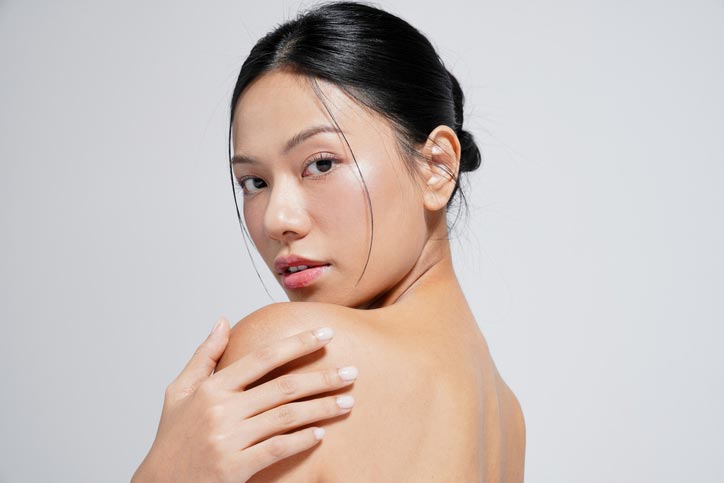
A properly structured morning routine applies hyaluronic acid after all water-based treatment steps and before all heavier emollients and SPF. The following is the correct sequence:
- Step 1 — Gentle Cleanser: Start with a non-stripping cleanser that preserves the skin barrier. Avoid foaming cleansers with sulfates if your skin tends toward dryness.
- Step 2 — Toner or Essence (Optional): If you use a hydrating toner or essence, apply it now while skin is damp from cleansing. This adds a hydration layer and keeps skin moist for the next step.
- Step 3 — Hyaluronic Acid Serum: Apply to damp skin immediately after toning, or directly after cleansing if you skip toner. Press gently into skin rather than rubbing; patting maximizes contact and avoids disrupting the moisture layer.
- Step 4 — Moisturizer: Apply within thirty to sixty seconds of the hyaluronic acid to seal it in. For oily skin, a lightweight gel-cream works well. For dry or mature skin, a richer emollient cream delivers better sealing.
- Step 5 — SPF 30 or Higher: The non-negotiable final step of every morning routine. Apply over moisturizer as directed.
Evening Routine: Step-by-Step Sequence

The evening routine allows for a fuller range of actives, including treatments like retinoids and exfoliating acids that are not appropriate for daytime use. The position of hyaluronic acid in a PM routine depends on what actives are included:
- Step 1 — First Cleanse: Remove SPF, makeup, and environmental debris with an oil cleanser or micellar water.
- Step 2 — Second Cleanse: Follow with a gentle water-based cleanser to remove residue from the first cleanse.
- Step 3 — Treatment Actives (if applicable): Apply any treatment-level actives — retinoids, niacinamide serums, exfoliating acids at the appropriate step — before reaching for hyaluronic acid.
- Step 4 — Hyaluronic Acid Serum: Apply to damp skin after treatments have been applied and partially absorbed. Hyaluronic acid serves as a hydration and buffer layer over treatment actives, particularly useful when using retinoids.
- Step 5 — Moisturizer or Night Cream: Seal with a moisturizer or overnight mask. Evening is an ideal time for richer formulations that support overnight skin repair and barrier recovery.
Layering Hyaluronic Acid with Other Actives
One of the significant advantages of hyaluronic acid is its compatibility with the full range of skincare actives. It does not react adversely with vitamin C, retinoids, niacinamide, AHAs, BHAs, or peptides. The layering rules are driven not by chemistry but by sequence and function.
Hyaluronic Acid and Vitamin C
Both are typically applied in serum form. Apply vitamin C first — it is often the most pH-sensitive active in a routine and should contact skin before other layers are added. Follow with hyaluronic acid serum, which provides a hydrating layer that supports the skin while the vitamin C is absorbed. The combination of antioxidant protection and deep hydration is highly effective for brightening and barrier support.
Hyaluronic Acid and Retinol or Retinoids
This is one of the most complementary pairings in skincare. Retinoids are among the most efficacious anti-aging actives available, but they are also associated with dryness, flaking, and sensitivity during the skin’s adjustment period. Applying hyaluronic acid after retinol or prescription retinoids adds a hydration buffer that reduces the intensity of these side effects and supports the skin barrier during the adaptation phase. Many dermatologists refer to this as the ‘sandwich method’ — moisturizer, then retinoid, then hyaluronic acid, then moisturizer — for those in the early weeks of retinoid use.
Hyaluronic Acid and Exfoliating Acids (AHAs and BHAs)
Apply exfoliating acids before hyaluronic acid. Acids are typically applied on clean skin and given a brief absorption period before layering other steps over them. Hyaluronic acid applied after an exfoliating acid helps restore hydration to skin that has been mildly destabilized by the acid step, and supports the barrier recovery process.
Hyaluronic Acid and Niacinamide

Niacinamide and hyaluronic acid are an excellent pairing for oily, congested, or dehydrated skin. Niacinamide can be applied before or after hyaluronic acid; both are water-based and compatible. If using separate serums, apply niacinamide first (as it is typically the lighter texture), follow with hyaluronic acid, then seal with moisturizer.
Knowing which molecular weight is right for your routine
Not all hyaluronic acid products are formulated equally, and the molecular weight of the hyaluronic acid in your chosen serum determines where in the skin it works. Surface-level products with high molecular weight provide immediate visible hydration and barrier protection. Deeper-penetrating low molecular weight formulas support the extracellular matrix. Understanding which molecular weight is right for your routine helps you choose a product that matches your hydration goals — whether surface plumping, structural moisture, or both. A multi-weight formula covers all bases most effectively.

Whether to Reach for a Serum or a Moisturizer
Another key structural decision in building a hyaluronic acid routine is choosing your format. The question of whether to reach for a serum vs moisturizer as your primary hyaluronic acid source depends on your existing routine, your skin’s hydration needs, and what you want the product to accomplish. A serum offers higher concentration and greater penetration; a hyaluronic acid-enriched moisturizer combines hydration and barrier sealing into one step. Many routines benefit from both — a serum underneath, a moisturizer on top — while simpler routines may favor one or the other based on budget and preference.
Frequently Asked Questions
How long should I wait between applying hyaluronic acid and my moisturizer?
Ideally, no longer than thirty to sixty seconds. Hyaluronic acid needs to be on damp skin, and waiting too long allows it to start evaporating before the moisturizer seals it in. A brief absorption moment — ten to thirty seconds — is fine, but do not let skin dry completely before applying moisturizer.
Can I apply hyaluronic acid twice a day?
Yes. Twice-daily application — morning and evening — is the standard recommendation for consistent hydration results. There is no mechanism by which daily hyaluronic acid use causes harm or diminishing returns. Consistent use produces the best sustained results.
Should I use a hyaluronic acid serum or a toner with hyaluronic acid?
A serum delivers a higher concentration and is applied closer to skin, making it the more effective delivery format. A toner with hyaluronic acid is a useful preparatory layer that adds hydration before serum application. If you choose one, choose the serum. If your budget allows for both, use them in sequence — toner first, serum second, both on damp skin.
Does hyaluronic acid go on before or after SPF?
Before SPF. The correct order is: cleanser, toner (optional), hyaluronic acid serum, moisturizer, then SPF as the absolute final step in the morning routine. Applying SPF before hyaluronic acid interferes with SPF protection and limits hyaluronic acid’s ability to interact with the skin surface.
AI-assisted, human-verified. At LaLaDaisy.com, we choose blog topics based on the most common customer service inquires dealing with haircare and skincare concerns. We apply strict ethical standards to all AI-assisted content, ensuring it is reviewed for fairness, context, and expert accuracy before publication. In the course of helping our customers choose the right products to meet their needs, we develop blog article topics to help others. Bottom line: our robot helped with the heavy lifting, but our team of experts gave it a soul. Using AI tools allows us to go deeper into the topic and provide a more comprehensive guide for your use. At LaLadaisy.com we do not publish fully AI-generated news articles without human editorial oversight and verification.