Introduction: The Problem That Looks Like a Hair Type

It’s important to learn why hair breaks when brushing. When hair consistently breaks during brushing or combing, most people draw one of two conclusions: their hair is weak or it is just prone to breakage. Both conclusions lead to the same response — more conditioning, more treatments, more products — without ever addressing the actual cause.
Hair breakage during brushing is almost always a mechanical problem, not a structural one. The hair itself is not inherently fragile. It is breaking because of how, when, or with what it is being brushed. Understanding the mechanics of why this happens is the first step toward a routine that stops it.
The Structure of Hair and Why It Breaks
Tensile Strength and Elasticity
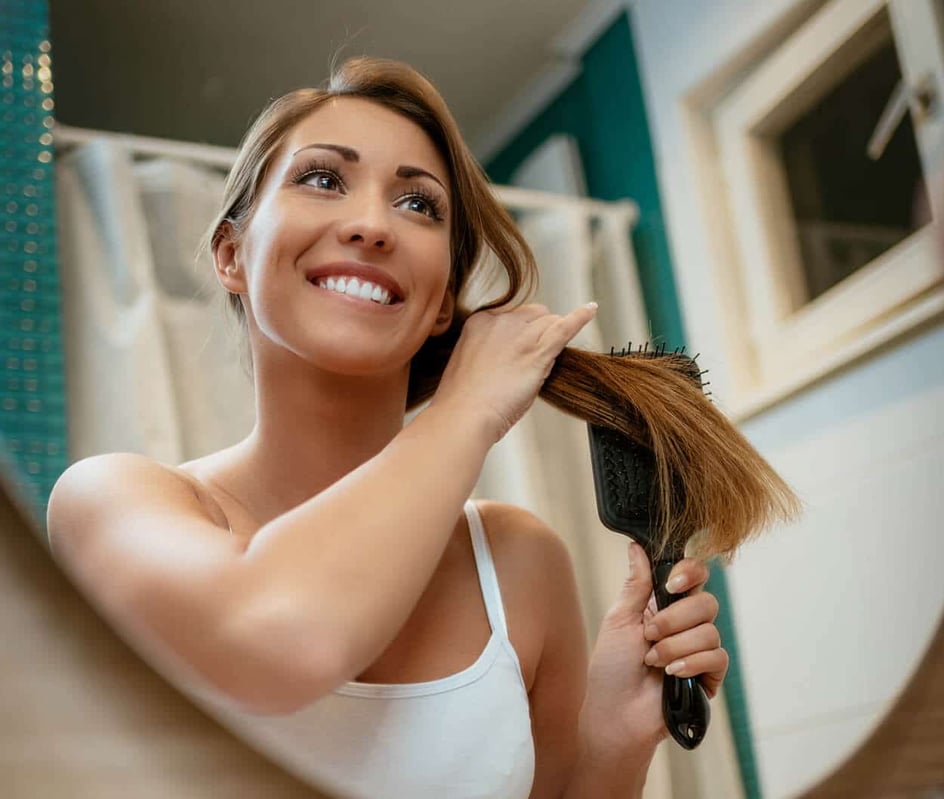
Hair is remarkably strong in tensile terms — a single strand can withstand a significant pulling force before it gives way. But that strength is not evenly distributed, and it is conditional on factors like moisture content, damage level, and how force is applied. When a brush meets a knot, all of the mechanical force concentrates at a single point on the strand rather than distributing across its length. If the force at that point exceeds the strand’s elasticity — its ability to stretch and return — the strand breaks.
Elasticity is a function of moisture. Hydrated hair stretches before it breaks. Dehydrated hair snaps. This is why moisture is so central to any breakage-prevention approach — it is not about softness or feel; it is about the strand’s physical ability to withstand mechanical stress without fracturing.
The Cuticle and Mechanical Resistance
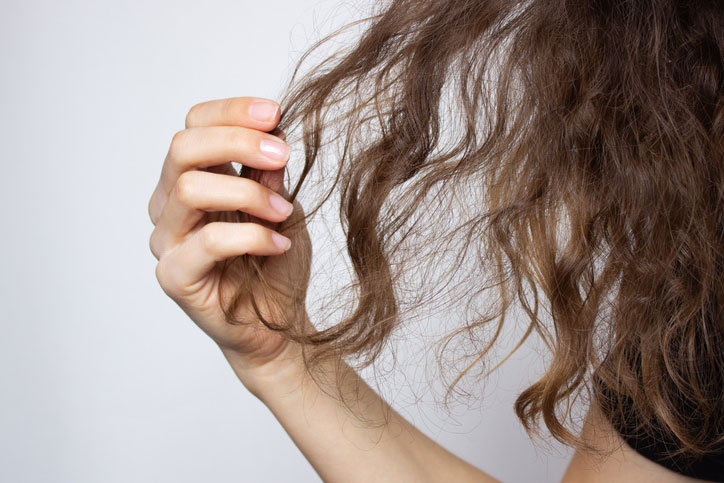
A roughened or raised cuticle creates mechanical resistance during brushing because the irregular surface of each strand catches neighboring strands and tools. When the cuticle is smooth, a brush passes through easily because strands offer little friction. When the cuticle is damaged or raised — due to heat, chemical processing, dryness, or alkaline product exposure — strands interlock and hold, and the force required to release them increases dramatically. More force means more breakage risk. This one common reason why hair breaks when brushing.
The Cortex and Structural Integrity
Beneath the cuticle lies the cortex, the structural core of the hair shaft. Chemical damage — from bleach, permanent color, relaxers, or perms — affects the cortex directly, disrupting the disulfide bonds that give hair its strength and elasticity. Hair that has undergone significant chemical processing has permanently reduced tensile strength, which means it requires even more careful mechanical handling to avoid breakage.
The Most Common Reasons Why Hair Breaks When Brushing
Starting at the Root

This is the most common and most damaging brushing mistake and a major reason why hair breaks when brushing. When you start at the root and drag a brush down through the length, every knot encountered along the way is compressed downward and made denser. By the time the brush reaches the ends — the oldest, most fragile portion of the strand — it is forcing through compounded resistance. Starting at the ends and working upward resolves knots progressively, so no individual point on the strand bears concentrated force.
Brushing Dry Hair Without Product
Dry hair has significantly less elasticity than moisturized hair. The physical act of passing a brush through dry, product-free hair forces cuticle scales against each other with every stroke, creating friction and concentrated stress at any point of resistance. The solution is not complicated: apply a leave-in conditioner or detangling product before brushing dry hair, restoring the surface slip and strand pliability that prevent snapping.
Brushing Wet Hair Too Aggressively
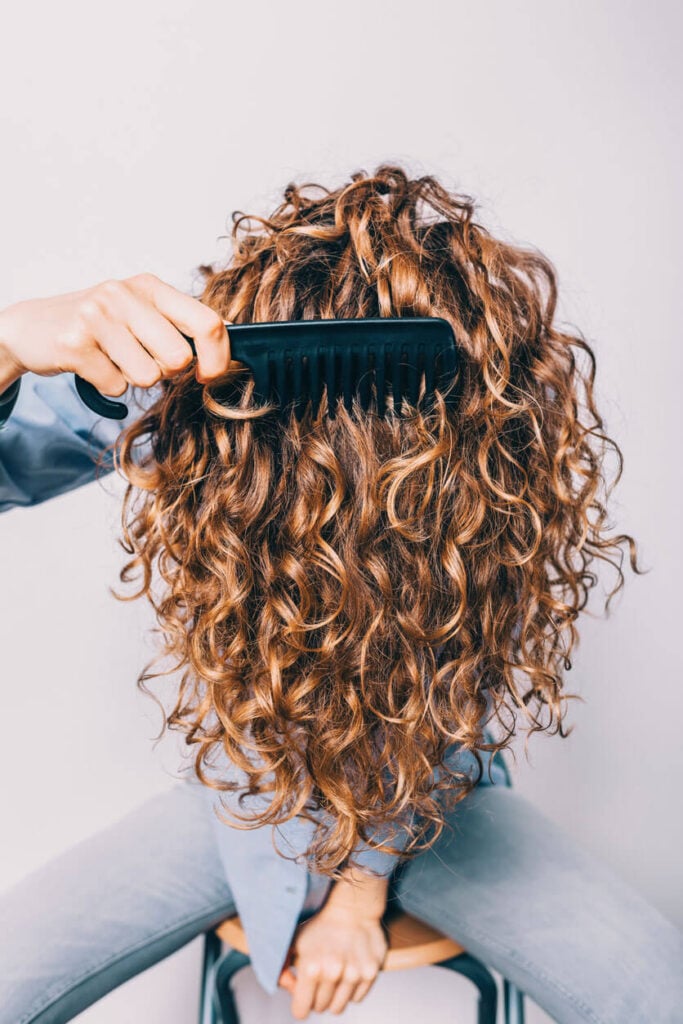
Wet hair is more pliable and easier to detangle — but it is also structurally weaker. When hair is saturated with water, the hydrogen bonds within the cortex are temporarily disrupted, reducing tensile strength significantly. This means that wet hair can withstand less force before it breaks. Detangling wet hair is effective when done correctly — with a wide-tooth comb, light pressure, conditioner in place, starting at the ends — but aggressive brushing on wet hair causes more breakage than almost any other single technique error.
Using the Wrong Brush
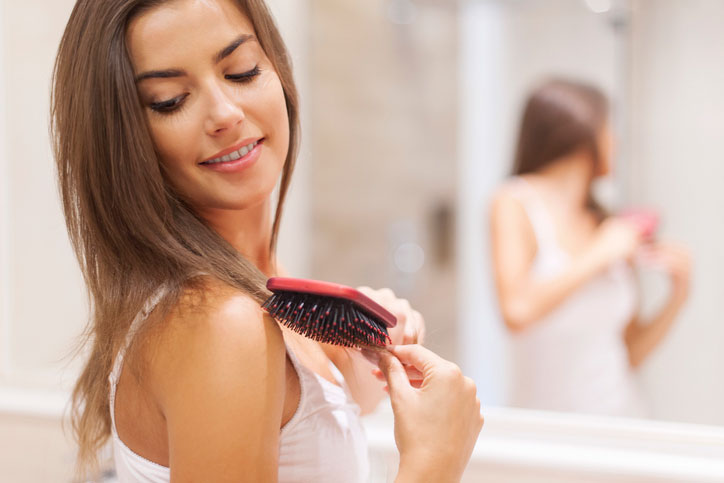
A styling brush — whether a paddle brush, boar-bristle brush, or round brush — is designed for use on already-detangled, smooth hair. It is not a detangling tool. Forcing a styling brush through tangled hair applies intense, concentrated force at every knot and creates friction along the length of every stroke. This is one of the main reasons why hair breaks when brushing. For hair that is tangled or even mildly knotted, the right tool is a wide-tooth comb or a purpose-built detangling brush with flexible, cushioned bristles that bend rather than force through resistance.
Not Enough Product — Or the Wrong Product
No technique compensates for insufficient slip. If the strands lack a conditioning layer that allows them to slide past each other and the brush’s bristles, every stroke increases friction and the risk of breakage. Using the wrong product — one that is too lightweight for the level of dryness or porosity present, or that has washed out before detangling begins — produces the same result. For a structured guide to selecting and applying the right product, see our article on the best leave-in conditioners for detangling.
Detangling Too Infrequently

Hair that is not detangled regularly develops compound tangles — knots within knots, where multiple strands have wound around each other over time. These are significantly harder to release than fresh, simple knots, and they require more force, more product, and more time. Establishing a consistent detangling schedule prevents this escalation.
Is It Breakage or Normal Shedding?
Not all hair in the brush is breakage. Normal shedding accounts for a meaningful number of shed strands per day, distributed across all hair manipulation. The key distinction is the appearance of the shed strands: naturally shed strands typically have a small white bulb at one end — the root follicle — indicating the strand completed its growth cycle before releasing. Broken strands do not have this bulb and are typically shorter than the full shaft length.
If the majority of hair in your brush is short, has no visible root bulb, and the mid-lengths or ends of the shed hairs appear frayed or split, you are seeing mechanical breakage rather than shedding. This is the signal to audit your technique, tools, and products.
How to Stop Hair Breaking When You Brush: A Structured Fix
Step 1: Add Slip Before You Start
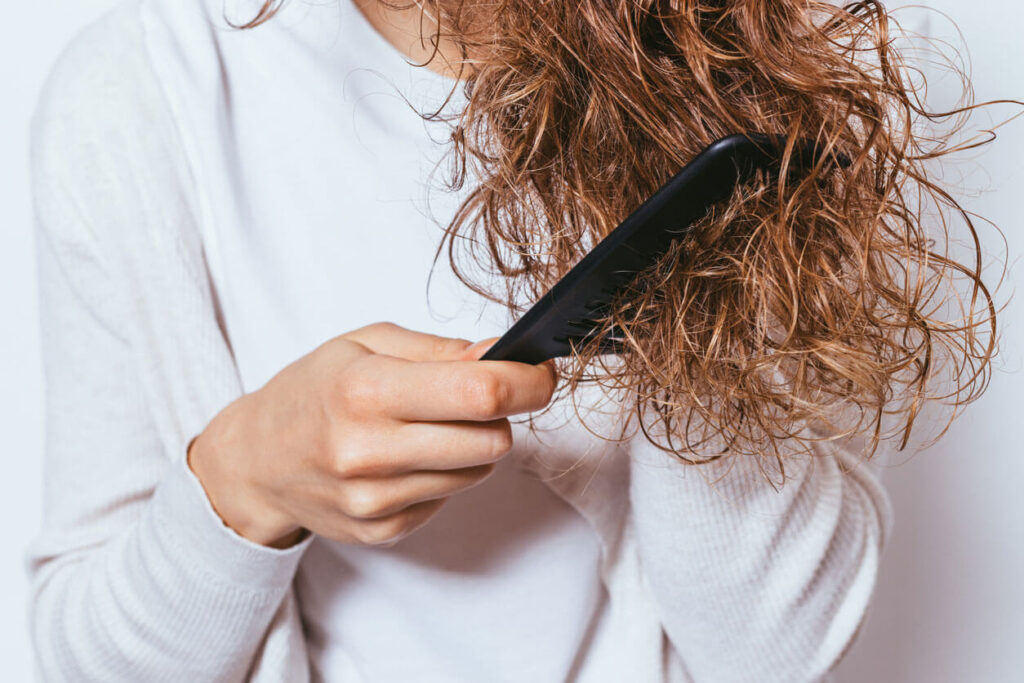
Apply a leave-in conditioner, detangling spray, or lightweight oil to the hair before introducing any tool. This step is non-negotiable if you are experiencing breakage. It does not matter how gentle your technique is without adequate product — the physics of the process work against you.
Step 2: Switch to the Right Tool
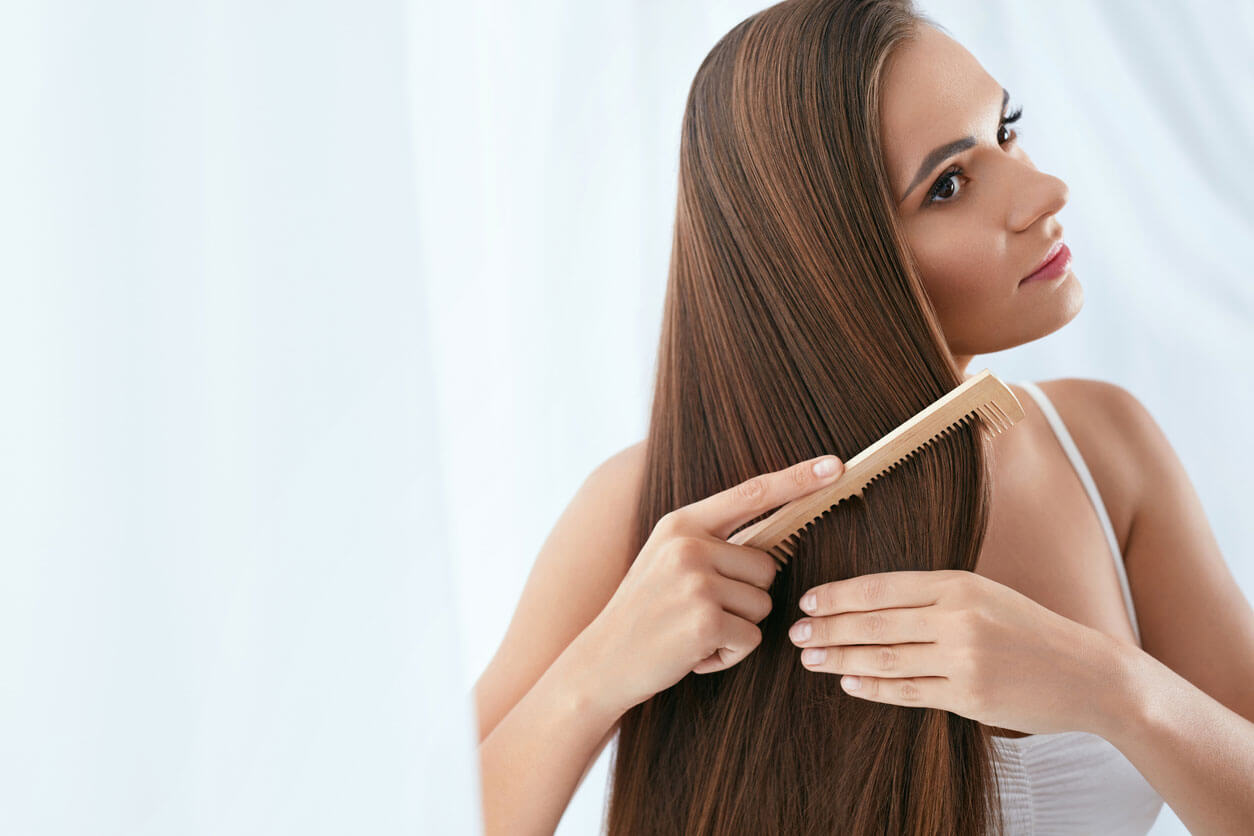
If you are currently using a styling brush for detangling, replace it with a wide-tooth comb for tangled hair and a flexible detangling brush for smoothing once knots are removed. The right tool removes force from the equation in a way that technique cannot.
Step 3: Work From the Ends Up
This is the most immediately impactful technique change most people can make. Resolve the bottom inch of the section first, then move upward, always holding the hair above the point where you are working to prevent root traction.
Step 4: Work in Sections
Divide hair into manageable sections and complete each one before moving to the next. Attempting to detangle all hair at once means you cannot control force or coverage — sections that are done re-tangle while you work on others.
Step 5: Incorporate Deep Conditioning Regularly

For hair that is chronically prone to breakage during brushing, the cuticle is likely compromised and the cortex is likely dehydrated. A weekly or bi-weekly deep conditioning treatment — one with heat for better penetration — rebuilds elasticity and smooths the cuticle surface, making each subsequent detangling session progressively easier.
Once you have addressed the immediate causes of breakage, building a complete system around these principles will give you long-term, consistent results. The complete guide to detangling hair without breakage walks through the full routine, tool selection, and type-specific adjustments in detail.
FAQ
Is it normal for hair to break when brushing?
A small amount of mechanical shedding is normal and unavoidable during any brushing process. However, consistent or heavy breakage — identified by short strands without root bulbs accumulating in the brush — is not normal and indicates a problem with technique, tools, or product. It is entirely correctable.
What type of brush causes the least breakage?
For detangling, a wide-tooth comb or a flexible detangling brush with ball-tipped, cushioned bristles causes the least damage. The key feature is the ability to flex under resistance rather than forcing through it. For styling already-smooth hair, a soft paddle brush or natural-bristle brush is fine — the distinction is that these tools should never be used on tangled hair.
Does brushing cause split ends?
Yes — aggressive brushing is one of the primary causes of split ends at the mid-shaft and ends. When a brush forces through a knot, it can fray the cuticle at that point, creating a split that then travels up the shaft. Addressing technique, product, and tool selection reduces both breakage and the rate of split end formation.
How can I tell if my hair is damaged or just dry?
Perform a simple strand elasticity test: take a single wet strand and stretch it gently. Healthy hair stretches approximately 30 percent before returning to its original length without breaking. Hair that snaps immediately with minimal stretch is either severely dehydrated or chemically damaged. Hair that stretches excessively and does not return to its original length is over-processed and has lost structural integrity. Both conditions increase breakage risk and require different interventions.
AI-assisted, human-verified. At LaLaDaisy.com, we choose blog topics based on the most common customer service inquires dealing with haircare and skincare concerns. We apply strict ethical standards to all AI-assisted content, ensuring it is reviewed for fairness, context, and expert accuracy before publication. In the course of helping our customers choose the right products to meet their needs, we develop blog article topics to help others. Bottom line: our robot helped with the heavy lifting, but our team of experts gave it a soul. Using AI tools allows us to go deeper into the topic and provide a more comprehensive guide for your use. At LaLadaisy.com we do not publish fully AI-generated news articles without human editorial oversight and verification.