Introduction: Why Detangling Is One of the Most Damaging Parts of Your Routine

This guide will teach you how to detangle hair without breakage. Detangling is not complicated — but it is systematic. Most people think breakage is a conditioning problem. They add more moisture, switch to a gentler shampoo, and wait for results that never quite arrive. But for a significant number of people, the real damage is happening in a much more ordinary moment: the few minutes spent trying to work a brush or comb through tangled hair.
Detangling, done incorrectly, is one of the leading causes of mechanical hair breakage. It generates friction, forces knots apart rather than releasing them, and stresses the hair shaft at its most vulnerable points — the midshaft, where chemical or heat damage tends to accumulate, and the ends, which are the oldest and most fragile part of every strand. Repeat this process daily without the right tools, technique, or preparation, and the cumulative damage becomes visible as thinning, shortened strands, and reduced density over time.
The good news is that this is entirely preventable. When you understand why hair tangles, what makes it vulnerable, and how to organize your routine around these realities, the process becomes almost effortless. This guide will walk you through the complete system: the science behind tangles and breakage, the right tools, the correct sequence, and adjustments for different hair types.
Why Hair Tangles: The Structure Behind the Problem
The Role of the Cuticle
Hair tangles because of the outermost layer of the strand: the cuticle. A healthy cuticle is composed of overlapping, scale-like cells that lie flat against the shaft, much like roof tiles. When these scales are smooth and aligned, strands slip past each other easily. When they are raised, roughened, or damaged, the irregular surfaces catch and interlock — creating knots.
Cuticle lifting is caused by several factors: alkaline environments (such as those created by certain shampoos), heat styling, chemical treatments like color or relaxers, friction from rough fabrics, and low humidity, which draws moisture out of the cortex, causing the cuticle to swell and open. This is why dry, chemically-treated, or heat-damaged hair tangles more readily than hair in good condition — the cuticle surface is chronically roughened.
Hair Length and Tangling Frequency
Longer hair tangles more frequently and severely than shorter hair, for two reasons. First, longer strands have more surface area to interlock. Second, the ends of long hair are the oldest part of the strand — they have been exposed to the most cumulative damage and are therefore the most porous and rough. Fine hair tends to tangle in wispy masses throughout its length. Thick, coarse hair tends to lock into denser knots, particularly at the nape. Curly and coily textures tangle at the point where individual curl formations overlap and cross.
Moisture, Porosity, and Tangling
Porosity — how easily the hair absorbs and releases moisture — directly affects tangling behavior. High-porosity hair has a cuticle that does not close properly, leading to chronic dryness and raised scales. This hair tangles easily and forms knots that hold tightly. Low-porosity hair resists moisture uptake but, once hydrated, tends to have a smoother cuticle and tangles less aggressively. Understanding your hair’s porosity helps you choose the right detangling products and techniques, because moisturizing and coating the cuticle before detangling is the single most effective way to reduce resistance.
Why Hair Breaks During Detangling: The Science
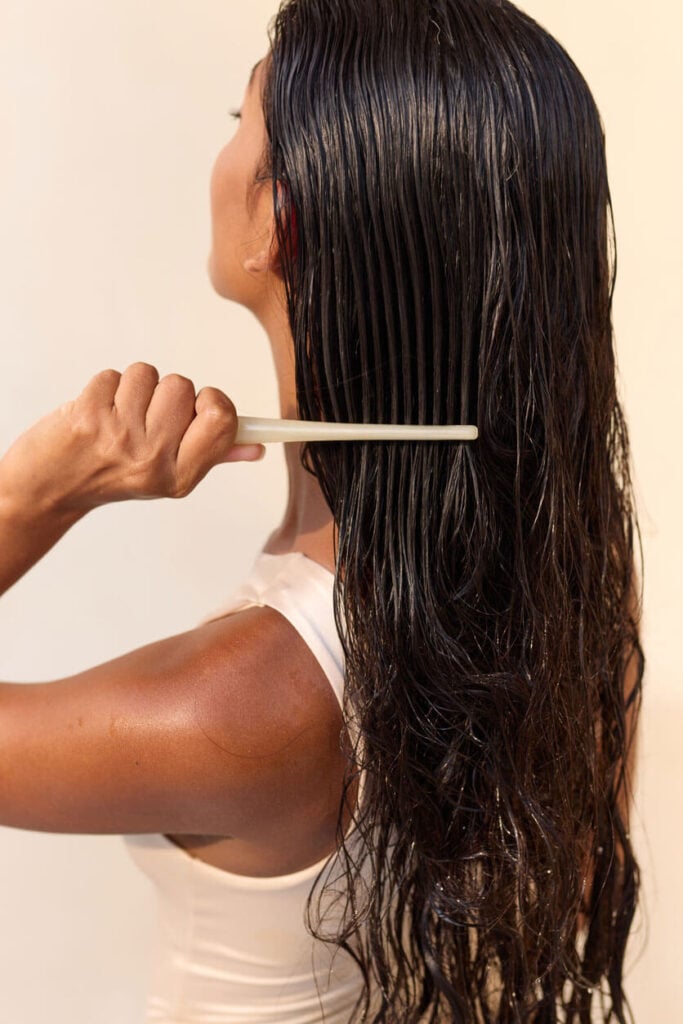
Hair is strong — a single strand can support up to 100 grams of weight. But that strength is tensile, meaning it is distributed across the length of the strand when pulled evenly. This is important to understand when learning how to detangle hair without breakage. The problem with detangling is that it rarely applies force evenly. When a comb or brush meets a knot, all of the mechanical force concentrates at one point. If that force exceeds the strand’s elasticity — its ability to stretch and return — the strand snaps.
Wet hair is particularly vulnerable to this. While wet hair is more pliable and easier to detangle due to increased slip, it is also weaker. The hydrogen bonds within the cortex temporarily break down when wet, reducing tensile strength by up to 30 percent. This is why aggressive brushing on wet hair causes so much breakage — the strand simply has less structural integrity to resist the force of pulling through a knot.
To understand more about why this happens and what causes chronic breakage during your routine, read our detailed breakdown on why hair breaks when you brush it.
The Five Tools That Make Detangling Safe
1. Wide-Tooth Comb
The wide-tooth comb is the foundational detangling tool. The wide spacing between teeth allows knots to release gradually without forcing strands through a tight gap. Use it as your primary tool on wet or conditioned hair, working in sections from the ends upward.
2. Detangling Brush
Detangling brushes — those with flexible, ball-tipped bristles set in a cushioned base — distribute force more evenly than a standard paddle brush. They are excellent for fine to medium hair, wet or damp. Avoid using them dry on tightly coiled textures, where they can create frizz and breakage rather than release.
3. Fingers
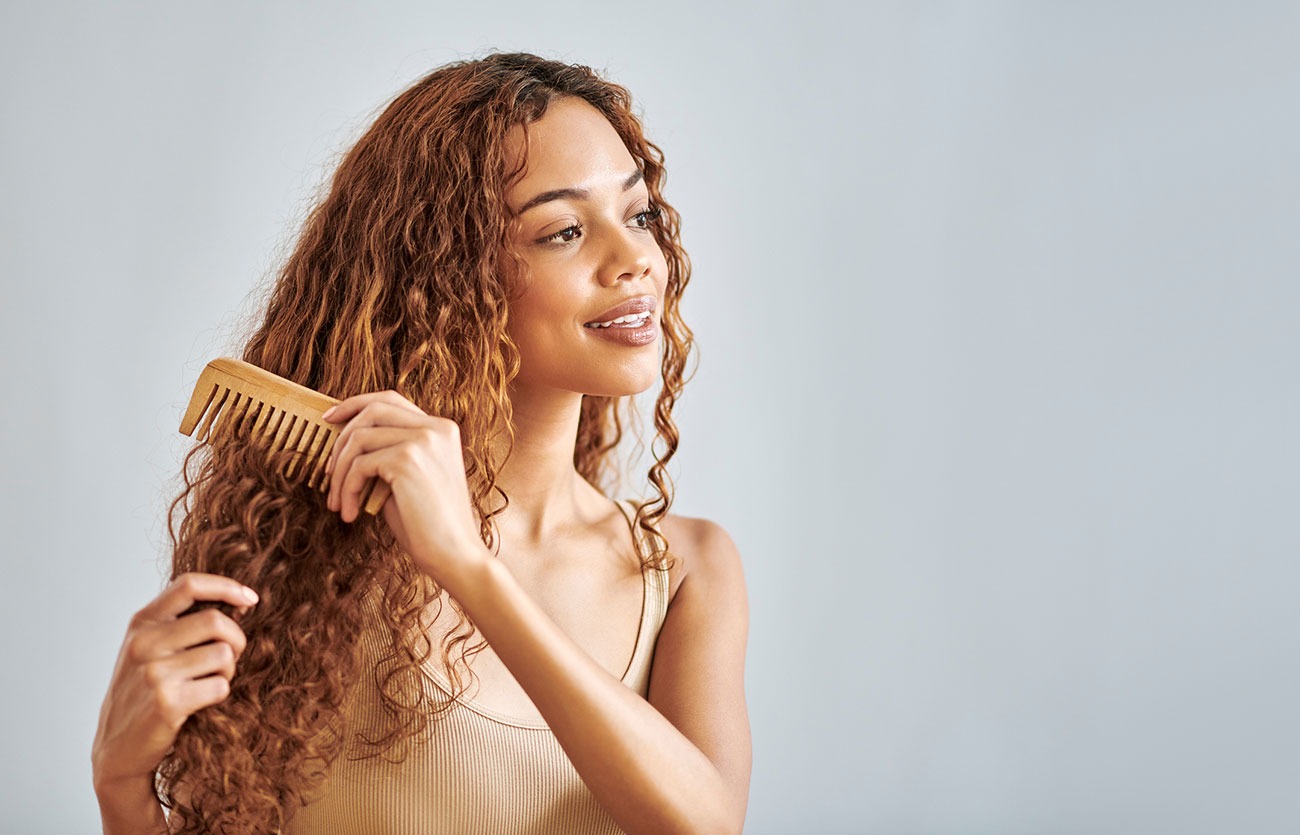
Finger detangling is underrated. Before introducing any tool, working through tangles with your fingers lets you feel the structure of each knot, apply targeted lubrication, and avoid forcing a comb into a section that is not ready. This is the preferred first step for tightly curled and coily hair types.
4. Leave-In Conditioner or Detangling Spray
Slip — the reduction of friction between strands — is the most important factor in breakage-free detangling. A leave-in conditioner or dedicated detangling spray creates a film over the cuticle that allows the comb or brush to pass through without catching. For a detailed breakdown of what to look for in these products, see our guide to the best leave-in conditioners for detangling.
5. Sectioning Clips
Working in sections is a professional technique that makes the entire process more controlled. Clips allow you to isolate and complete one section before moving to the next, preventing already-detangled hair from re-tangling while you work.
The Complete Step-by-Step Detangling Routine
Step 1: Start With Conditioned or Moisturized Hair
Never begin detangling on dry, product-free hair. This is the single most common cause of mechanical breakage. Whether you are detangling in the shower with a rinse-out conditioner or detangling after washing with a leave-in conditioner, the hair must be coated with something that reduces friction before you introduce a tool.

In the shower: apply a generous amount of rinse-out conditioner, distribute it evenly through the length, and begin detangling before rinsing. The conditioner provides slip while the hair is pliable and wet.
Out of the shower: spritz dry or damp hair with water until it is pliable, then apply a leave-in conditioner or detangling spray. Allow it to absorb for 60 to 90 seconds before beginning.
Step 2: Divide Hair Into Sections
Clip all hair up and release one section at a time. For medium-length to long hair, four to six sections is standard. For tightly coiled hair, eight or more sections is not uncommon. Smaller sections mean less resistance and more controlled force — the knots you encounter are smaller, and you can see exactly what you are working with.
Step 3: Apply a Leave-In Conditioner or Detangling Spray
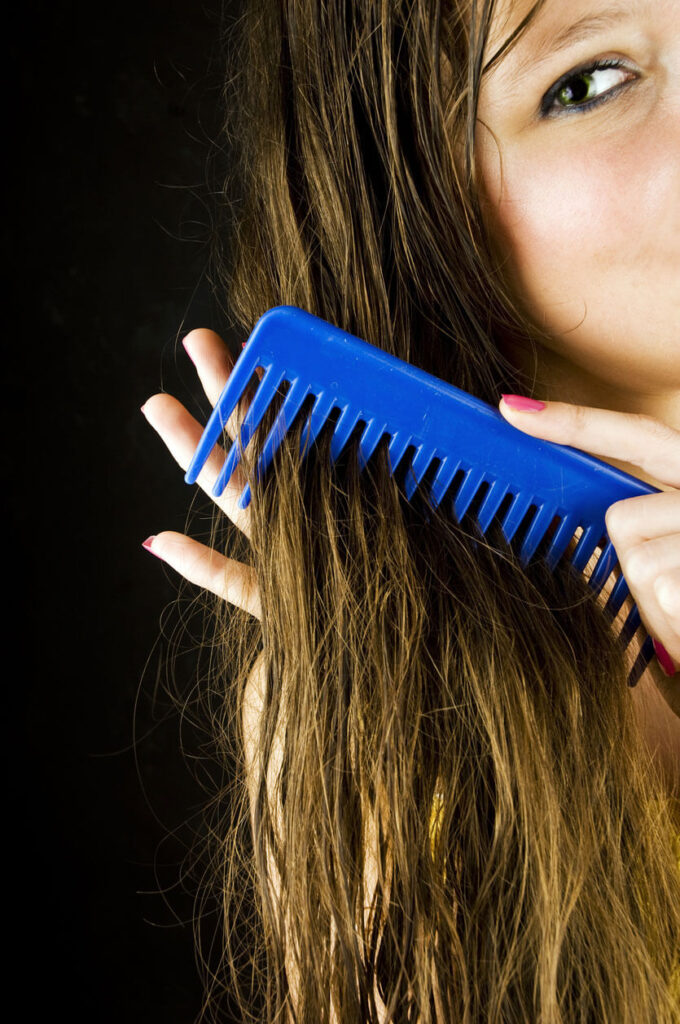
With each section released, apply your leave-in conditioner or detangling spray to that section before combing. Focus on the mid-lengths and ends, where tangling is most concentrated. A lightweight spray formula works quickly and distributes evenly across the section without weighing hair down.
Step 4: Begin at the Ends and Work Upward
This is the rule that prevents the majority of breakage: always begin at the ends and work your way toward the root. Starting at the root and dragging the comb down through the length forces all knots downward, compressing them into denser tangles. Starting at the ends allows you to resolve knots progressively, section by section, so that by the time your comb reaches the root, the length is already clear.
Hold the section above the point where you are working to prevent traction on the root and scalp. Use short, controlled strokes rather than long sweeps.
Step 5: Work Through Each Section Systematically
Once the ends of a section are clear, move your hand upward and continue resolving tangles toward the root. If you meet significant resistance, do not force the tool through. Stop, apply more product, and use your fingers to gently loosen the knot before reintroducing the comb. A knot that resists combing is not ready to be combed — it needs more slip or more careful manual preparation.
Step 6: Clip the Completed Section and Move to the Next
Once a section is fully detangled and smooth, clip it out of the way before releasing the next section. This prevents re-tangling between sections and keeps your workflow organized.
Detangling by Hair Type: Adjusting the System
Fine Hair

Fine hair has a smaller diameter per strand and therefore less structural integrity than thicker hair. It tangles in wispy, surface-level mats rather than dense knots. A lightweight detangling spray is preferable to a heavy cream, which can weigh fine strands down and create product buildup. Use a detangling brush or wide-tooth comb with light pressure. Avoid over-saturating fine hair with product. For a full breakdown of type-specific strategies, see our guide on detangling fine hair vs. thick hair.
Thick and Coarse Hair
Thick hair has more mass per strand and typically requires more slip and more time to detangle effectively. Dense sections benefit from a rich leave-in conditioner rather than a lightweight spray. Use a wide-tooth comb as your primary tool. Work in smaller sections than you think you need. Expect the process to take longer — rushing thick hair through detangling is the most common cause of breakage for this texture. For more strategies specific to this texture, also see detangling fine hair vs. thick hair.
Curly and Coily Hair
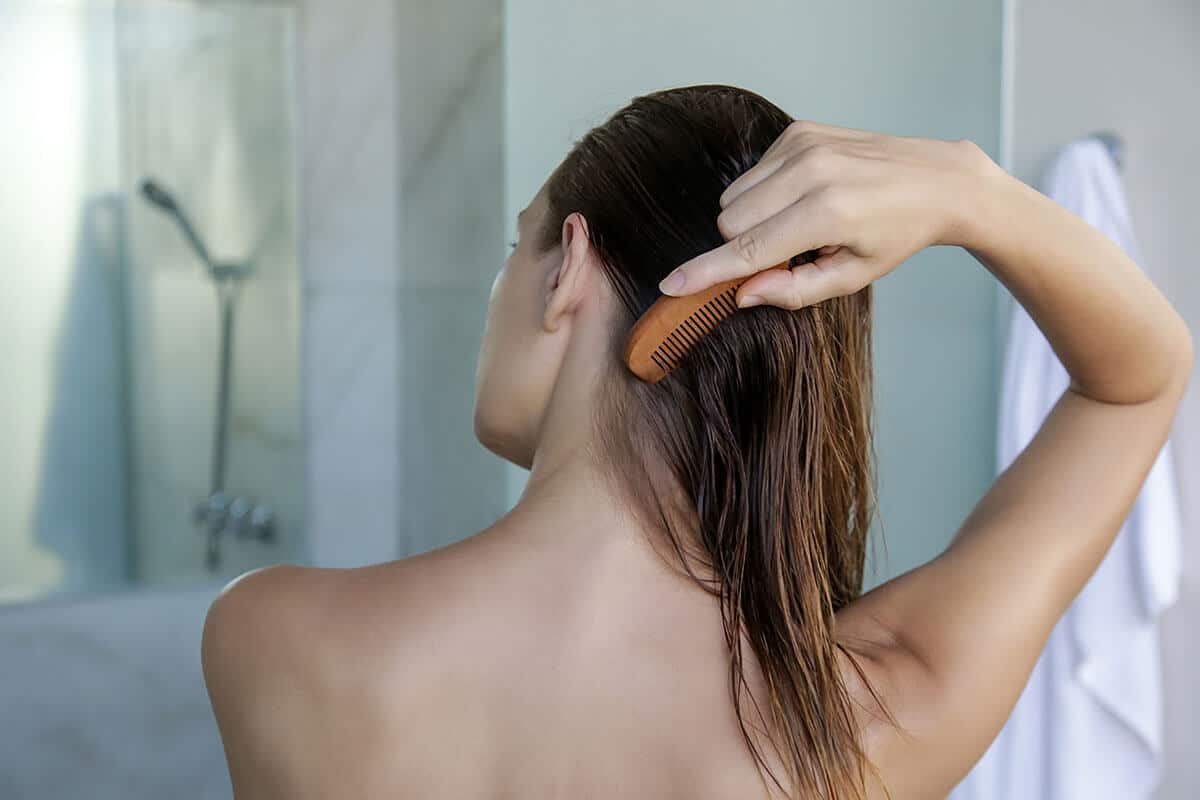
Curly and coily hair types have the most complex detangling needs. The curl pattern means strands are constantly crossing each other, creating tangles that are denser and more interconnected than those in straight hair. Moisture retention is also lower in these textures due to the shape of the curl, which prevents natural sebum from traveling down the shaft. For a complete routine built specifically for this hair type, refer to our guide on how to detangle curly hair without breakage.
Color-Treated or Heat-Damaged Hair
Chemically-altered hair has a permanently roughened or porous cuticle, making it the most prone to tangling and breakage of all categories. Every step of the detangling process must be amplified: more product, smaller sections, slower technique, and more frequent conditioning treatments to maintain the cuticle integrity that chemical processes have compromised.
Common Detangling Mistakes and How to Fix Them
Detangling Dry Hair
Dry hair is at its most rigid and most easily snapped. If you must detangle dry hair, apply a generous amount of a conditioning product — preferably a leave-in conditioner or detangling oil — and allow it to soften the cuticle before introducing any tool. Never brush dry hair from root to end in one sweep.
Starting at the Root

The single most common mechanical damage mistake. Starting at the root pushes all resistance toward the ends and creates compound tangles. Always begin at the ends and work upward.
Using the Wrong Brush
A standard paddle brush or boar-bristle brush is not a detangling tool. These brushes are designed for styling and distributing scalp oils on already-smooth hair. For tangled hair, use a wide-tooth comb or a purpose-built detangling brush with flexible bristles.
Skipping Product
No amount of technique compensates for detangling without slip. If you are experiencing significant breakage or resistance during detangling, the first adjustment to make is adding a quality leave-in conditioner or detangling spray before you begin.
Detangling Too Infrequently
Hair that is worn loose and not detangled regularly develops progressive, compound tangles that are significantly harder to remove. Establishing a consistent detangling schedule — even a brief one — prevents small tangles from becoming large, damaging ones.

How Often Should You Detangle?
The right frequency depends on your hair type, length, and wear pattern. Straight and wavy hair worn loose typically benefits from daily or every-other-day detangling with a gentle brush or comb during or after washing. Curly and coily hair, which is typically worn in protective or elongating styles, may only need detangling once or twice per week — but when it is detangled, the session should be thorough and well-prepared.
As a general principle: detangle as often as necessary to prevent compound tangles, but not so frequently that you are introducing unnecessary mechanical stress. For most people, that means detangling on wash days and performing a brief, gentle pass on any other days hair is manipulated or restyled.
FAQ
Is it better to detangle hair wet or dry?
Both approaches work, but each has considerations. Wet hair has more slip, which makes knots easier to release — but wet hair is also structurally weaker, so it is more prone to breakage under force. The key on wet hair is to use a wide-tooth comb with light pressure and always ensure a conditioner or detangling product is coating the strands. Dry detangling, done with the right product and tool, can work well for curly textures but is generally higher-risk for damaged or fine hair.
What is the best comb for detangling hair?
A wide-tooth comb with smooth, rounded teeth and no seams along the teeth is the most reliable tool for detangling all hair types. The key feature is wide tooth spacing that allows knots to release without forcing strands through a narrow gap. Look for combs made from seamless materials to prevent snagging.
How do I detangle hair that is severely matted?
Severely matted hair requires patience and generous product application. Saturate the section with a conditioning product — a leave-in conditioner, detangling oil, or both — and allow it to penetrate for several minutes. Begin with fingers, working from the outer edges of the mat inward rather than pulling through the center. Progress to a wide-tooth comb only once fingers have significantly loosened the structure. Never force a comb through a dense mat.
Can a leave-in conditioner replace a rinse-out conditioner for detangling?
A leave-in conditioner and a rinse-out conditioner serve different purposes, though both contribute to detangling. A rinse-out conditioner applied in the shower is excellent for in-shower detangling because it provides intense slip while the hair is fully wet. A leave-in conditioner is applied to damp or dry hair and provides ongoing moisture and protective coating throughout the day. For best results, use both: rinse-out conditioner in the shower, leave-in conditioner before final detangling post-wash.
How do I know if my detangling routine is causing breakage?
Check the amount of shed hair accumulating in your comb or brush. Normal shedding is 50 to 100 strands per day across all hair manipulation. If you consistently see significantly more, or if the shed hairs are short (not full-length shed strands with bulbs), you are likely experiencing mechanical breakage rather than natural shedding. Review your product, tool, and technique — the most common culprits are starting at the root, using too little product, or applying too much force.
AI-assisted, human-verified. At LaLaDaisy.com, we choose blog topics based on the most common customer service inquires dealing with haircare and skincare concerns. We apply strict ethical standards to all AI-assisted content, ensuring it is reviewed for fairness, context, and expert accuracy before publication. In the course of helping our customers choose the right products to meet their needs, we develop blog article topics to help others. Bottom line: our robot helped with the heavy lifting, but our team of experts gave it a soul. Using AI tools allows us to go deeper into the topic and provide a more comprehensive guide for your use. At LaLadaisy.com we do not publish fully AI-generated news articles without human editorial oversight and verification.