-
 Davines NaturalTech Renewing Conditioning Treatment 33.8 oz
×
$147.001 × $147.00
Davines NaturalTech Renewing Conditioning Treatment 33.8 oz
×
$147.001 × $147.00 -
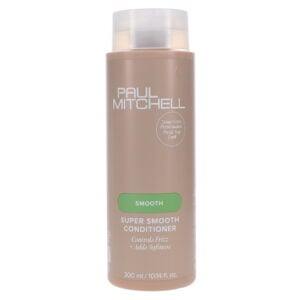 Paul Mitchell Smooth Super Smooth Conditioner 10.14 oz
×
$17.501 × $17.50
Paul Mitchell Smooth Super Smooth Conditioner 10.14 oz
×
$17.501 × $17.50 -
 Paco Rabanne 1 Million Parfum for Men 3.4 oz
×
$119.991 × $119.99
Paco Rabanne 1 Million Parfum for Men 3.4 oz
×
$119.991 × $119.99 -
 OPI Just Lanai-ing Around 0.5 oz
×
$10.491 × $10.49
OPI Just Lanai-ing Around 0.5 oz
×
$10.491 × $10.49 -
 Oribe Invisible Defense Universal Protection Spray 5.9 oz
×
$37.401 × $37.40
Oribe Invisible Defense Universal Protection Spray 5.9 oz
×
$37.401 × $37.40



Learning how to use a hair mask is critical if you want to achieve the results you want. Most people own at least one hair mask they are not using correctly. They know it is good for their hair. They use it when they remember. They leave it in for whatever amount of time feels right. And then they wonder why their results are uneven — why the mask that earned glowing reviews online seems to be doing only half of what it promises for them.
Learning how to use a hair mask is a skill. Not a complicated one, but a precise one. And the gap between a mediocre result and a transformative one often comes down to timing, technique, and a few preparation steps that most people skip entirely.
This is the guide that closes that gap.
Step 1: Start With the Right Base — Freshly Shampooed, Damp Hair

When you learn how to use a hair mask correctly, you’ll understand that they work best on freshly shampooed, damp hair. This is not an arbitrary recommendation — it is based on how hair fiber responds to treatment conditions.
Why shampooed? Shampoo removes the sebum, product buildup, and environmental residue that coats the hair surface before a treatment. If you apply a mask to unwashed hair, the conditioning agents in the mask have to compete with — or are blocked by — that existing film. Shampooing first opens a clean surface for the active ingredients to contact and deposit on.
Why damp, not soaking wet? Water-saturated hair is less receptive to conditioning ingredients than damp hair. When hair is completely saturated, the water molecules filling the shaft create less gradient for oil-based and conditioning agents to penetrate. Pressing excess water from the hair before applying a mask — without rubbing or wringing, which causes friction damage — puts the hair in the optimal state for absorption.
The correct post-shampoo sequence: rinse shampoo thoroughly → gently squeeze water from sections with hands → press hair gently with a microfiber towel → apply mask while hair is damp but not dripping.
Step 2: Section the Hair Before Applying
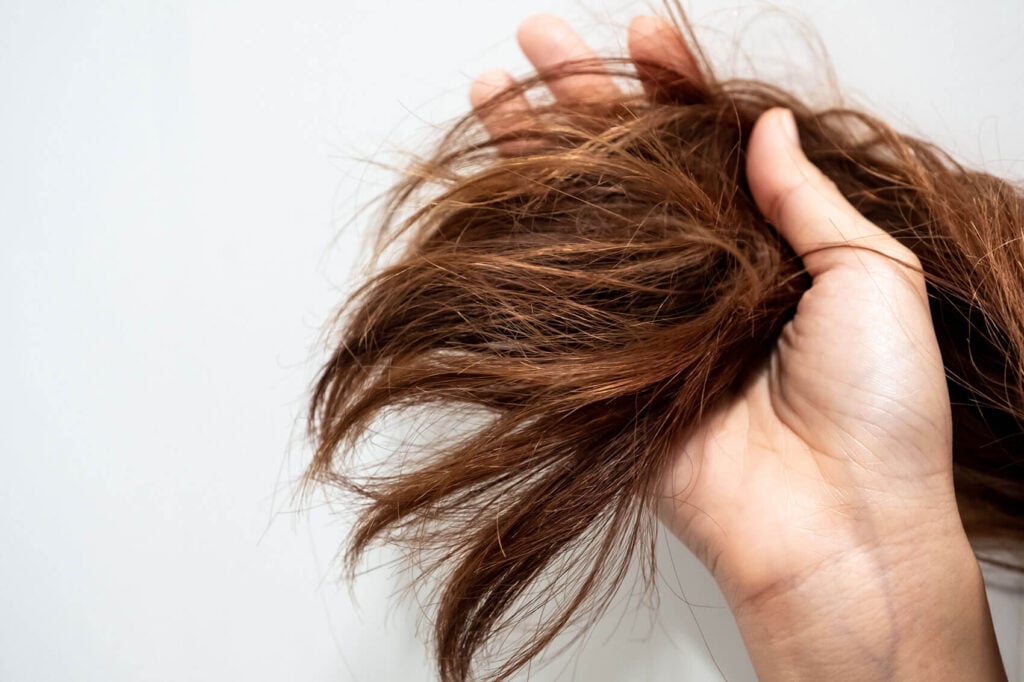
This step is almost universally skipped — and it is one of the highest-impact changes you can make to your mask application. Dividing hair into sections (typically four for medium-density hair, more for thick or very long hair) ensures that the product is distributed evenly and reaches the strands in the inner layers, not just those on the surface.
Without sectioning, masks tend to coat the outermost layer of the hair heavily while barely touching the sections underneath. The strands that need the most help — particularly if you have breakage occurring in inner sections — may receive almost no product.
How to section for mask application:
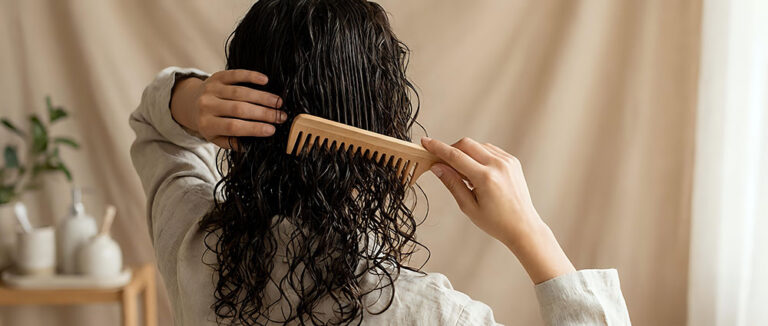
- Use a wide-tooth comb to separate hair down the center from front to back
- Divide each half horizontally at ear level, creating four sections
- Clip three sections while working on one at a time
- Apply mask from root to tip (for dry, damaged hair — roots are not typically excluded unless hair is oily at the scalp)
Step 3: Apply Generously and Work the Product Through Each Section

The most common mask-application error is under-application. Hair masks are concentrated treatments, and they require enough product to coat every strand in a section — not a thin film, but a genuine coating that gives the conditioners and actives full contact with the hair.
The amount varies by hair length and density, but a general guide:
- Short hair: 1–2 tablespoons
- Medium length: 2–4 tablespoons
- Long or thick hair: 4–6 tablespoons or more
Work each section between your palms first to warm the product (warming any conditioning formula slightly improves its spreadability and penetration), then apply from the ends upward toward the mid-lengths. Use your fingers or a wide-tooth comb to work the mask through so that every strand is coated. For very dry, porous hair — the type that feels like it is drinking in product immediately — apply generously without concern about over-application.
Focus particular attention on the ends of the hair, which are the oldest, most exposed, and typically most damaged part of the length.
Step 4: Use Heat to Maximize Penetration

This is the technique variable that makes the single largest difference in mask efficacy — and most home users do not do it.
Heat temporarily raises the hair cuticle, allowing conditioning agents to penetrate more deeply into the cortex before the cuticle closes again on cooling. It is the same principle that makes salon deep conditioning services so much more effective than an at-home mask left for the same amount of time at room temperature.
How to add heat at home:
Option 1 — Thermal cap: Purpose-made heat caps (microwave-heated or electric) are the most effective and convenient home option. They maintain a consistent, gentle temperature throughout the dwell time.
Option 2 — Shower cap + warm towel: Wrap hair in a shower cap to trap moisture, then wrap a hot (but not burning) towel around the outside. Rewarm the towel once or twice during the treatment.
Option 3 — Blow dryer on low heat: Directing low heat at a shower-capped head for two to three minutes before sitting for the rest of the dwell time mimics the warmth effect adequately.
Note on bond-building masks: Olaplex’s bond-building actives work through chemistry rather than heat-driven penetration. The brand does not require heat for their treatments — and the regular 4-in-1 Moisture Mask instructions should be followed as written. For purely moisture-focused masks like the Amika Soulfood Nourishing Mask, heat is a highly effective addition.
Step 5: Leave the Mask On for the Full Recommended Time — Or Longer

Reading the label is essential. Most hair masks give a recommended time range (e.g., 5–20 minutes, or 20–30 minutes). For dry, damaged hair, always aim for the upper end of the range rather than the minimum.
General timing guidelines by damage level:
- Mild dryness: 15–20 minutes with gentle heat
- Moderate damage: 20–30 minutes with heat
- Severe damage: 30–45 minutes with heat, or overnight (for formulas designed for extended wear)
For overnight application, choose a moisture-focused mask designed for extended leave-on time (like the Amika Soulfood Nourishing Mask — cover with a silk or satin-lined cap to protect bedding and prevent transfer). Bond-building masks should follow their specific brand timing and are generally not designed for overnight use.
The minimum-time myth: Leaving a mask on for exactly five minutes because the instructions list “5–20 minutes” as a range is a missed opportunity. The conditioning agents in a mask need dwell time to deposit and penetrate. The first five minutes, the product is still distributing and warming. The real absorption happens in the 15–30 minute range, especially with heat.
Step 6: Rinse Thoroughly — With Cool Water
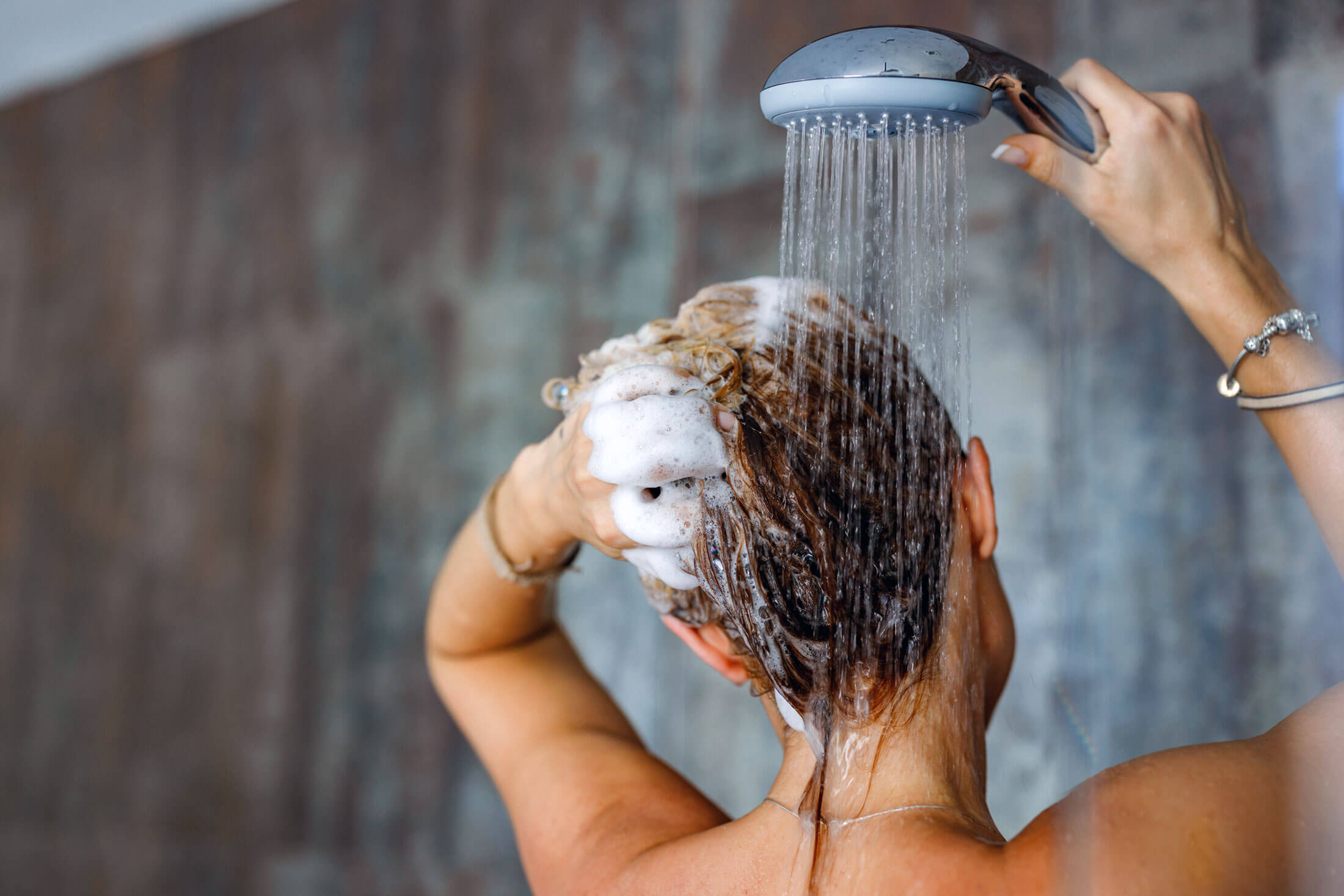
Rinsing is not a passive step. For hair masks — particularly rich, thick formulas — incomplete rinsing leaves residue on the hair that can cause buildup, weigh the hair down, and actually block moisture absorption at the next wash.
Rinse with cool or lukewarm water, working section by section, until the water runs completely clear and the hair no longer feels heavy or slippery with product. Then — and this is important for damaged hair — finish with the coolest water you can tolerate. A cool-water final rinse causes the hair cuticle to contract and seal, locking in the moisture you just spent 20–30 minutes depositing.
The difference in shine and smoothness between a lukewarm-rinsed and a cool-rinsed result is visible. After a thorough rinse, hair should feel softer and lighter, not heavy or coated.
Step 7: Follow With Leave-In and Finish Correctly
After rinsing, gently press excess water from hair with a microfiber towel (never wring or rub) and apply a leave-in conditioner while hair is still damp. This is the seal step: the leave-in locks in moisture that would otherwise evaporate as hair dries, and extends the softness benefit of the mask well beyond the wash session.
For damaged hair, avoid blow-drying on high heat immediately after a mask treatment — this reverses some of the cuticle sealing you just achieved. If you must blow-dry, apply a heat protectant first and use the lowest effective heat setting with a concentrator nozzle, keeping the airflow moving at all times rather than concentrating on a single section.
How Often Should You Use a Hair Mask?
Frequency is one of the most commonly asked questions about hair masks — and the answer depends on the formula type and your hair’s condition:
- Nourishing, moisture-focused masks (Amika Soulfood): One to two times per week for dry or damaged hair; once weekly for maintenance once hair improves
- Bond-building masks (Olaplex 4-in-1): Once per week during recovery; once every one to two weeks for maintenance
- Protein-heavy masks: No more than once per week, and monitor the hair for signs of protein overload (stiffness, snapping, worsening elasticity)
Understanding the distinction between mask types — and whether your hair currently needs more structural repair or more moisture — is covered in depth in the guide comparing hair mask vs deep conditioner, which explains how to rotate treatments for best results.
Mask Application for Different Hair Types

Hair type affects how you modify the technique, not whether you use masks:
Fine hair: Use lighter formulas and avoid applying mask directly to the roots — rich products at the scalp can make fine hair look flat and oily. Focus from mid-lengths to ends.
Coily or 4C hair: Use the most generous amount of product, section into smaller subsections, and seal with a sealant (oil or butter) over the mask before applying heat. Extended overnight masking is particularly effective for coily textures.
Wavy hair: Apply to damp, defined waves (not towel-dried hair that has lost its wave pattern) and scrunch upward rather than raking through, to preserve the wave structure during application.
Straight fine to medium hair: Section application is most important for even distribution. Rinse thoroughly to avoid any heaviness at the root.
The Products That Deliver Best Results When Used Correctly
Technique matters enormously — but technique applied to an excellent formula matters most. Here are the products where these application practices make the most dramatic difference:
Amika Soulfood Nourishing Mask: Responds exceptionally well to extended dwell time and heat activation. When applied correctly — generous application, 20–30 minutes under warmth, thorough cool-water rinse — the sea buckthorn and moisture complex delivers dramatically different results than a quick five-minute application.
Olaplex 4-in-1 Moisture Mask: The bond-building technology operates through chemistry, so timing and thorough distribution are more important than heat here. Ensuring every strand is coated and the product has adequate dwell time to work is key.
Moroccanoil Moisture Repair Conditioner: While technically a rinse-out conditioner, extending the dwell time to 10–15 minutes with a shower cap transforms it into a full deep conditioning treatment — significantly amplifying its moisture delivery for very dry hair.
For all of these, correct use within a broader structured protocol amplifies results further. The complete framework for doing so is laid out in the full haircare routine for dry damaged hair — which integrates masks, conditioners, bond-builders, and finishing steps into a single cohesive weekly schedule.
FAQ: How to Use a Hair Mask
Q: Can I apply a hair mask to dry hair instead of damp hair? A: Some masks (particularly oil-based pre-shampoo treatments) are designed for dry hair application. Most conditioning masks and bond-building treatments are designed for damp hair post-shampoo, as this is when the hair is most receptive to conditioning ingredient penetration. Always check the specific product’s instructions — damp vs. dry application is not universal.
Q: Should I use a rinse-out conditioner before applying a hair mask? A: Typically, no. For most mask protocols, you shampoo, then apply the mask directly. The exception is if your hair tangles severely when wet — in that case, a light rinse-out conditioner applied and rinsed first can make sectioning and mask application easier and less damaging.
Q: Why does my hair feel weighed down after a mask? A: Usually one of three causes: the mask formula is too rich for your hair type, insufficient rinsing left residue, or the product was applied too close to the roots. Try rinsing for longer with slightly warmer water to remove all residue, then finish with a cool rinse. If heaviness persists, the formula may need to be adjusted for your texture.
Q: Can I use a hair mask every day? A: Using a mask daily is not recommended — it leads to product buildup and can cause moisture overload (hair that feels limp, excessively soft, and lacking elasticity). Once to twice weekly is the effective range for most people with damaged hair. The scalp and lengths also need the regular rhythm of shampoo, conditioner, and treatment to stay balanced.
Q: Does the type of water I rinse with affect results? A: Yes, actually. Hard water (high in mineral content) can leave calcium and magnesium deposits on the hair shaft that interfere with conditioning agent absorption and contribute to dullness and roughness. If you live in a hard water area and find that masks are not producing expected results, a chelating shampoo used once or twice monthly to remove mineral buildup can significantly improve treatment efficacy.
AI-assisted, human-verified. At LaLaDaisy.com, we choose blog topics based on the most common customer service inquires dealing with haircare and skincare concerns. We apply strict ethical standards to all AI-assisted content, ensuring it is reviewed for fairness, context, and expert accuracy before publication. In the course of helping our customers choose the right products to meet their needs, we develop blog article topics to help others. Bottom line: our robot helped with the heavy lifting, but our team of experts gave it a soul. Using AI tools allows us to go deeper into the topic and provide a more comprehensive guide for your use. At LaLadaisy.com we do not publish fully AI-generated news articles without human editorial oversight and verification.