Hyaluronic acid molecular weight is not a detail reserved for cosmetic chemists. It is one of the most important variables determining whether a hyaluronic acid product delivers surface hydration, deeper structural support, or both — and understanding it will fundamentally change how you evaluate ingredient labels and product claims. Most consumers encounter the term without a frame of reference for what it actually means. This guide provides that frame.
The Science of Hyaluronic Acid Molecular Weight in Skincare

Molecular weight refers to the mass of a molecule, typically expressed in Daltons (Da) or kiloDaltons (kDa). In the context of topical skincare, molecular weight is essentially a proxy for molecular size, and molecular size determines how deeply a compound can penetrate the skin’s layered structure. The skin barrier is a selective membrane. It allows certain substances to pass through while blocking others, primarily based on size, charge, and lipid solubility.
Hyaluronic acid in its native biological form is a very large polymer — typically 1,000 kDa to 4,000 kDa — which means it is far too large to penetrate the stratum corneum unaided. For cosmetic use, hyaluronic acid is processed into various molecular weights to deliver benefits at different skin depths. This processing — hydrolysis, fermentation, and fractionation — produces the range of molecular weights found across the market today.
High Hyaluronic Acid Molecular Weight : Surface Hydration and Film Formation
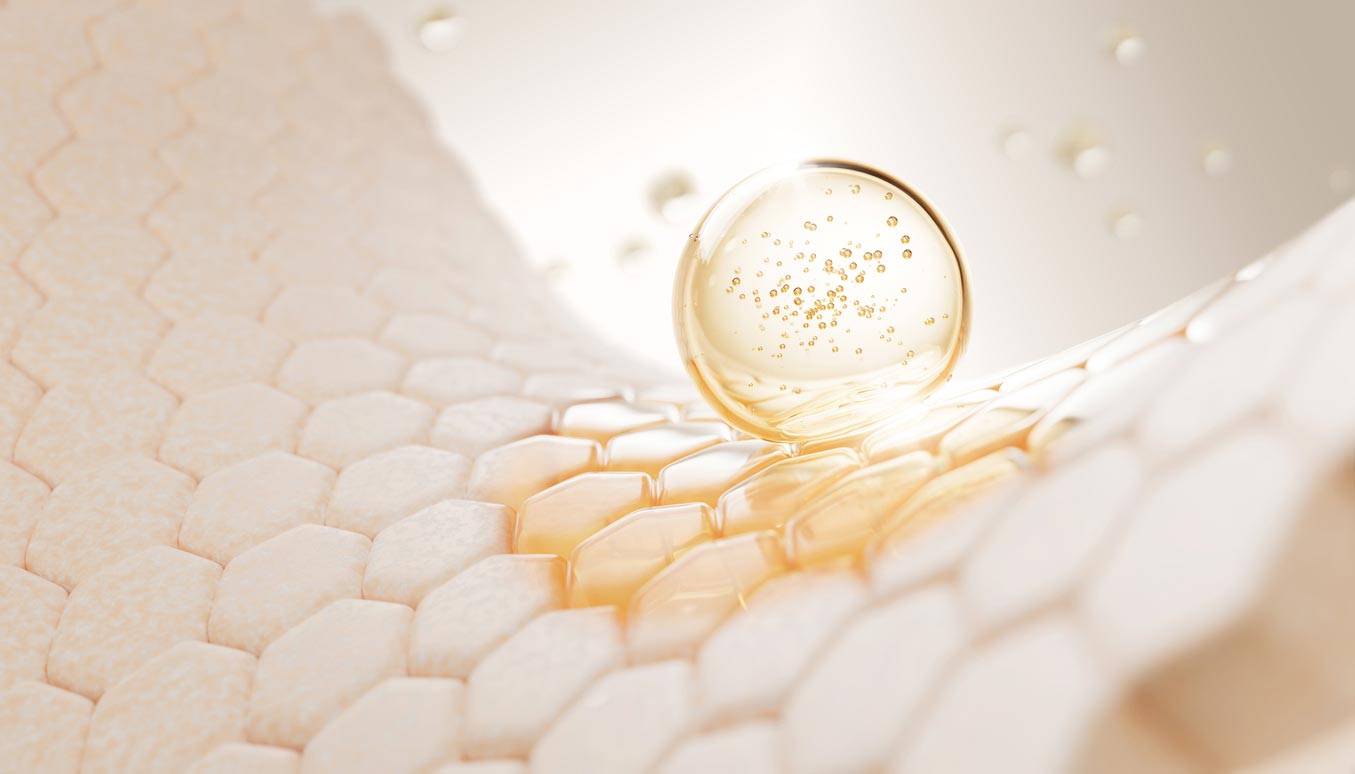
High molecular weight hyaluronic acid (HMW-HA) typically falls in the range of 1,000 kDa to 1,800 kDa. At this size, it cannot penetrate below the stratum corneum. What it does instead is form a viscoelastic film on the skin’s surface — a moisture-retaining layer that reduces transepidermal water loss (TEWL), provides immediate visible plumping, and gives skin a smooth, cushioned texture noticeable within minutes of application.
The surface-level action of HMW-HA is not a limitation — it is a specific mechanism that serves a real and important purpose. For skin that lacks surface-level moisture, is sensitized, or has a compromised barrier, the protective film that HMW-HA creates can be more valuable than deeper penetration. It is also the mechanism responsible for the immediate ‘glass skin’ visual effect associated with hyaluronic acid application.
Products formulated primarily with high molecular weight hyaluronic acid tend to have a slightly more gel-like or viscous texture and are particularly well-suited to dry, mature, or barrier-compromised skin types that need surface-level protection and moisture retention.
Low Hyaluronic Acid Molecular Weight: Deeper Penetration and Structural Support

Low molecular weight hyaluronic acid (LMW-HA) ranges from approximately 50 kDa to 300 kDa. At this size, it can penetrate the stratum corneum and work within the viable epidermis, where it supports the extracellular matrix and delivers hydration to the cellular environment below the skin surface. The result is a more durable, structurally embedded form of hydration that does not evaporate with surface moisture.
Research into low molecular weight hyaluronic acid has also identified a more complex biological role. Beyond hydration, LMW-HA interacts with cell surface receptors — particularly CD44 — which are involved in wound healing, collagen synthesis, and inflammatory signaling. This makes LMW-HA particularly relevant for skin experiencing active repair processes, post-procedure recovery, or chronic inflammation.
It is worth noting that very low molecular weight hyaluronic acid (below approximately 10 kDa) has shown the potential to be mildly pro-inflammatory in some research contexts. This is one reason why well-formulated products rarely go to the absolute minimum end of the molecular weight spectrum for primary hydration and instead use a balanced blend.
Sodium Hyaluronate: The Salt Form Explained

Sodium hyaluronate is the sodium salt of hyaluronic acid. It is produced by neutralizing hyaluronic acid with sodium hydroxide, resulting in a compound that is more water-soluble, more stable in cosmetic formulations, and slightly smaller in molecular size than its parent molecule within equivalent weight ranges. Because of this improved solubility and stability, sodium hyaluronate is the form most commonly found in commercial skincare products.
When a product lists sodium hyaluronate on the ingredient label, it is not an inferior substitution for hyaluronic acid — it is simply the practical, stable delivery form of the same fundamental molecule. The distinction between sodium hyaluronate and hyaluronic acid on an ingredient list is far less meaningful than the molecular weight of each, which is rarely disclosed on consumer-facing labels.
Hydrolyzed hyaluronic acid is another variant: the polymer chain has been broken down into smaller fragments through hydrolysis, resulting in very low-molecular-weight fragments that enable deep penetration. It is increasingly found in premium formulations designed for anti-aging and structural support.
Why Multi-Weight Formulations Outperform Single-Weight Products
The most sophisticated hyaluronic acid formulations do not rely on a single molecular weight. They combine HMW-HA for surface hydration and barrier protection, LMW-HA for deeper epidermal support, and often sodium hyaluronate at a mid-range weight for additional coverage across the skin’s layered structure. This multi-depth approach is the gold standard for hyaluronic acid formulation.
When evaluating products, look for ingredient lists that include more than one hyaluronic acid compound. Seeing both ‘sodium hyaluronate’ and ‘hydrolyzed sodium hyaluronate’ — or ‘hyaluronic acid’ alongside ‘sodium hyaluronate’ — indicates a multi-weight approach. A single listing may still be effective, but it is working at only one skin depth.
For a broader overview of how hyaluronic acid fits into a complete skincare routine and how to choose the right product for your skin, the complete guide to hyaluronic acid for skin provides the full framework from ingredient science to routine building.
How to Read Ingredient Labels for Molecular Weight

Cosmetic ingredient labels in most markets are regulated by INCI (International Nomenclature of Cosmetic Ingredients) standards, which require ingredients to be listed in descending order of concentration. Unfortunately, INCI standards do not require the disclosure of molecular weight. This means two products could list ‘sodium hyaluronate’ at the same position on the label but deliver entirely different penetration profiles depending on how the ingredient was processed.
In the absence of direct molecular weight disclosure, there are practical signals to look for:
- Multiple hyaluronic acid variants listed: indicates a multi-weight approach.
- ‘Hydrolyzed’ prefix: indicates processed, lower molecular weight fragments.
- Brand transparency: some brands voluntarily disclose molecular weight on product pages or in technical documentation. This is a positive quality signal.
- Texture and finish: lighter textures often indicate lower molecular weight formulas designed for deeper absorption; denser gels often indicate higher molecular weight surface-action products.
Frequently Asked Questions
Is lower molecular weight hyaluronic acid always better?
Not necessarily. Lower molecular weight provides deeper penetration, but high molecular weight provides essential surface-level protection. The best products combine both. Neither is universally superior — they serve different functions and ideally work together.
Can I tell molecular weight from the ingredient label?
Not directly. INCI nomenclature does not require molecular weight disclosure. However, multiple forms of hyaluronic acid listed together, and the presence of ‘hydrolyzed’ variants, are reliable indicators of a multi-weight formulation strategy.
Does sodium hyaluronate penetrate deeper than hyaluronic acid?
At equivalent molecular weights, sodium hyaluronate may offer marginally better skin penetration due to improved water solubility. However, the molecular weight of the compound is a more significant factor in penetration depth than whether it is in acid or sodium salt form.
Why do some hyaluronic acid products feel sticky?
Stickiness in hyaluronic acid products is typically associated with high molecular weight forms that form a film on the skin surface. It can also result from formulations with high concentrations of other humectants. Lower molecular weight formulations or those with a more balanced humectant blend tend to absorb more cleanly.
AI-assisted, human-verified. At LaLaDaisy.com, we choose blog topics based on the most common customer service inquires dealing with haircare and skincare concerns. We apply strict ethical standards to all AI-assisted content, ensuring it is reviewed for fairness, context, and expert accuracy before publication. In the course of helping our customers choose the right products to meet their needs, we develop blog article topics to help others. Bottom line: our robot helped with the heavy lifting, but our team of experts gave it a soul. Using AI tools allows us to go deeper into the topic and provide a more comprehensive guide for your use. At LaLadaisy.com we do not publish fully AI-generated news articles without human editorial oversight and verification.