
Before you start shopping, it’s important to understand the best ingredients for dry damaged hair products. Walk into any beauty retailer — or scroll through any haircare website — and you will find dozens of products claiming to repair, restore, nourish, and transform damaged hair. The claims are everywhere. The science behind them is not always equally distributed. Knowing which ingredients actually work, and why, is the difference between selecting a product that genuinely shifts your hair’s condition and one that simply makes it feel temporarily smoother before washing out.
This is not a list of buzzwords. This is a functional breakdown of the best ingredients for dry damaged hair. We’ll look at the ones that matter most for dry, damaged hair — the ones with real mechanisms of action, supported by cosmetic science — so that you can read a product label with confidence rather than confusion.
Why Ingredients Matter More Than Marketing for Damaged Hair

Damaged hair is structurally compromised. The cuticle is lifted, cracked, or eroded. The disulfide bonds in the cortex — the internal bridges that give hair its elasticity and strength — are partially or fully broken. Proteins and lipids that were once bound inside the hair shaft have been displaced.
A product can only repair what it is chemically capable of addressing. A conditioner with no protein and no bond-building actives can make hair feel soft temporarily (because it deposits slip agents on the surface), but it cannot reconnect broken bonds or restore the internal protein matrix. Understanding this distinction is the first step toward building a product lineup that actually reverses damage rather than masking it.
The Most Important Ingredient Categories for Dry Damaged Hair
1. Bond-Building Actives
This is the category that has most transformed professional and at-home haircare over the past decade. Bond-builders work by penetrating the cortex and actively reconnecting broken disulfide bonds — the same bonds broken by bleach, perms, heat, and oxidative stress. Let’s look at how the best ingredients for dry damaged hair work.
The original breakthrough was bis-aminopropyl diglycol dimaleate, the active in Olaplex’s patented formula. It works by cross-linking the broken bond ends across the cortex, essentially rebuilding the internal scaffolding of the hair strand. The result, with consistent use, is measurably stronger, more elastic hair that is significantly less prone to breakage.
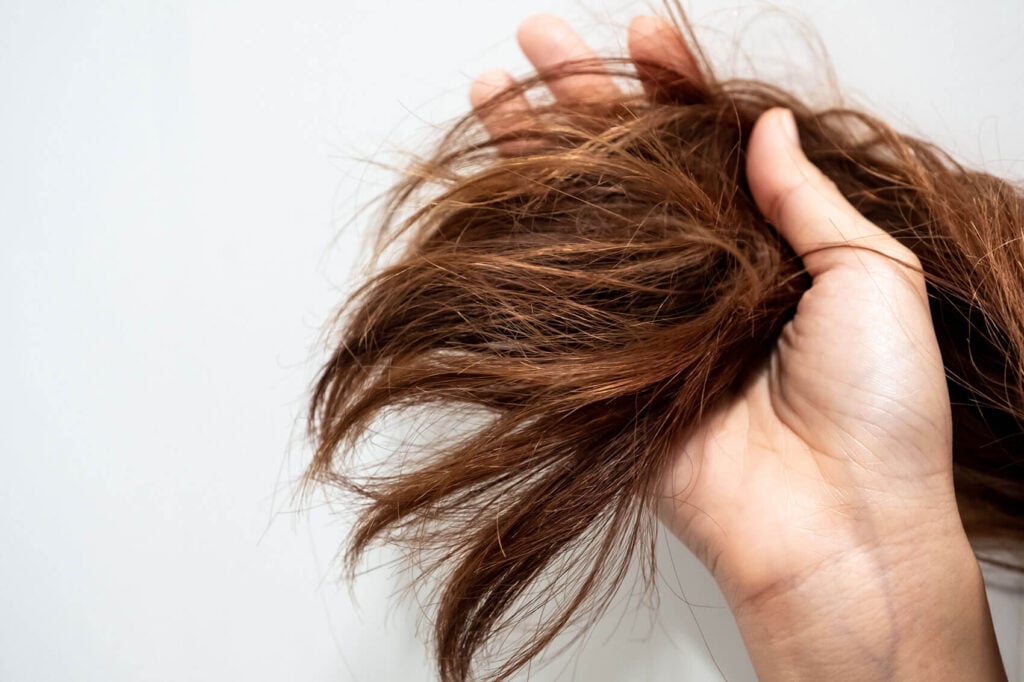
More recently, K18 peptide (lauroyl adaptyl tripeptide-2) entered the market as an alternative mechanism: a bioactive peptide that claims to reconnect polypeptide chains in the hair’s inner structure, restoring elasticity even in hair that has undergone multiple chemical services. The K18 Damage Shield pH Protective Shampoo incorporates pH-control alongside this technology, addressing the cuticle and the cortex in a single step.
For anyone beginning a structured haircare routine for dry damaged hair, understanding which bond-builder is in your products — and using it consistently — is non-negotiable for structural recovery.
2. Hydrolyzed Proteins

Hair is made of protein (keratin, specifically) — so it makes intuitive sense that protein ingredients would support repair. The key is hydrolyzed proteins: proteins that have been broken into smaller molecular fragments so they can actually penetrate the hair shaft rather than sitting on the surface, are definitely included in our list of the best ingredients for dry damaged hair.
Hydrolyzed keratin is the most structurally similar to the protein in human hair. It temporarily fills gaps in the cuticle and cortex, improving tensile strength, reducing porosity, and creating a smoother surface. Hydrolyzed wheat protein and hydrolyzed silk protein have smaller molecular weights and can penetrate more deeply, contributing to elasticity and softness.
One caveat: protein balance matters enormously. Hair needs both protein and moisture. A product lineup that is heavily protein-dominant — without sufficient humectants and emollients — can cause protein overload, making hair feel stiff, brittle, and paradoxically more prone to snapping. For damaged hair, alternating protein-rich treatments with moisture-focused ones (like the Amika Soulfood Nourishing Mask, which emphasizes moisture and fatty acids over hard protein) is best practice.
3. Ceramides

Ceramides are lipid molecules that occur naturally in the hair’s cuticle — part of the intercellular cement that holds cuticle cells together and seals moisture inside the shaft. When hair is damaged, ceramides are depleted, which is a major reason why high-porosity hair leaks moisture so quickly.
Ceramide-containing products help restore this lipid layer, essentially re-sealing the cuticle so moisture stays in longer. They are particularly valuable in leave-in conditioners, serums, and overnight treatments — products that stay on the hair rather than being rinsed away. When scanning ingredient lists, look for ceramide NP, ceramide AP, or ceramide EOP.
4. Humectants
Humectants are moisture-attracting ingredients that draw water from the environment (or from the deeper hair layers) into the hair shaft. The most well-known in haircare are glycerin, panthenol (pro-vitamin B5), and hyaluronic acid.
For dry, damaged hair, humectants are essential in both rinse-out and leave-in products. They help address the moisture deficiency that makes damaged hair feel chronically thirsty. However, in very low-humidity environments, glycerin can sometimes pull moisture from the hair rather than into it — which is why formulas typically balance glycerin with emollients that lock moisture in place once attracted.
Panthenol is particularly multifunctional: it penetrates the hair shaft, improves elasticity, adds shine, and reduces breakage. It appears in a huge range of effective haircare formulas for a reason.
5. Fatty Acids and Nourishing Oils
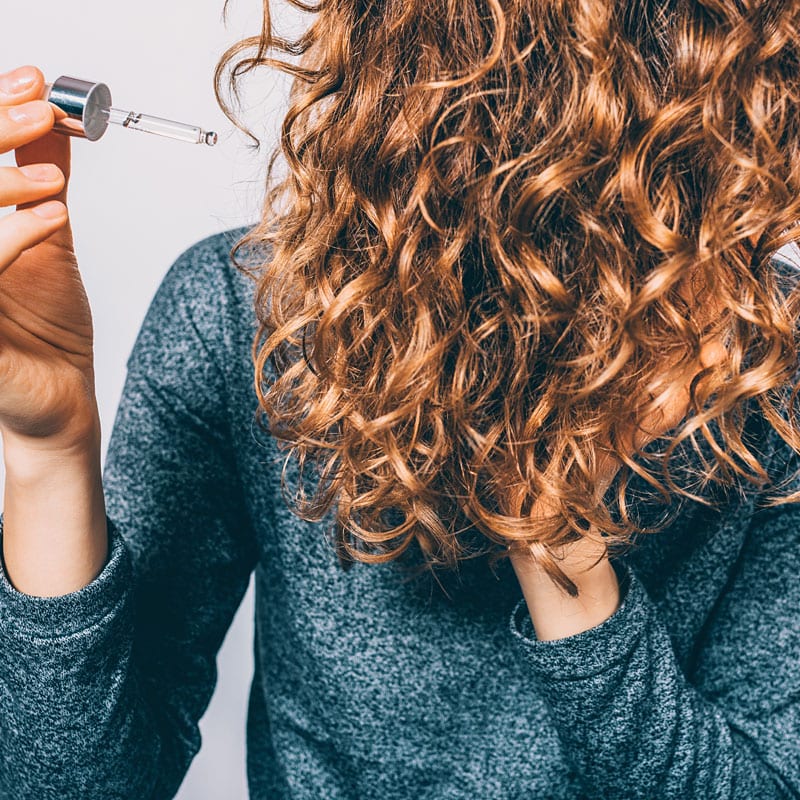
Oils and fatty acids do different things depending on their molecular structure. Some — like coconut oil (rich in lauric acid) — can penetrate the cortex to some degree, reducing protein loss during washing. Others — like argan oil (used prominently in Moroccanoil Moisture Repair Conditioner) — are primarily cuticle-smoothing and shine-enhancing, creating a protective layer on the surface.
Sea buckthorn berry oil, featured in the Amika Soulfood Nourishing Mask, is a particularly nutrient-dense ingredient: rich in omega-3, -6, -7, and -9 fatty acids, plus vitamins C and E and beta-carotene. It is deeply nourishing to the outer cuticle layers and helps restore the lipid barrier that damaged hair has lost.
For very dry, porous hair, products rich in these fatty acids — used as both rinse-out treatments and leave-in sealants — are enormously effective at restoring softness and reducing frizz between washes.
6. pH-Balancing Ingredients
This category is often overlooked but is foundational. Hair’s optimal pH is between 4.5 and 5.5 — slightly acidic. The cuticle scales lie flat and sealed within this range. Most shampoos, particularly those containing sulfates, temporarily raise the hair’s pH to 7 or above, which causes the cuticle to lift and leaves the hair more vulnerable to mechanical and environmental damage during and immediately after washing.
Products formulated to actively maintain or restore the hair’s pH — like the K18 Damage Shield pH Protective Shampoo — protect the cuticle during the cleansing process itself, reducing the net damage that accumulates over hundreds of wash sessions. This may sound incremental, but over weeks and months of use, it makes a substantial difference in the condition of the cuticle.
Acidic rinses and conditioners (those with a low pH) also help close the cuticle after washing. A cool-water final rinse performs a similar function — another reason the cold-rinse recommendation for damaged hair has real scientific backing.
Ingredients to Avoid for Dry Damaged Hair

Knowing what to seek out is half the equation. Knowing what to avoid is equally important:
Sulfates (sodium lauryl sulfate / sodium laureth sulfate): Harsh cleansing agents that strip both dirt and the natural lipids that protect the cuticle. For dry, damaged hair, sulfate-free formulas are strongly preferred.
Alcohol-based ingredients (specifically denatured alcohol / SD alcohol / alcohol denat): Drying agents found in some hairsprays and finishing products. These evaporate quickly and can aggressively dehydrate an already dry strand. Fatty alcohols (cetyl alcohol, stearyl alcohol) are the opposite — they are conditioning and should not be confused with drying alcohols.
Formaldehyde-releasing preservatives: Found in some keratin treatments and select styling products. While outside the scope of daily haircare, they are worth flagging for those considering in-salon treatments.
Heavy mineral oils and petrolatum (in leave-in products): These coat the hair surface and create the appearance of shine and smoothness without penetrating or nourishing. In leave-in products applied to dry, damaged hair, they can build up and block the absorption of genuinely nourishing actives over time.
How to Read a Product Label for Damaged Hair

Ingredients are listed in descending order of concentration. The first five to ten ingredients represent the largest portion of the formula. When evaluating a product for damaged hair:
- Look for humectants and proteins in the top half of the list
- Check that fatty alcohols or conditioning agents appear in the first third (for conditioners and masks)
- Verify the absence of high-concentration sulfates if the product is a shampoo
- Look for bond-building actives — they may appear near the middle or bottom of the list but are still active at very low concentrations (this is true of the Olaplex active, for example)
How These Ingredients Work Together in a Product System

The most effective approach to repairing dry, damaged hair is not finding one miracle product — it is building a system where each product addresses a different dimension of the damage:
- A pH-balanced shampoo (K18 Damage Shield) protects the cuticle at cleansing
- A protein-rich rinse-out conditioner (Moroccanoil Moisture Repair) rebuilds surface structure
- A bond-building treatment (Olaplex 4-in-1 Moisture Mask or In Good Repair Kit) reconnects cortex bonds
- A fatty-acid-rich nourishing mask (Amika Soulfood) restores lipids and surface moisture
- A gentle, nourishing shampoo base (Davines Nounou) keeps the cleansing step from undermining everything else
When these products are used in a coherent sequence, each one supports the next. This is how to repair damaged hair fast. To see exactly how to structure this sequence, explore the complete haircare routine for dry damaged hair, which lays out the full protocol from pre-wash to finishing step.
FAQ: Best Ingredients For Dry Damaged Hair
Q: Is hydrolyzed keratin the same as a keratin treatment? A: No. Hydrolyzed keratin as an ingredient in conditioners and masks temporarily fills gaps in the hair shaft and improves strength. A salon keratin treatment is a separate process involving higher concentrations, heat application, and (in some formulas) formaldehyde-releasing agents. Both use keratin, but the mechanism and intensity are entirely different.
Q: Can I use a bond-building product every wash? A: Most bond-building products are designed for regular or even every-wash use at low concentrations. The Olaplex No. 3, for example, is a pre-shampoo treatment designed for home use once or twice weekly. Always follow the brand’s recommended frequency — more is not always better with protein or bond-building actives.
Q: How do I know if my hair has protein overload? A: Hair with protein overload typically feels stiff, rough, or crunchy even when conditioned. It may snap more easily than expected and resist moisture. If your hair is responding this way, pause protein-heavy products for a wash cycle or two and focus exclusively on deeply moisturizing, protein-free formulas.
Q: Are natural oils as effective as formulated products for repairing damage? A: Natural oils are excellent at surface smoothing, moisture sealing, and reducing protein loss during washing — but they cannot reconnect broken bonds or replace structural proteins. They work best as part of a broader routine rather than as standalone repair treatments.
Q: What ingredient should I prioritize first if my hair is severely damaged? A: Start with a bond-building active (Olaplex or K18). Structural repair must come before surface conditioning — there is no point smoothing the cuticle of a strand that continues to snap. Once the bonds are showing improvement, layer in nourishing, fatty-acid-rich masks and protein-humectant conditioners to restore moisture balance.
AI-assisted, human-verified. At LaLaDaisy.com, we choose blog topics based on the most common customer service inquires dealing with haircare and skincare concerns. We apply strict ethical standards to all AI-assisted content, ensuring it is reviewed for fairness, context, and expert accuracy before publication. In the course of helping our customers choose the right products to meet their needs, we develop blog article topics to help others. Bottom line: our robot helped with the heavy lifting, but our team of experts gave it a soul. Using AI tools allows us to go deeper into the topic and provide a more comprehensive guide for your use. At LaLadaisy.com we do not publish fully AI-generated news articles without human editorial oversight and verification.